18/09/2023
An early start … we were on the road at 7.30. There was over 6 hours of driving ahead of us with a stop on the way … Hitler’s war time bunker complex. We had been told the Masurian Lakes were attractive, and had we not run out of days we, we would have stayed. Lots of water, trees and gentle undulations … perfect for exploring on bikes. We had noticed that as soon as we left Lithuania, the landscape became more interesting, i.e. less pancake iflat.
At the Wolf’s Lair we parked in the dedicated motorhome bays, with EHU. Not that we bothered connecting as, with the fridge not working, all we have that can go off is milk. It does … but only after 2 days. We had an early lunch as even J was hungry; he’d missed breakfast, and all we’d eaten was a packet of biscuits. Normally, I batch make and freeze soup so we can vary the flavours. The fridgeless state means I’m buying jars of soup. Bit of a lottery as to the flavour unless I Google translate them. They’re OK.
The audio guide was good. Another one that is gps triggered and tells you where to walk. Hilter and his wartime government lived and worked here from June 1941 to November 1944. And why here? It was part of East Prussia and was close to the Eastern Front. Far from roads and towns. Accessible only by rail and light aircraft. And why the Wolf’s Lair? Wolf was a self adopted nickname of Hilter.
Hitler arrived on June 24th 1941, two days after the start of Operation Barbarossa. At it’s peak over 2000 people lived and worked here. He spent 800 days here continuously at one point. The bunkers were expanded and reinforced mid 1944. The works were never completed due to the rapid advance of the Red Army. Hitler fled to Berlin.
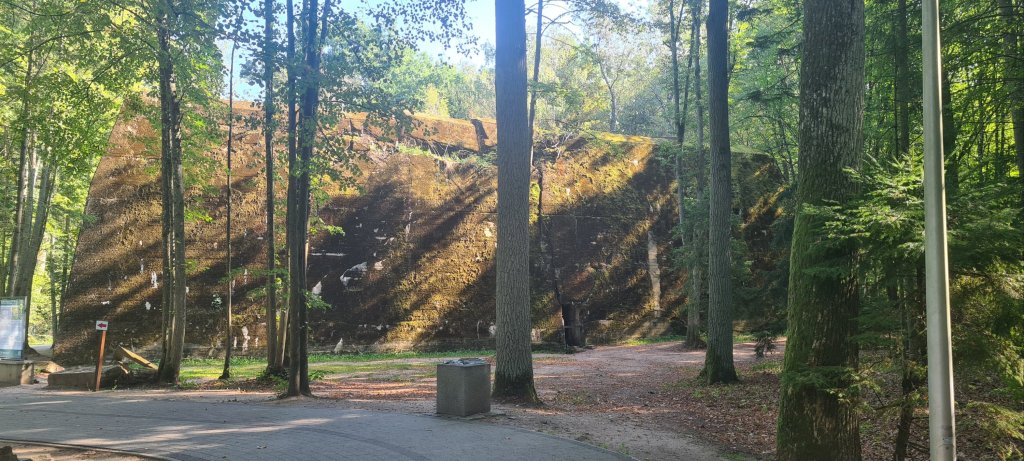

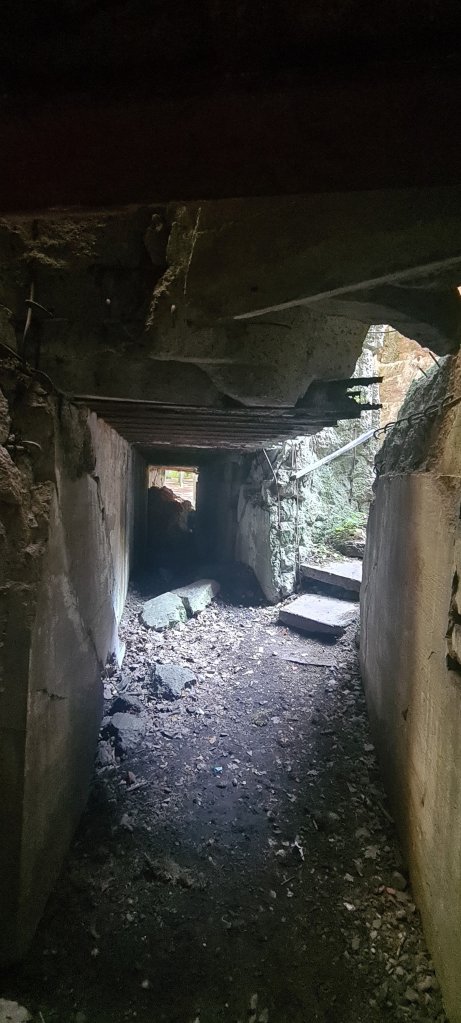


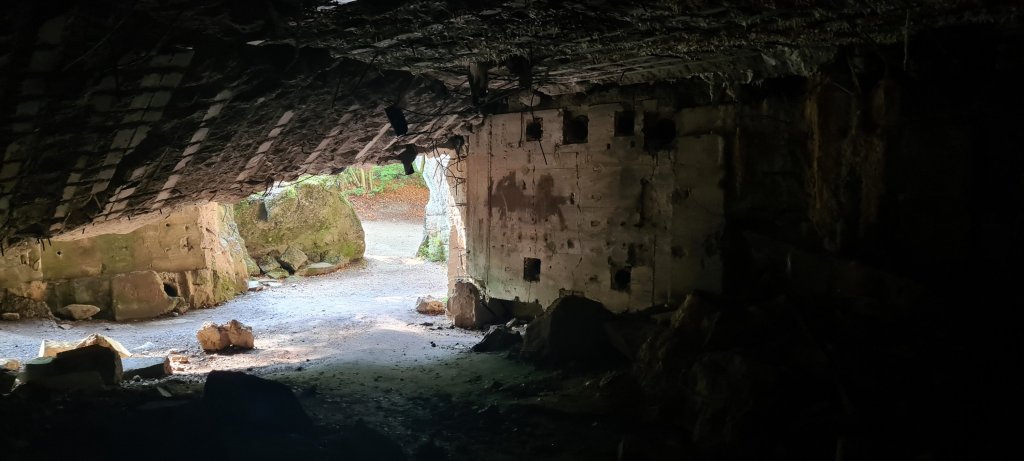
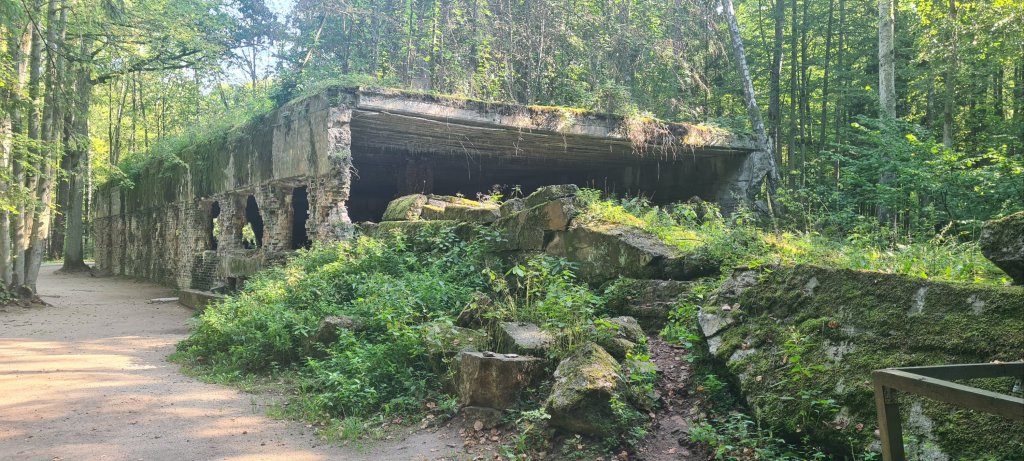

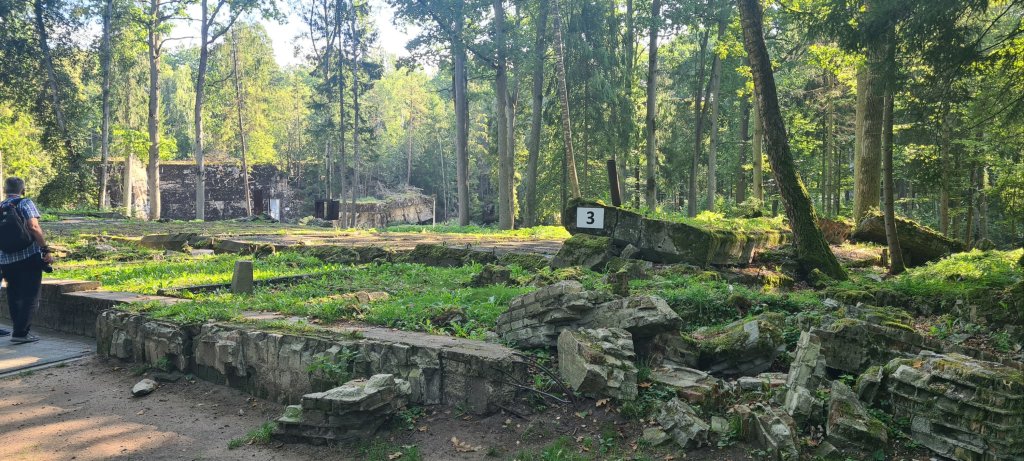
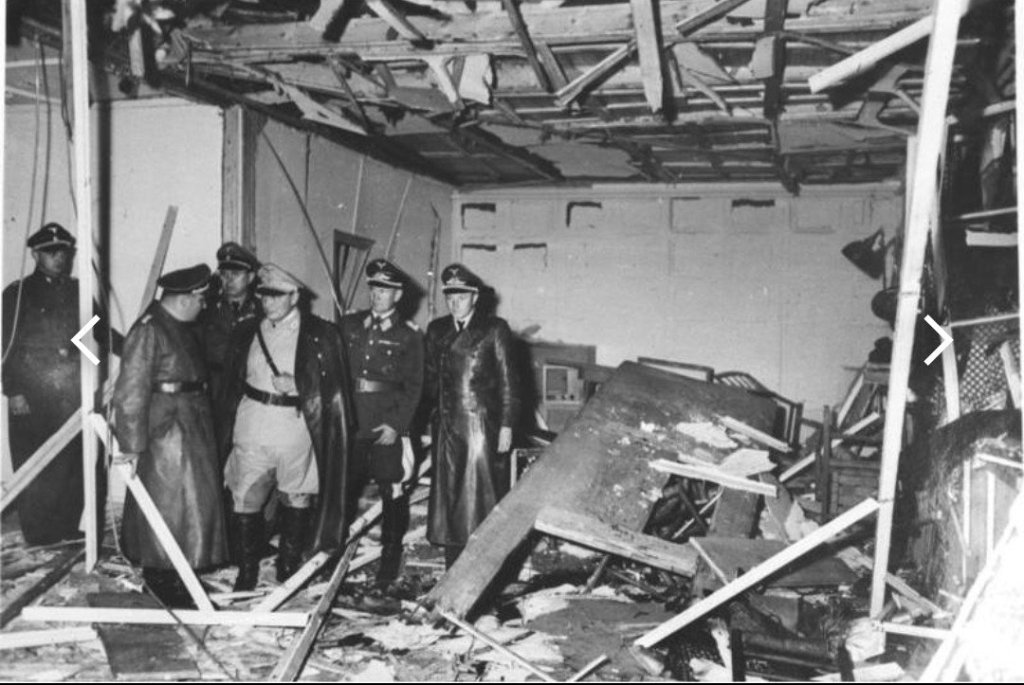
There had been numerous attempts on Hilter’s life. He had food tasters in case of poisoning. The July 20th 1945 attempt nearly got him. Recognising that loosing the war was inevitable, a group of officers and civillians plotted. Staff officer Colonel Claus von Stauffenberg volunteered to carry a bomb hidden in a briefcase into one of the daily military briefings usually held in the bunkers, in the hope that the heavy reinforcements of the bunkers could be turned against the Führer through the shockwave of the blast reverberating off the heavily reinforced walls of the room and certainly killing him.
However, on the day of the planned assassination, the location of the meeting was unexpectedly changed to a light brick hut due to Hitler’s complaints about the immense heat within the bunkers that day. This change in venue, along with other factors, such as Hitler unexpectedly calling the meeting earlier than anticipated, would contribute to the eventual failure of the plot. Despite this change in plans, Stauffenberg went ahead with carrying out the plot. He carried the briefcase containing the bomb into the conference hut, making a request to be placed close to Hitler on grounds that he had trouble hearing due to his injuries sustained while fighting in North Africa, which would ensure that the bomb would be close enough to Hitler to be effective.
The bomb exploded at precisely 12:42 p.m., with Stauffenberg having excused himself from the meeting a few minutes before. The interior of the building was devastated, four officers were injured and would later die of their wounds but Hitler was only slightly injured. This was due to the fact that one of the other officers present at the meeting had, for his own comfort, moved the briefcase from where it had been put by Stauffenberg close to Hitler and placed it against one of the legs of the solid oak table being used for the meeting. The result of this innocent action was that the thick, heavy table absorbed most of the blast and this, along with the collapse of some of the hut’s thin walls thus dissipating the shockwave, saved the Führer‘s life. Four men died from the bomb. Most of the conspirators were shot.
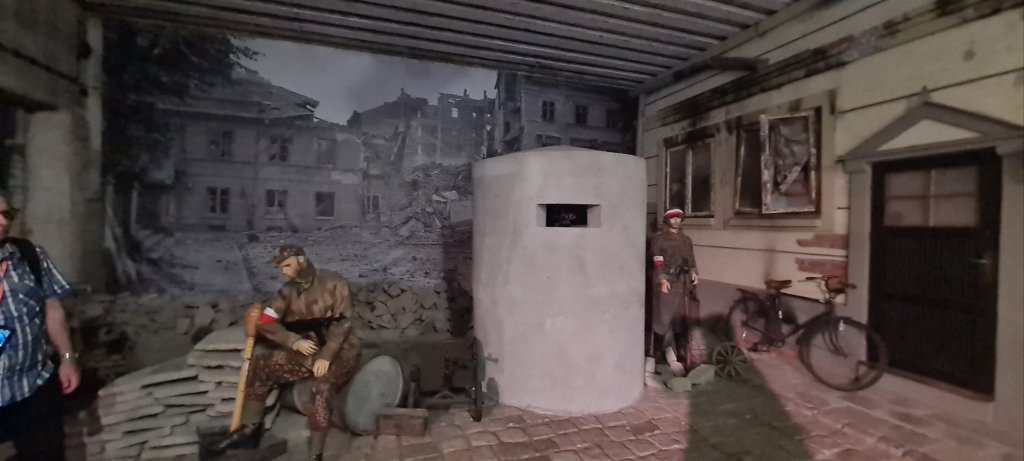
There was a display about the Warsaw Uprising. Angered by the attempt on his life, Hilter ordered the complete destruction of the city and population.

It is doubtful that the Allies knew of the location as it was never bombed. Indeed, the Russian army only stumbled on it as they advanced west.
Another longish drive to Gdansk. We re-routed after a 10k stretch of shocking road where I was down to 25mph. Fortunately, we were driving into Gdansk as the roads leaving were completely stationary. It was like Operation Stack: mostly trucks with a few cars. Note to self, leave Gdansk late. Very late.
 Clune Gap Years