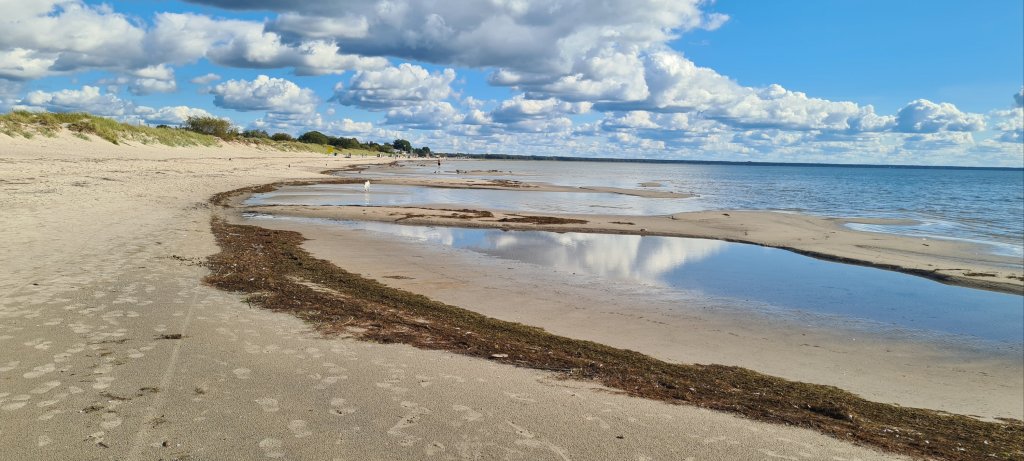
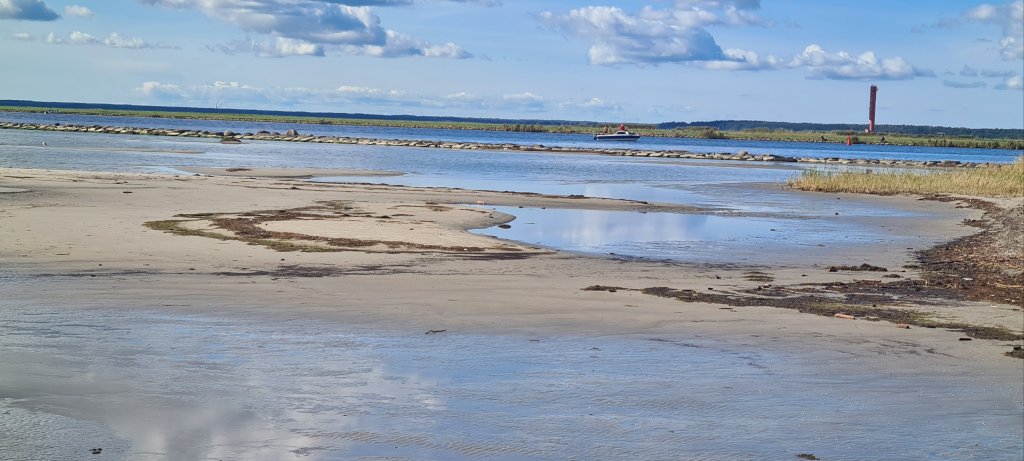
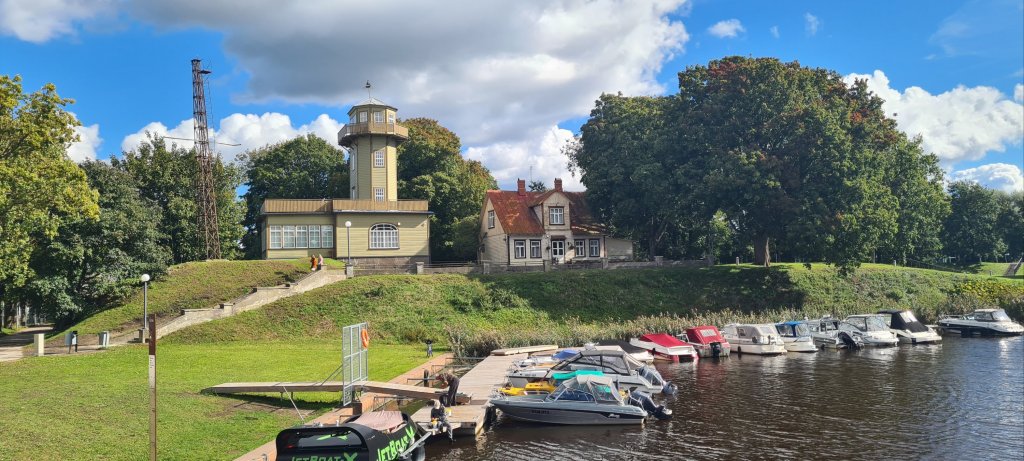
Whilst most folk visit Parnu for a holiday, or at least a weekend break, we broke a long driving day here. Having walked along the river and round to the beach we could see why it is a top tourist destination. A local, a Finn married to an Estonian, told us the town swells by 25,000 during high season.
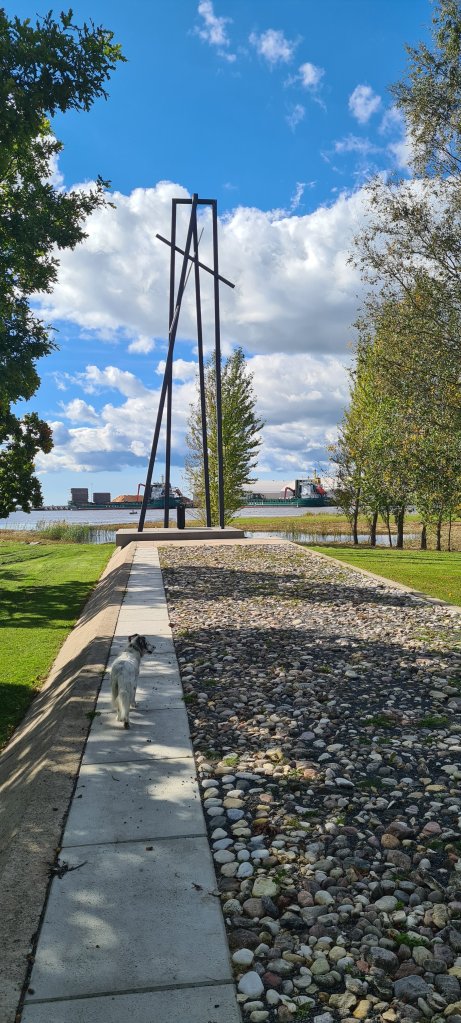
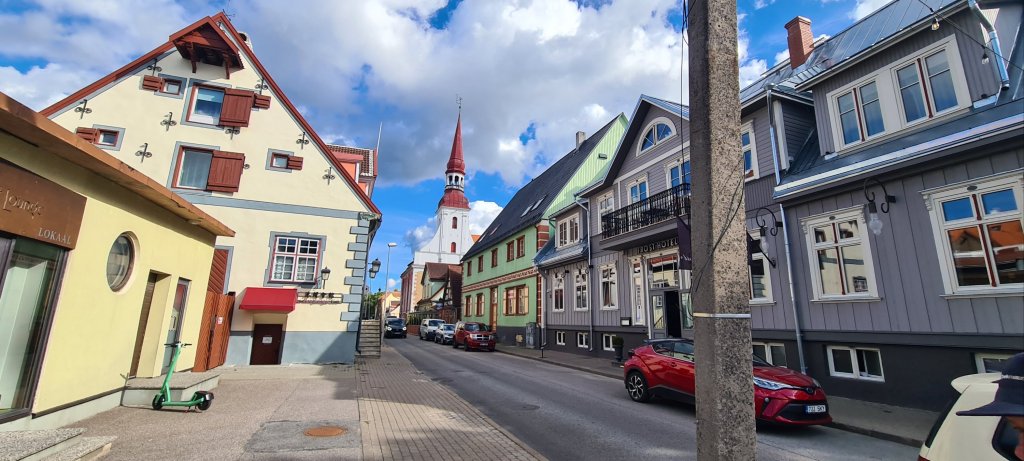
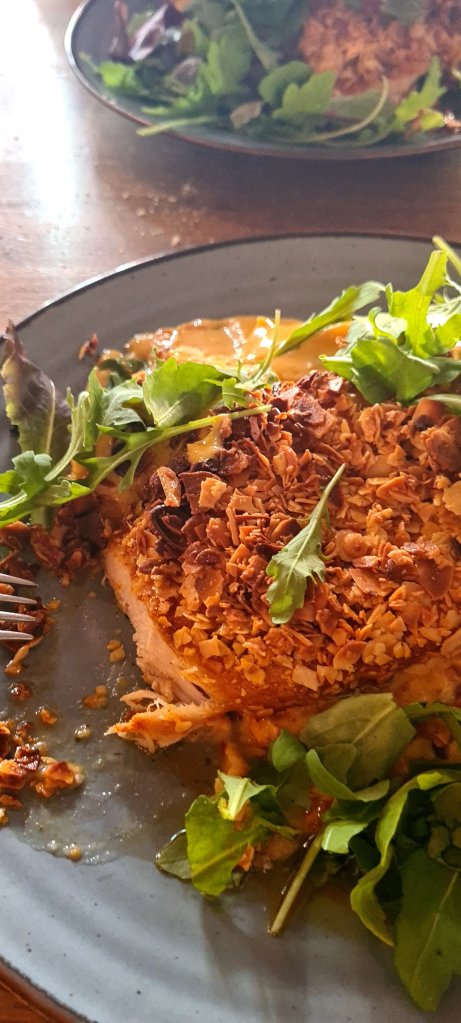
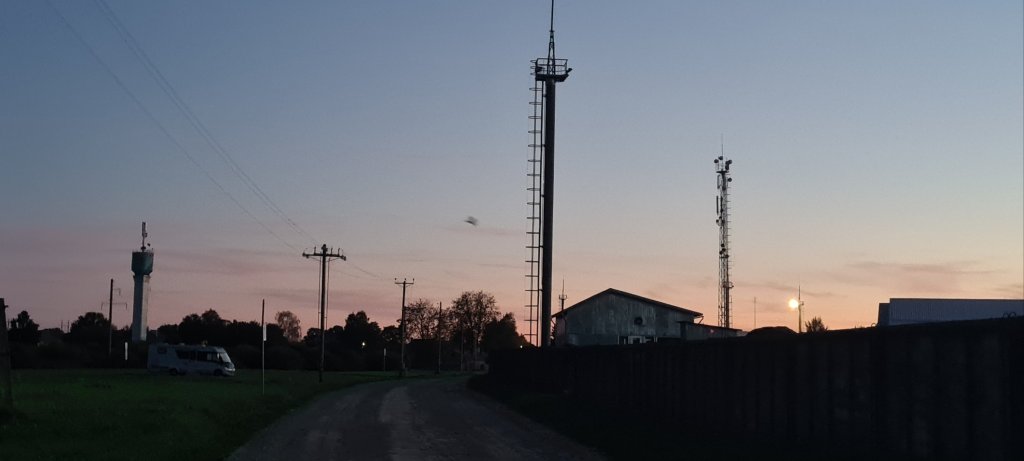
A monument to the MS Estonia which sank claiming 852 lives in 1994.We saw another monument in Tallinn. Along the river. The town itself was pretty unremarkable compared to the historic cities we’ve been visiting, but it had a chilled vibe. Well, now it’s out of season!Lunch was a recommendation from the blogger we met in Krakow … https://manvannoplan.co.uk/. Almond crusted chicken … couldn’t eat it all. Good value at €10. We drove on for a further 3.5 hours to a parking just off the main road. All the radio masts belong to a logging processing plant. No idea why.
Well, we definitely saved the best Baltic capital till last. By accident rather than design, as we had no expectations of which city would woo us. So much so we stayed a second day. This is despite getting absolutely drenched on the first visit, which you would have thought would have dampened our enthusiasm.
Day 1 we’d booked a free (tip based) walking tour. Our guide gave us a similar potted history to Latvia’s …except the Danes were first here. Then the Germans, Russian empire, independent between wars and then swinging between Germany and Russia during the WW2. With only 1.3 million people today, it is truly a small country. About 30% of the population are native / 1st & 2nd gen Russians … brought over to work and ‘Russanise’ Estonia. Like in Latvia, they go to Russian speaking schools and live and socialise only with each other. Our guide said she’d only recently made a Russian Estonian friend as their paths just do not cross. One has to wonder how many would welcome a Russian invasion.
Estonia lost nearly 18% of it’s population due to USSR deportations. The chap we met the other day told us his grandmother had been deported as a young girl with her parents and two sisters. She was the only survivor. Our guide explained that her grandfather had fought with the Germans during WW1, meaning his name went on a list, so durung Russian occupation post WW2, he went to hard labour camp for 3 years. His wife and son (our guide’s father) were sent to different Gulags. It was many years before they returned.
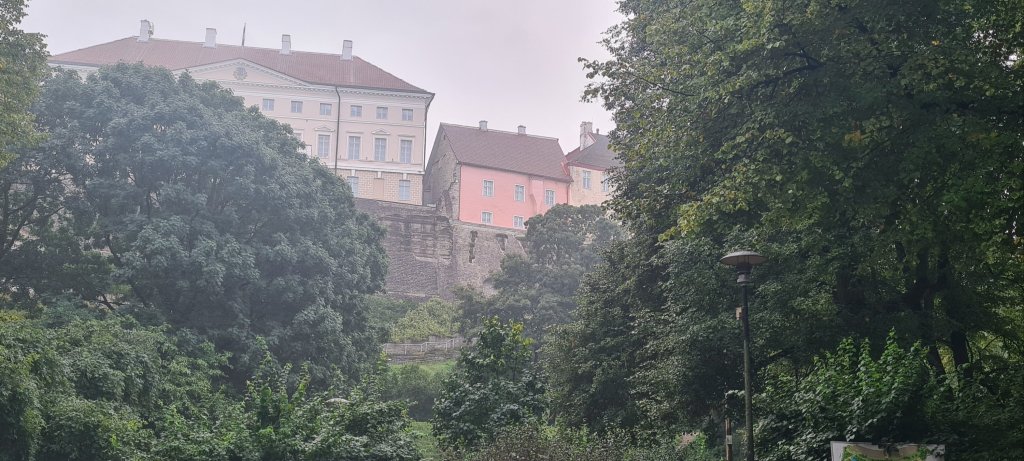
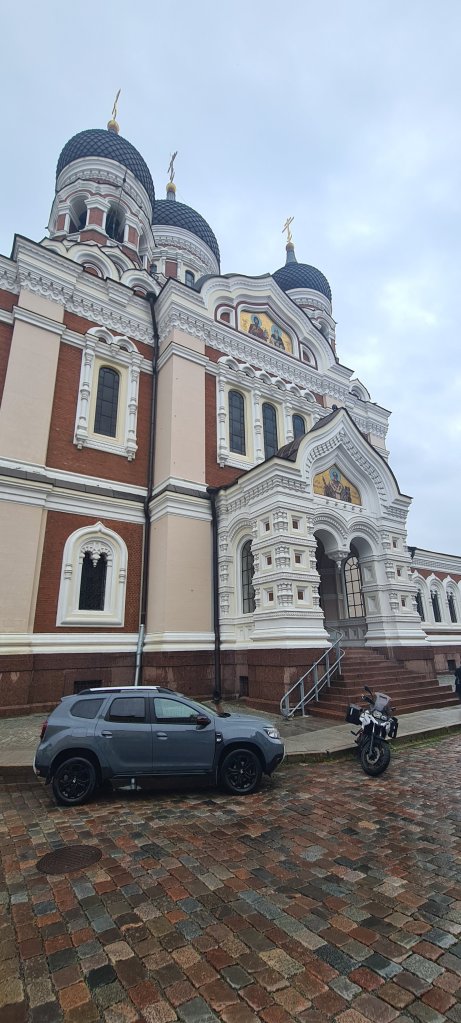
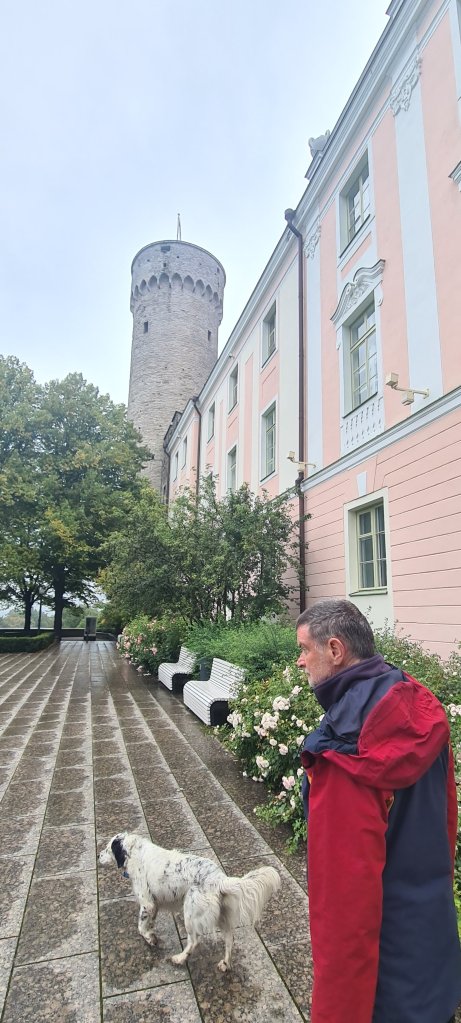
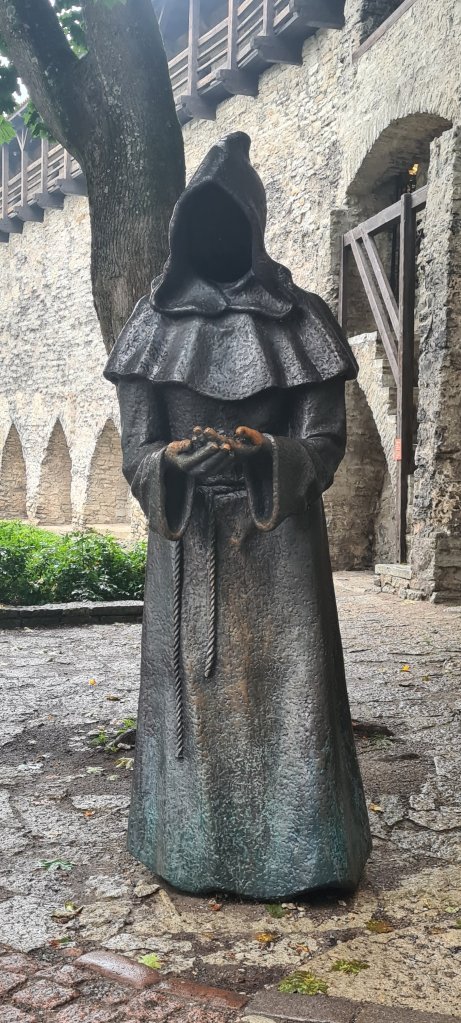
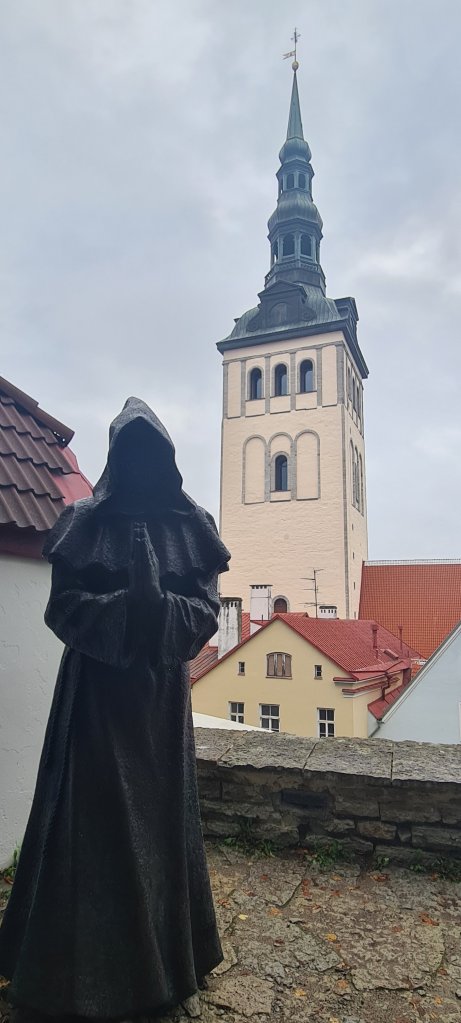
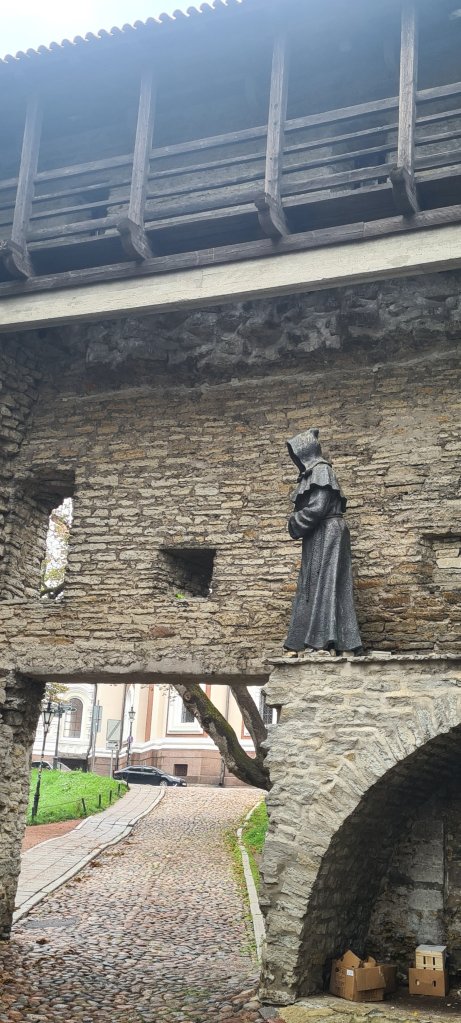
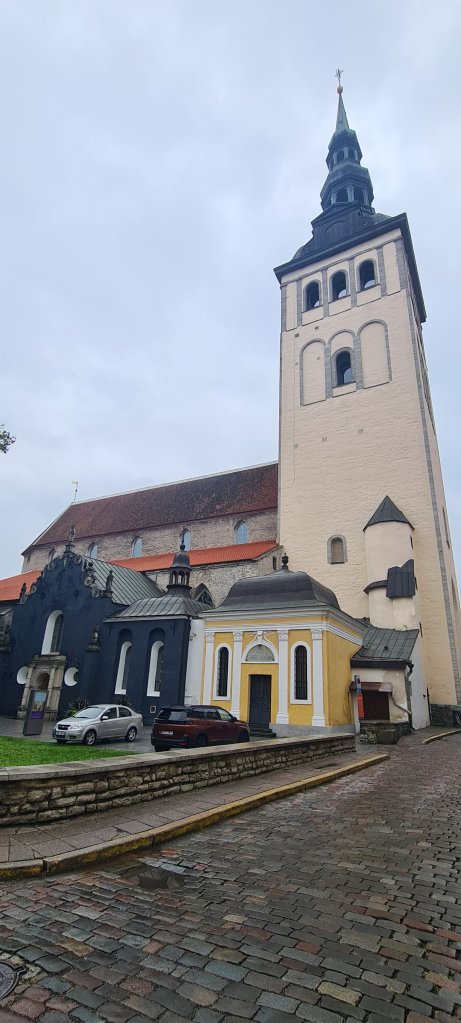
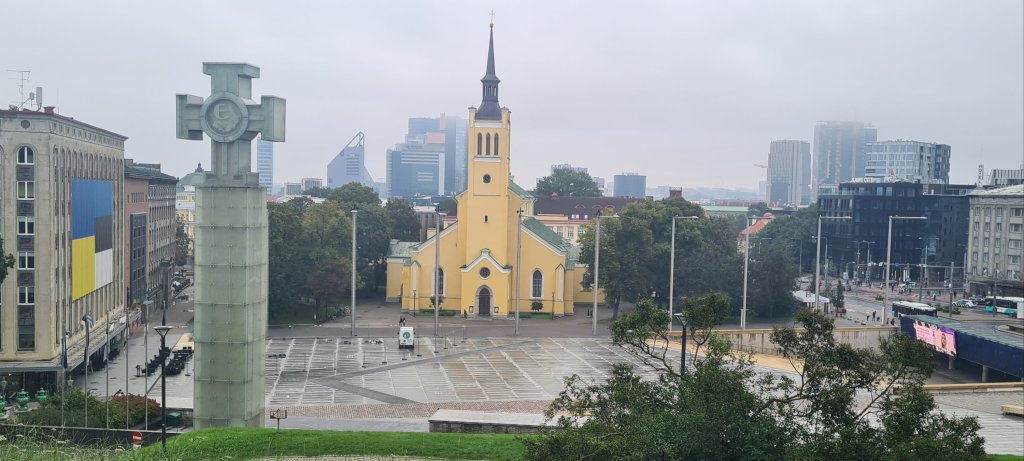
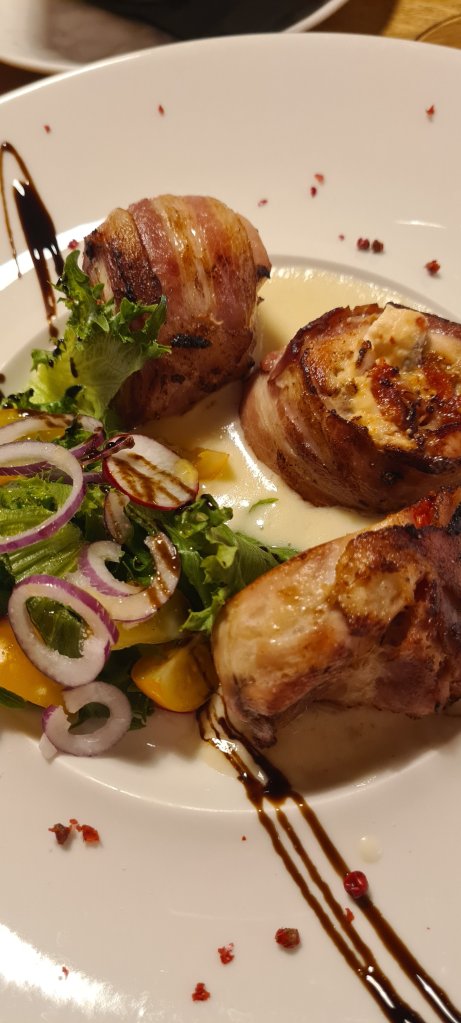
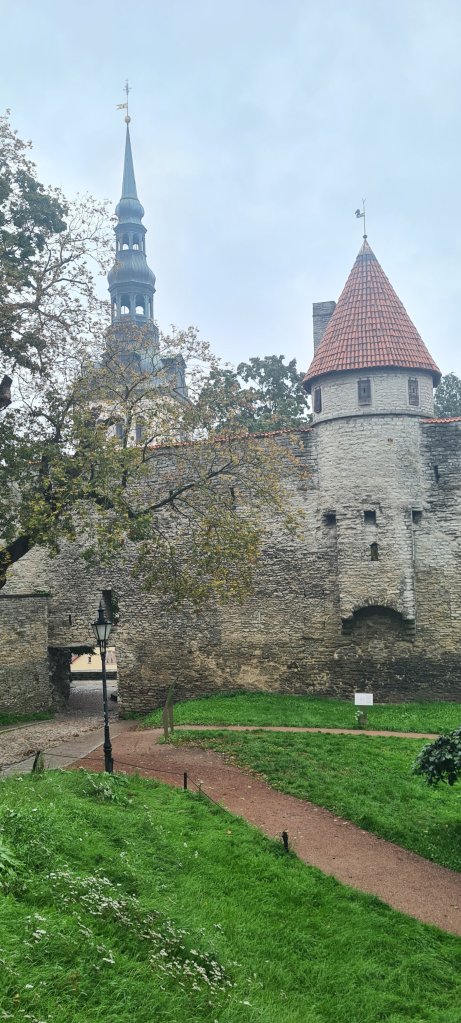
Wet misty first view of the old town wallAlexander Nevsky Cathedral built late C19 as part of the Russanification. During the inter war independence, Estonia planned to pull it down. They didn’t have the funds for such a huge demolition project, so it survived. What was the castle is now the ParliamentA wealthy inhabitant decided there were insufficient statues in Tallinn and commissioned the monks, which now grace the Danish Kings GardenFreedom Square. The cross monument was built early 1990’s at huge expense and the glass sheets need annual repair. According to our guide, this and a public toilet are good examples of early independence corruption. It wasn’t until the turn of the century when Estonia was chasing joining the EU, that corruption was stamped out. EU and NATO were 2004. Euro was 2011. Lots of viewpoints, but oh, so misty in the stair rods. Tallinn actually has a proper hill in the city, making for views and a more interesting layout. Bear in mind, Estonia boasts the highest of the Baltic states mountains … at 318m. To put into perspective, Sca Fell Pike is 978m and Ben Nevis is 1345m.Cold and wet we splashed out on a lovely meal, including pud and a bottle of red!
Our wet weather gear had been no match for the torrential downpours. We were cold and wet. On the way home, a small bottle of brandy was purchased … stiff Irish-ish coffees back at Jez! However, on the 30 minute train ride back to the campsite, we determined to visit for a second day.
Day 2 was sunny. What a difference a day makes. We left shoes etc drying outside Jez. I spent the morning grappling with some admin for one of our rental properties … the site had good wifi. We used gps.mycity again to follow a route to see most of the sites. Whilst we felt one day was just OK in Vilnius and Riga, as we can’t go into museums etc with Corrie, Tallinn definitely justified a round 2.
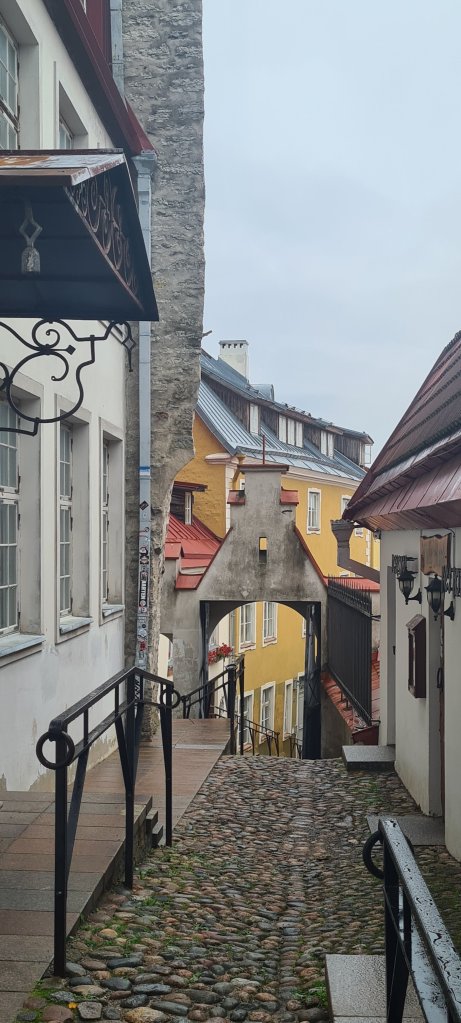
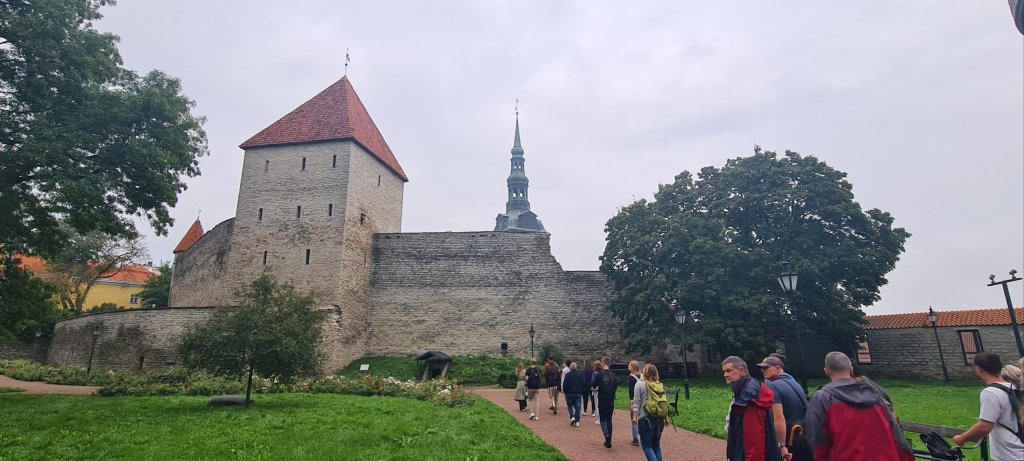
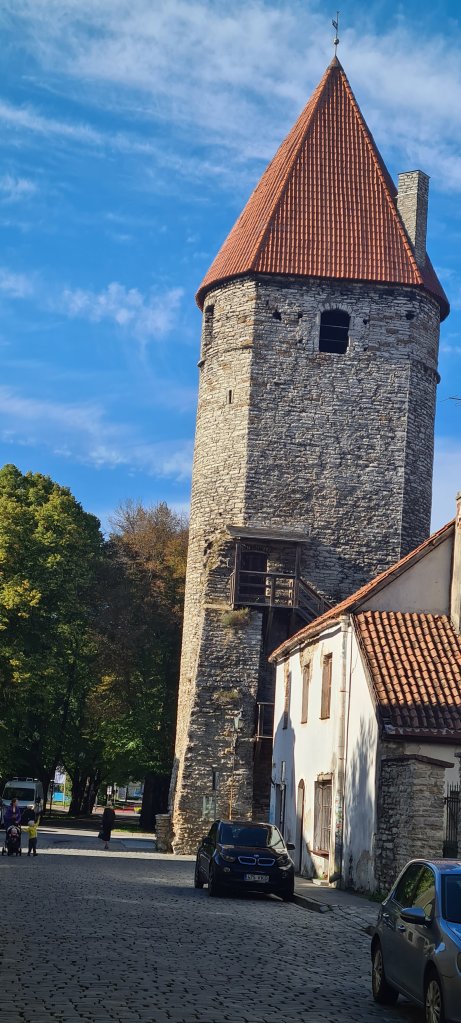
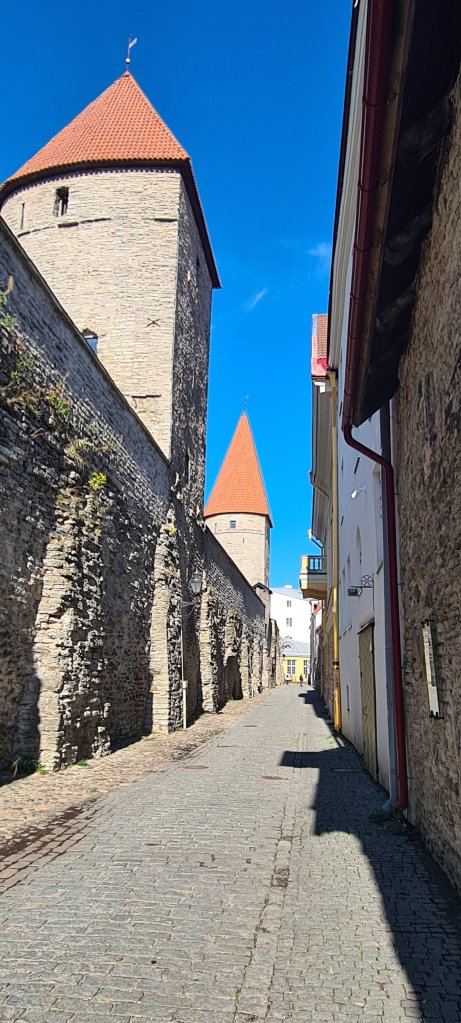
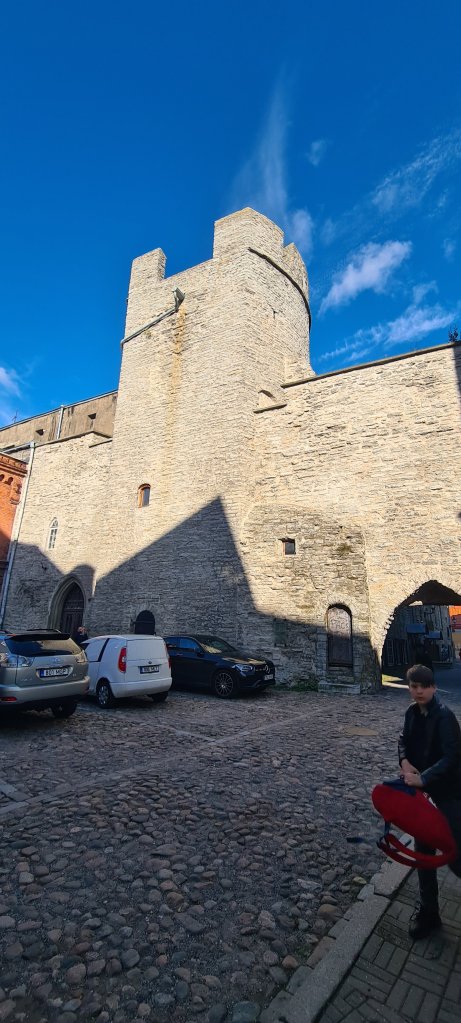
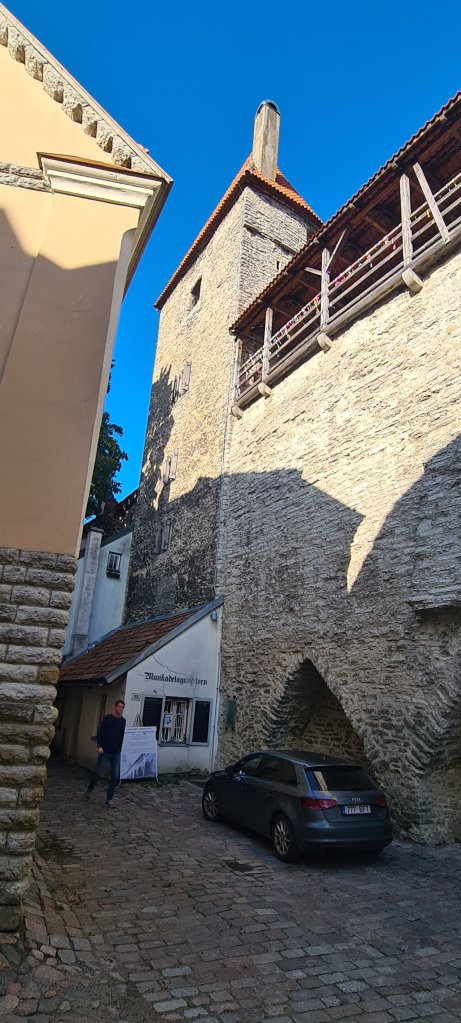
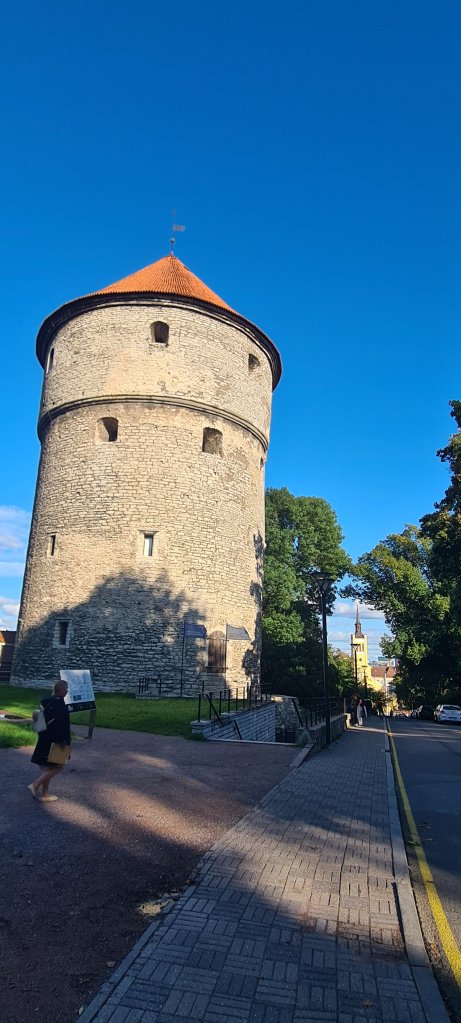
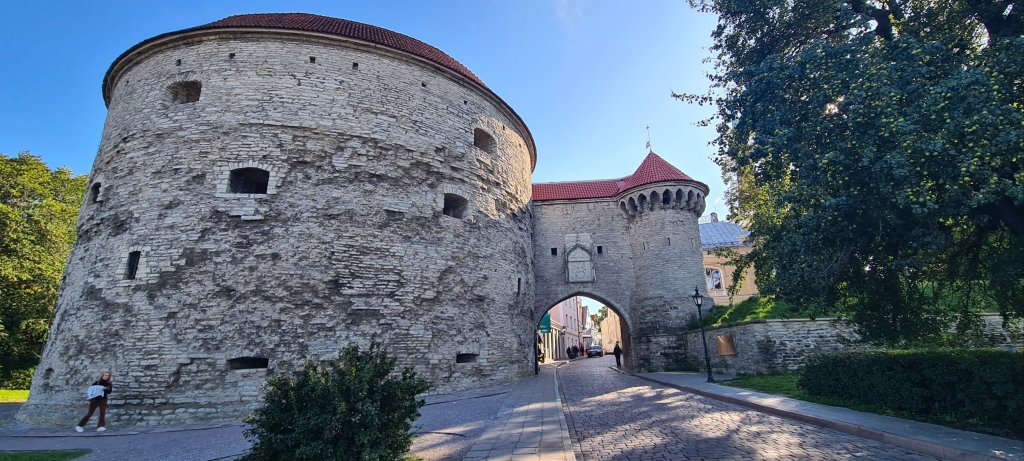
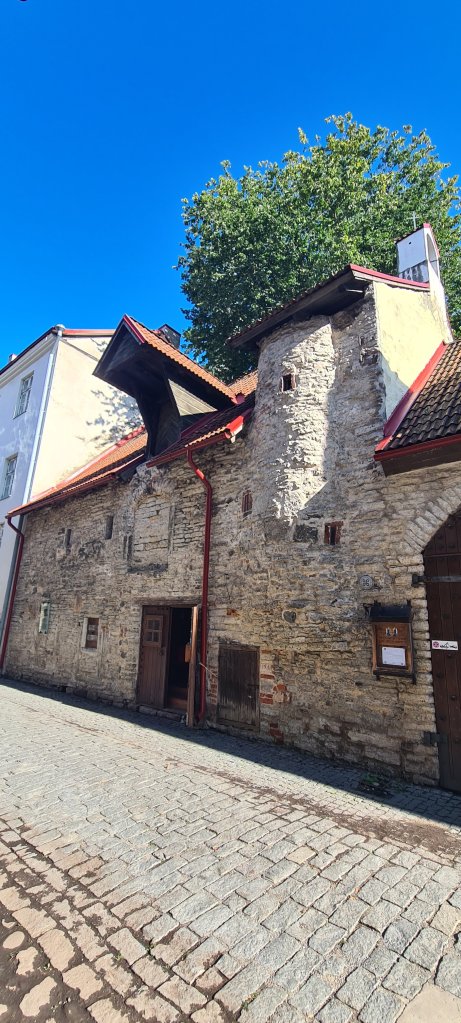
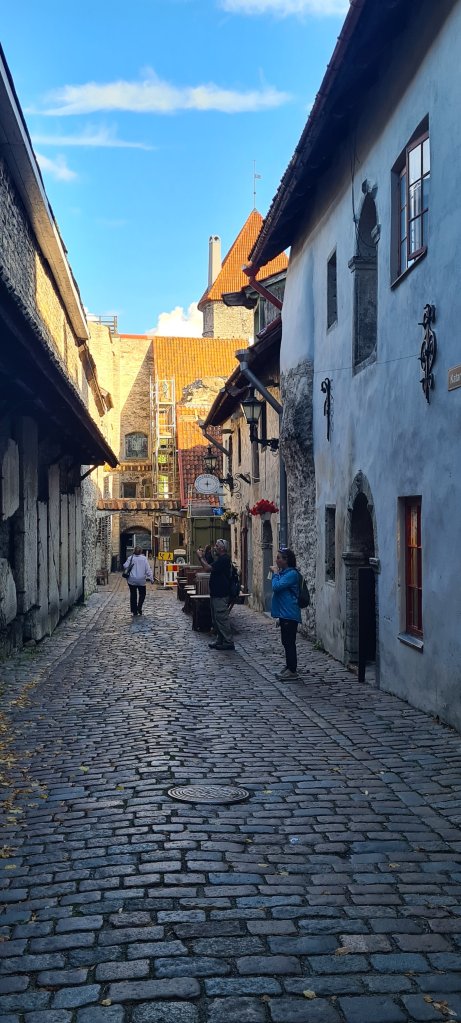
Of 46 defensive towers, 26 remain and a significant section of walls. This one is dubbed Fat Margaret!The Ukrainian Greek Catholic (!) Church with a worshipping community since 988. The house dates back to C13 and as a church since C17. Super narrow St Catherine’s passage, now with craft shops which I managed to avoid. I did come away with Estonian wool from a factory, which was established under USSR occupation. I’m gifting Mother the wool … to knit a jumper for me!!The hotel visible through this gate was where the KGB put all overseas guests. It was reported that every room was bugged. The story goes that a guest tested it from hisroom by saying that for such a smart hotel. It should have paper in the toilet. Toilet paper arrived in 20 mins.
So, just in case you’re wondering which city to pick for a long weekend, our top pick is Tallinn. But wear good shoes as most of it is cobbles.
Leaving Sillamae, we started westward, away from Russia. We’ve felt its presence on the last 2 stops. Russian being the main language, people looking more Russian (whatever that is) and the sheer proximity.
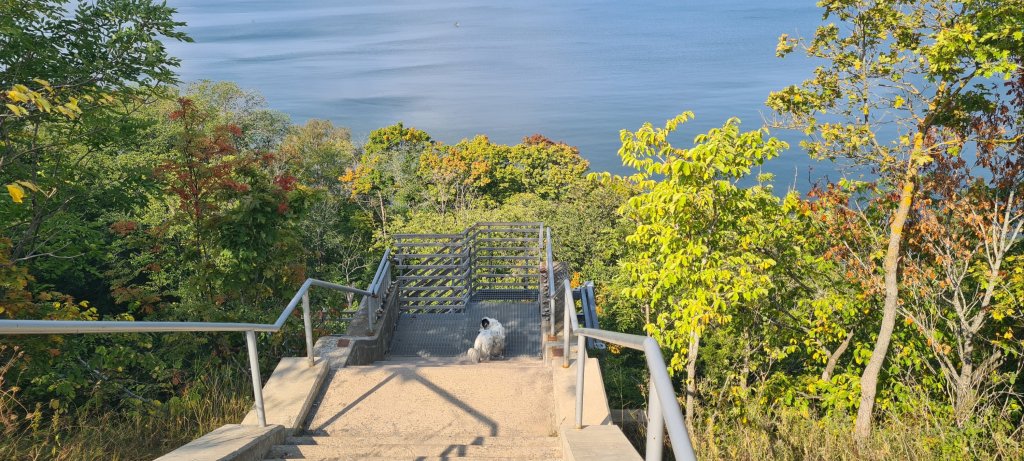
The plan was to stop at two waterfalls in the northern coasts cliffs … the tallest and the widest. The tallest, Valaste, was a damp squib. Actually, not damp at all. It was dry. I’m sure it’s spectacular in winter when torrents race through, or when the spray freezes on trees. J and C declined to descend the 376 steps down to the beach. Followed by the 376 steps ascent. I deserved that ice cream after, even if it wasn’t a very good one.
Water … no fall. And a drop of only 26m. Estonia really is very flat. The tallest mountain is only 318m. And taller than any in Lithuania or Latvia. To put that into perspective, Sca Fell Pike is 978m, and Ben Nevis is 1345m … I did fact-check these!The 376 steps down to the beach. And yes, Autumn is showing in the leaves.
Much of the north coast was a USSR military defence zone. We passed some derelict military buildings later. This area is now national parks, and there are walks along the coast. Despite this, we decided we could live without seeing the widest waterfall!
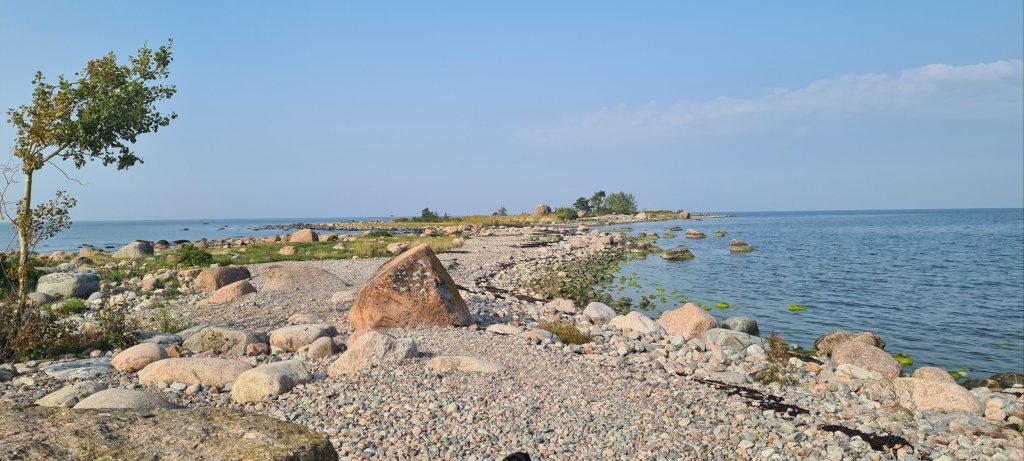
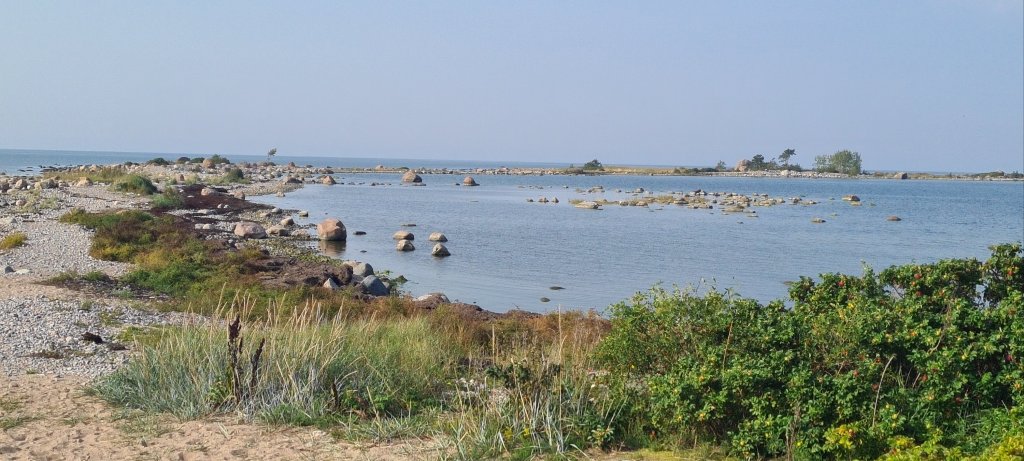
We drove directly to one of the peninsulars of the Lahemaa National Park … the Parispea Penisula. I’m sure pronouncing it Paris-pea must be incorrect. This is Estonia’s most northerly point.
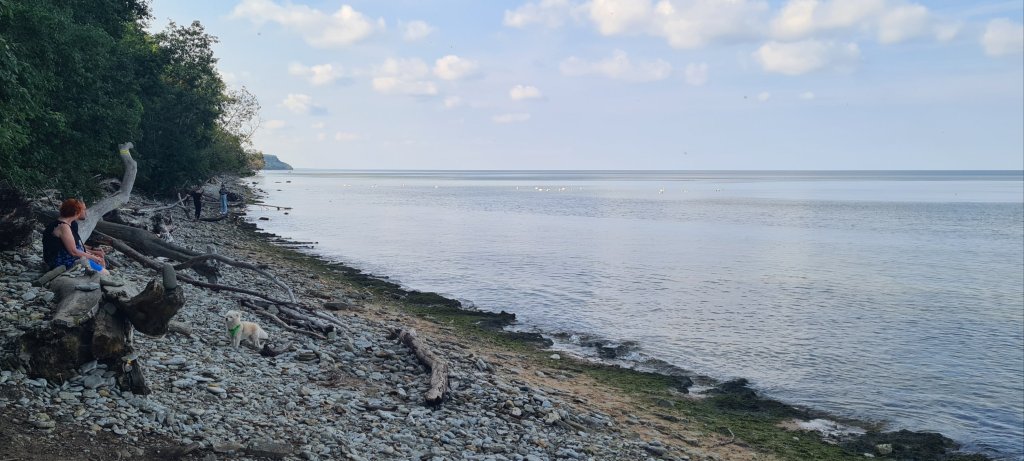
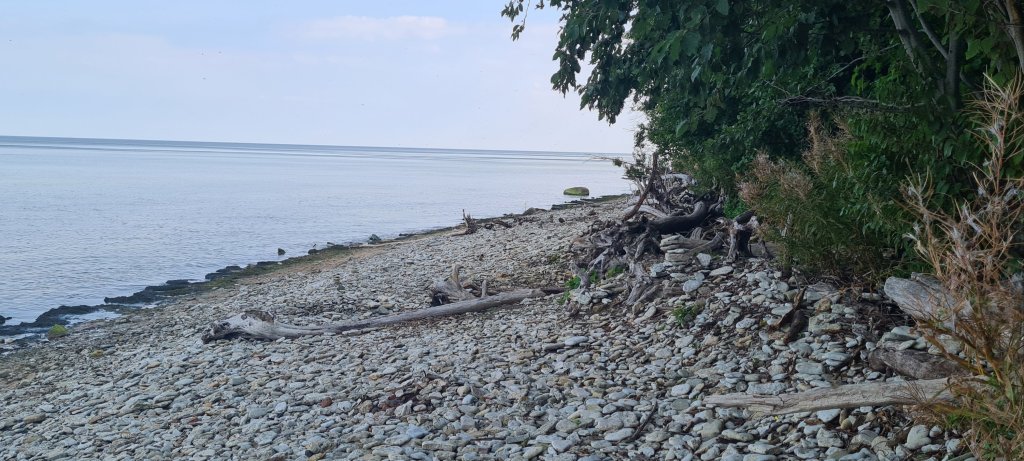
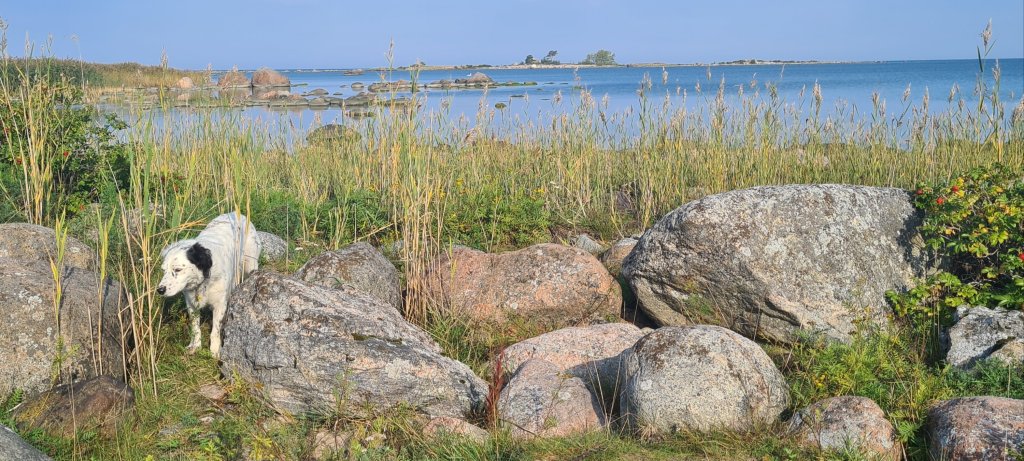
We didn’t much fancy crossing the seaweed, so this was as far as we went. Judging by the cairn on top of a large rock, others had. It was enough for us to jump from boulder to boulder thus far. Lots of boulders brought down by retreating glaciers. A really tranquilplace.Fabulous light quality in the morning
We struck up a a conversation with a young Estonian. His parents had bought their forest house just after independence for about €15,000. He talked about the ‘them and us’ … Russian speakers who don’t speak Estonian. Segregated schools and living areas. The female prime minister had started an initiative to make all kindergartens Estonian speaking to further integration. The flaw is that there are insufficient teachers. We’ve since learnt that the PM is in the mire for loaning her husband money… he runs a company in Russia. I’d read that the government was concerned that Estonians wouldn’t have the will to fight a Russian invasion. His response was one word. NATO.
We stayed there overnight. It’s a permitted forestry camping spot with small bins and compost toilets. The main carpark had about 6 campers in it, so we stayed in the one just a bit back on our own. It was pitch black at night with some fab stars.
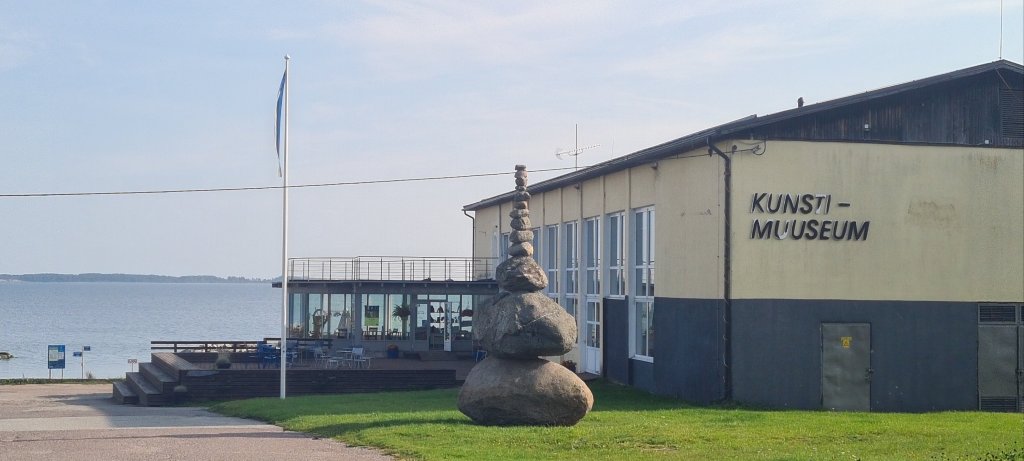
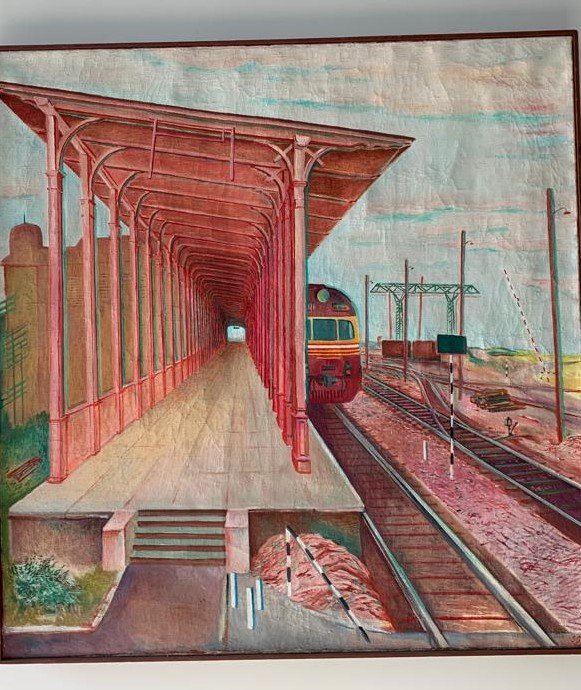
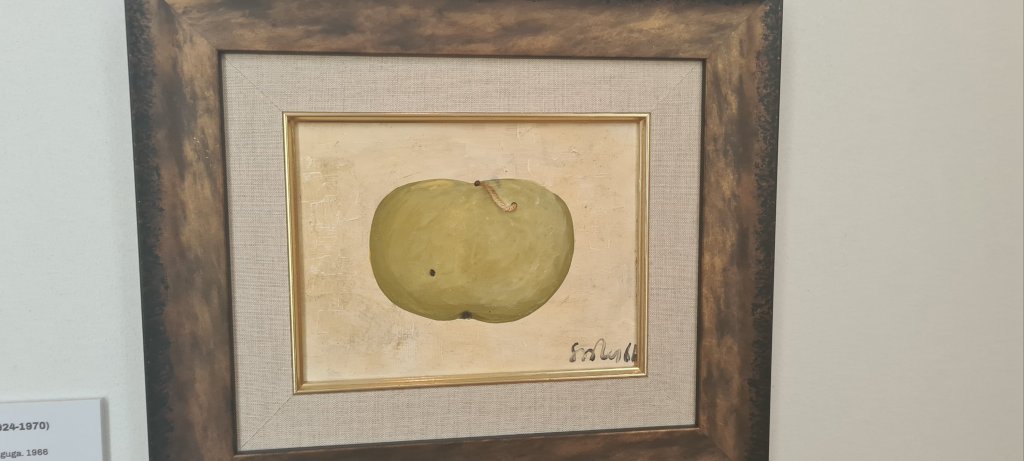
The next morning, we stopped at Viinistu on the P-pea Penisula (chortle). It’s a tiny hamlet with a decent art gallery in a former fish processing collective, restaurant and hotel. All Estonian artists from C18 to present day. It was set up by Jaan Manitski who had fled Estonia as a baby with his parents to Vienna, Finland, and then Sweden. Made his fortune as the financial manager for ABBA! He lived in exile until independence. He was a mushroom farmer, co-owner of a daily newspaper and politician – Minister of Foreign Affairs 1992. He established the art gallery in 2003. Would like him at a dinner party!
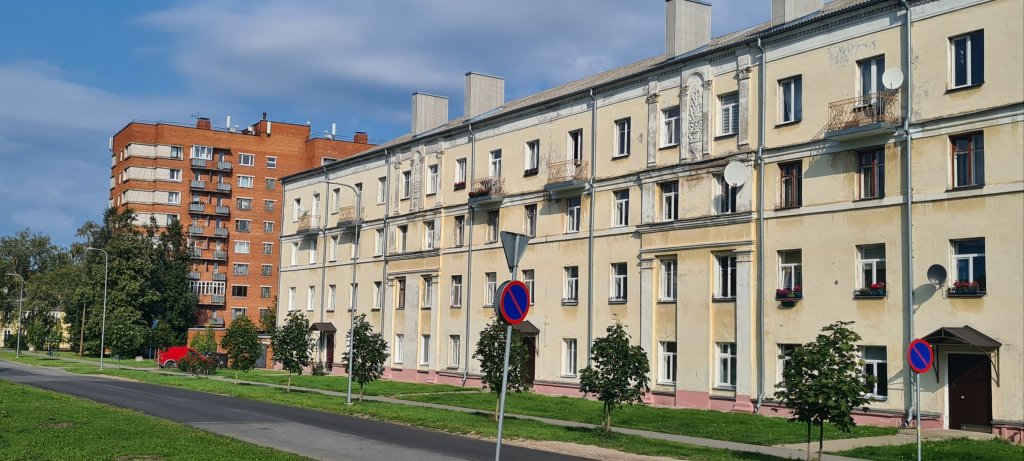
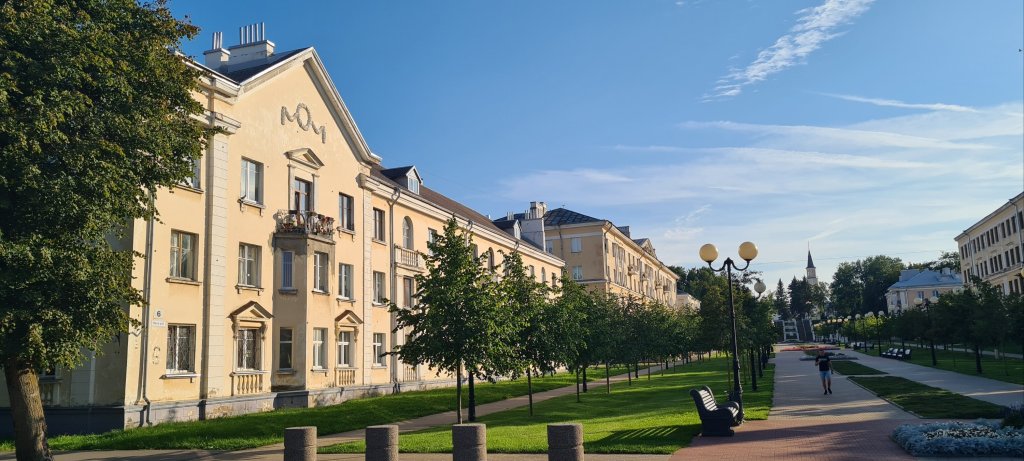
We drove though, and then had a wander through a town that didn’t exit. During the Russian occupation, since WWII, it was a secret town. It didn’t even appear on maps. Sillamae (Silly Me) had long since been a mining town. The Swedes had extracted ores and then oil shale. The Russians discovered that the oil shale contained small amounts of uranium. It was developed to become USSR’s 3rd largest uranium mine and processing plant. But they needed a workforce. 5000 Russian political prisoners built the mine and 3800 Baltic Prioners of War (they’d served in the German army) built the accommodation. Blocks of apartments for workers and villas for management. All was designed by Russia in the Stalinist Neo classisist style in the 1940s and 50s. Wide boulevards with decorated facades. As the town grew, further apartment blocks in later Russian architectural styles were built. A Kulturhaus was built. The town hall was built with a spire to make the centre look more like a normal Estonian village. No churches as Communist Russia saw religion as a threat. Sillamae was described as a gilded cage for its residents. They couldn’t leave and people couldn’t visit. A large portion of the population was Russian, moved in to work at the mine. And it still feels very Russian.
When Estonia gained independence in 1991 the uranium extraction and processing stopped. Other precious metals are now mined by an America company. But the EU has had to step in to contain the uranium radio active waste … radiation levels are within acceptable levels … for now!
Prometheus holding an atom aloft.
We wandered in from our parking and had a few drinks. Hard to find bars or restaurants in the centre. Even the shops seemed camouflaged.
Our overnight … disturbed a little by air horns of trucks from the mine.
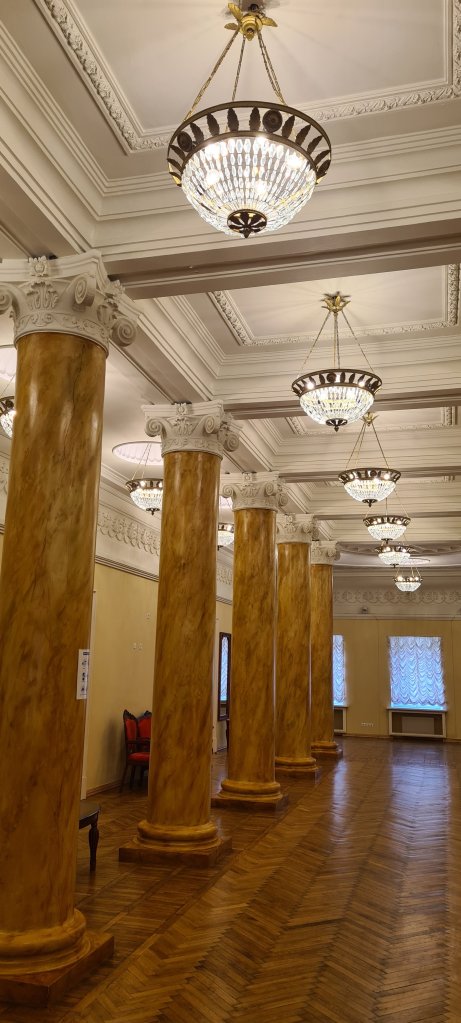
The next morning we wandered back into the centre to visit the museum, housed in the nuclear bunker under the Kulturhaus. It was shut, but the Kulturhaus was open. A Russian speaking member of staff showed me around using Google translate. After independence, the director of the building protected the building from the de-Russianising that was prevalent.
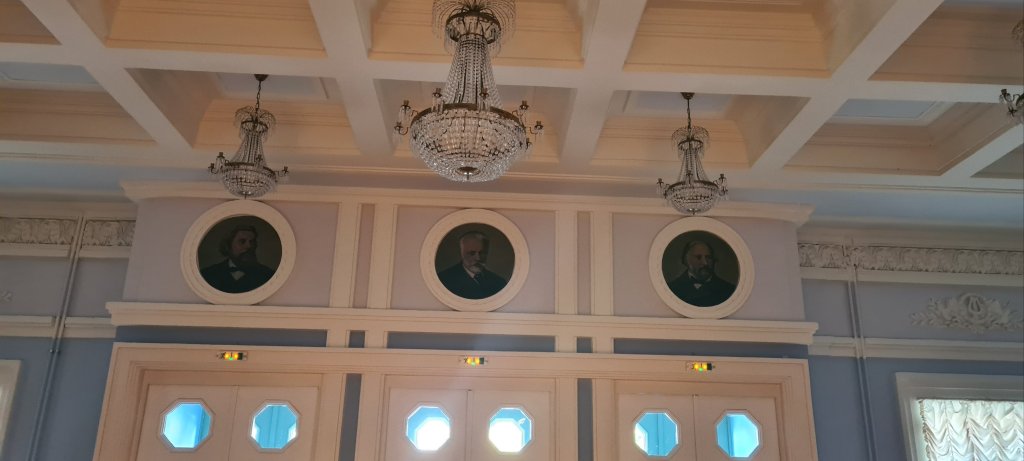
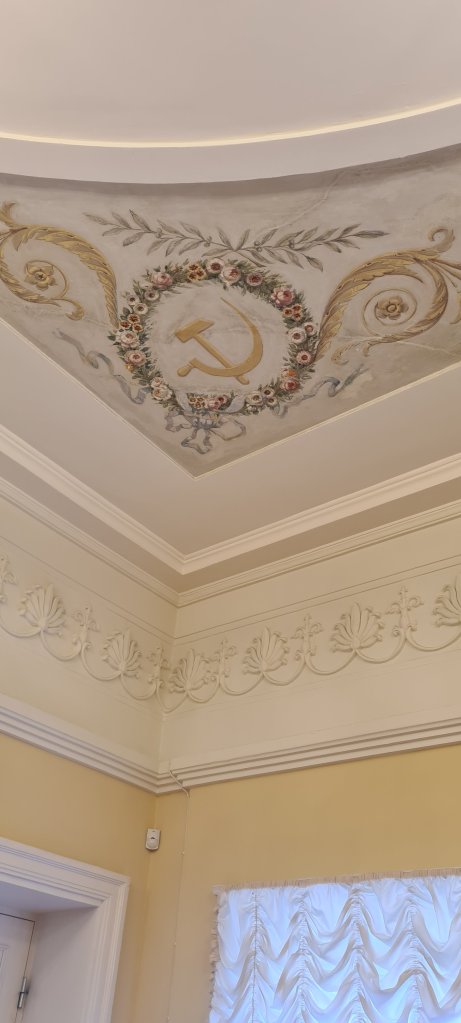
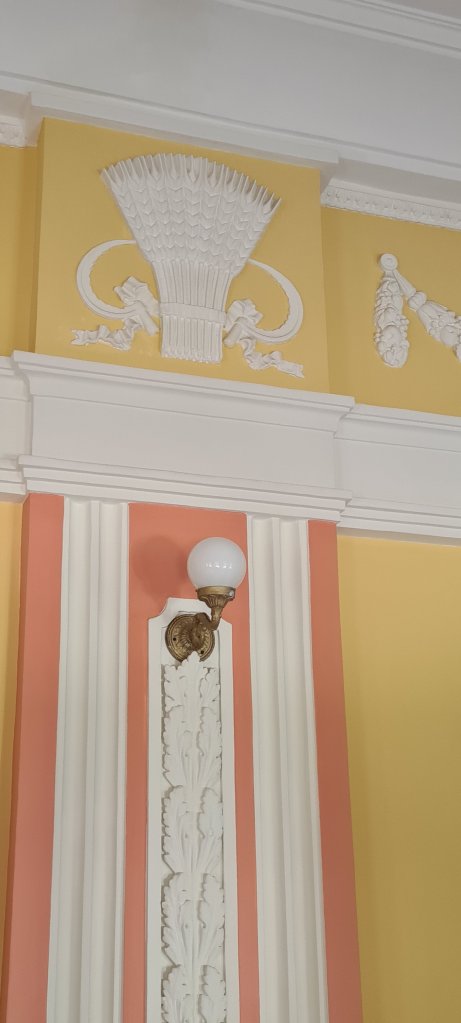
Exterior of the Kulturhaus Fabulous huge chandelier from Moscow. Lowered mechanically for cleaning and changing bulbs. A few of the lobby portraits of famous Russian writers and composers Russian symbols in the decorationBright colours were used to cheer folk post war.The 1940s cloakroom still in use
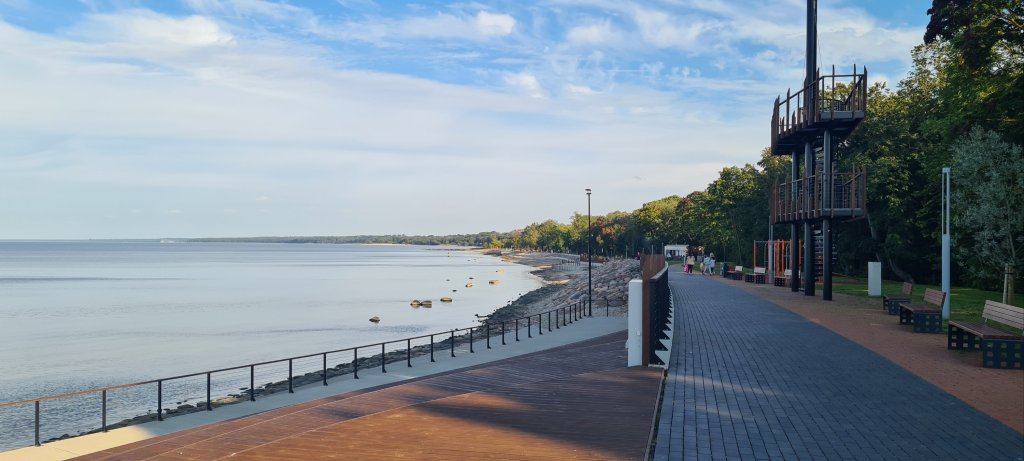
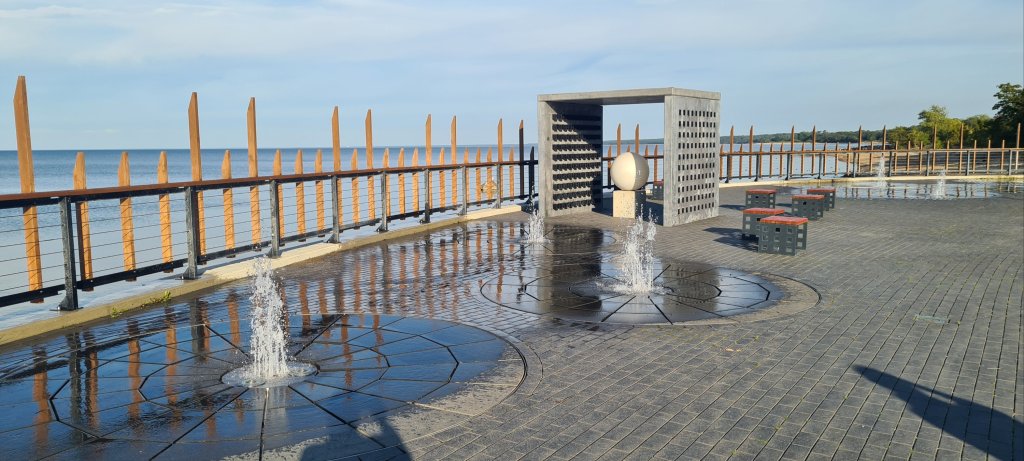
Sillamae is trying to reinvent itself as a seaside / tourist destination. A lot of money has been spent recently on the sea front promenade.
Sports facilities, bars, bbqs and beach access along the new promenade
We set off on the bikes to learn about the Old Believers. We arrived at the first museum. It was shut. At this point, I realised I’d not brought the bike lock keys. We’d locked the bikes up, but now no way of unlocking them. Fortunately, it was under 5km for me to march back to Jez. I drove back to J, Corrie and the bikes! With the keys!!!
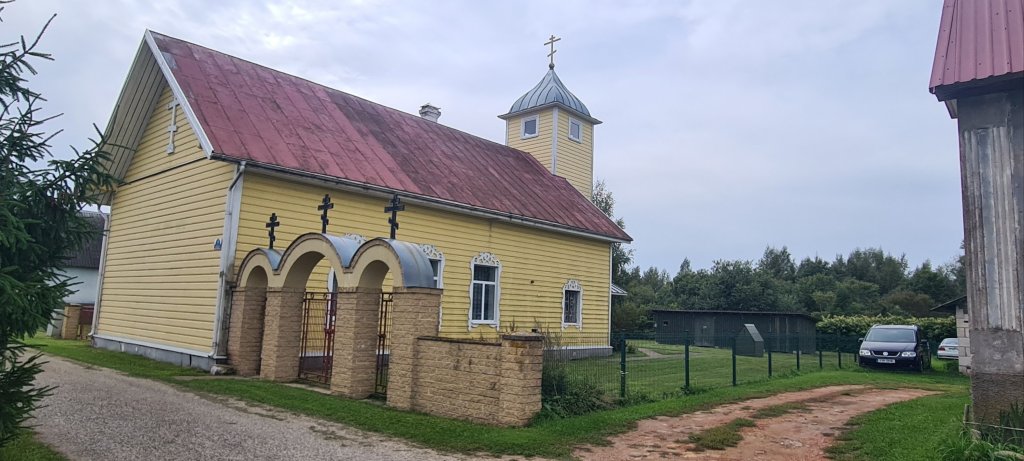
The other museum was also shut. So were both the churches. There were (living) family members tending the graves in the cemetery, so we didn’t like to go in. Shut, shut and shut.
However, a restaurant was open. Let’s have lunch then! When we were full time in the motorhome, Sunday was cleaning and go out for lunch day. Well, we managed half of that.
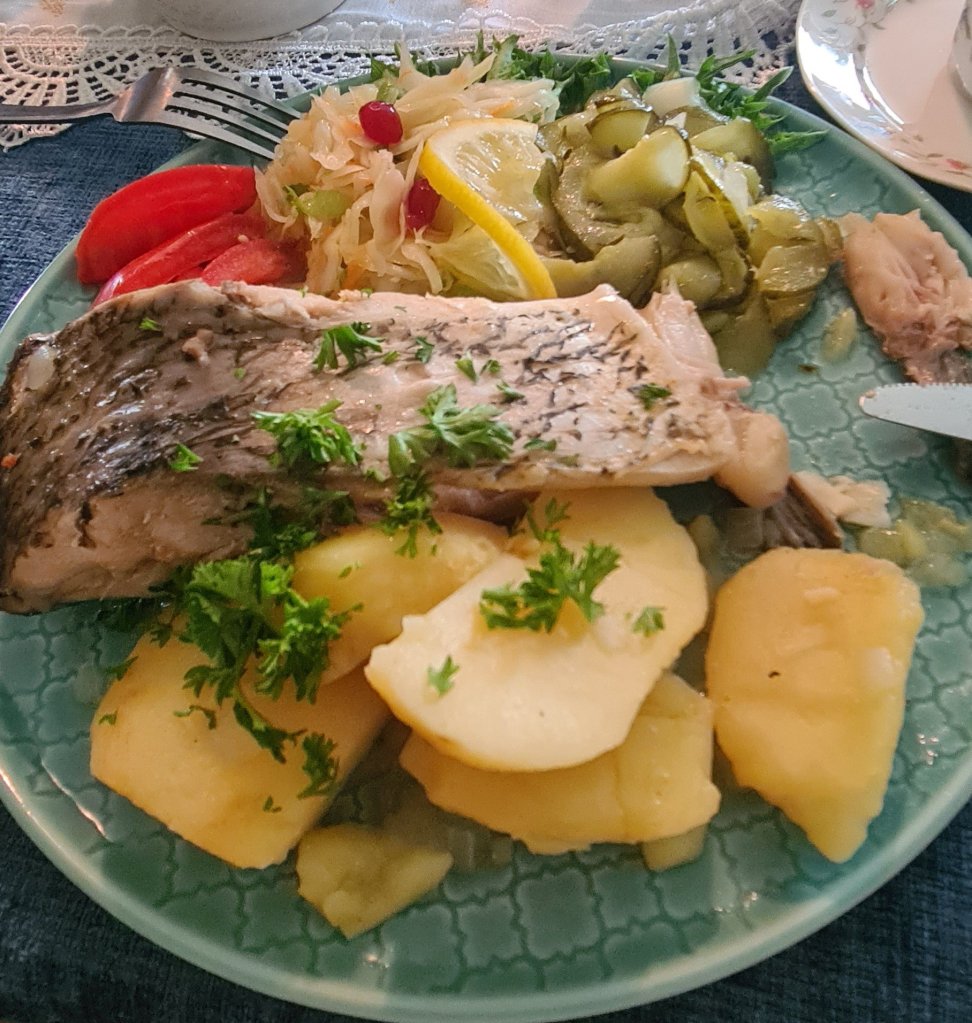
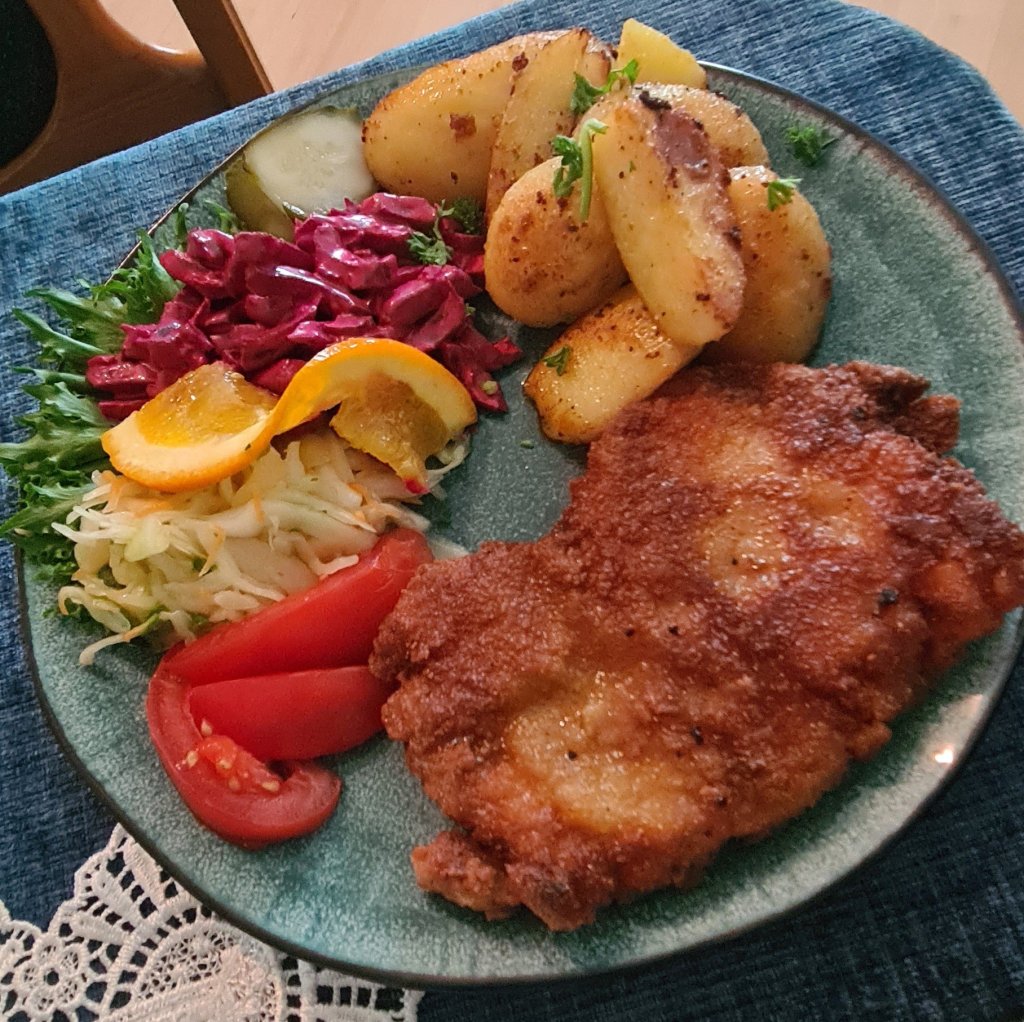
The Old Believer’s were fishermen and renowned for pungent onion growing. You can guess what a lot of the menu was! I had fish soup followed by bream. J had smoked fish salad and then chicken. All very good, although homely.
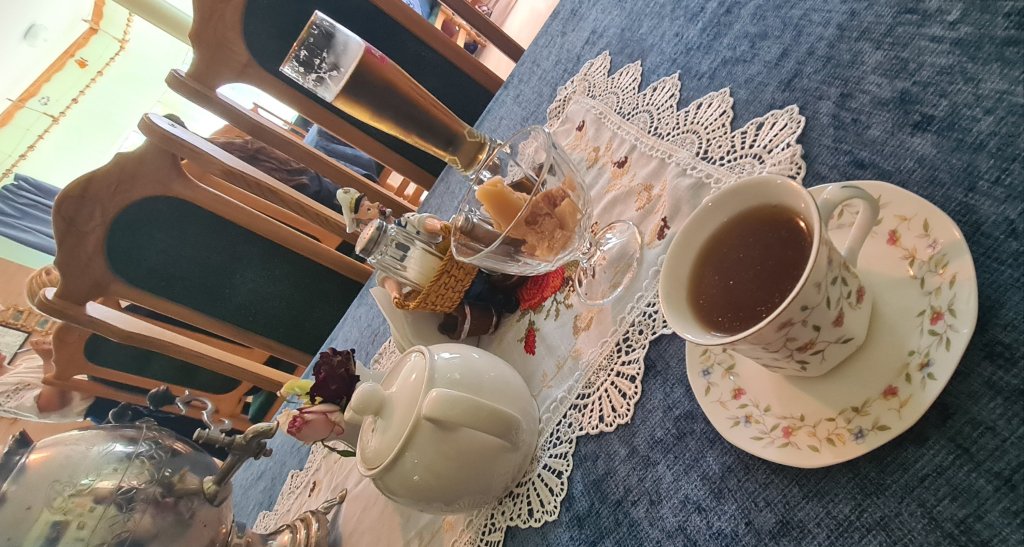
My Old Believers tea was the most interesting. Served black, with a sugar and cream tablet sweetener. Essentially … fudge. I noticed I wasn’t the only diner eating it!
At least the guidebook was able to fill in some information about the Old Believers. During the 1600s, Russia adopted the Greek Orthadox religious practices. The changes seem minor to us. Things like how many fingers are used for the sign of the cross. Those who refused to adopt the changes were persecuted. So they left and made their home on the shores of Lake Peipsi. They made their living from fishing and selling onions. We saw many folk selling bags of onions along what is called the Onion Road. This really is the most ‘foreign’ place we have been this trip.
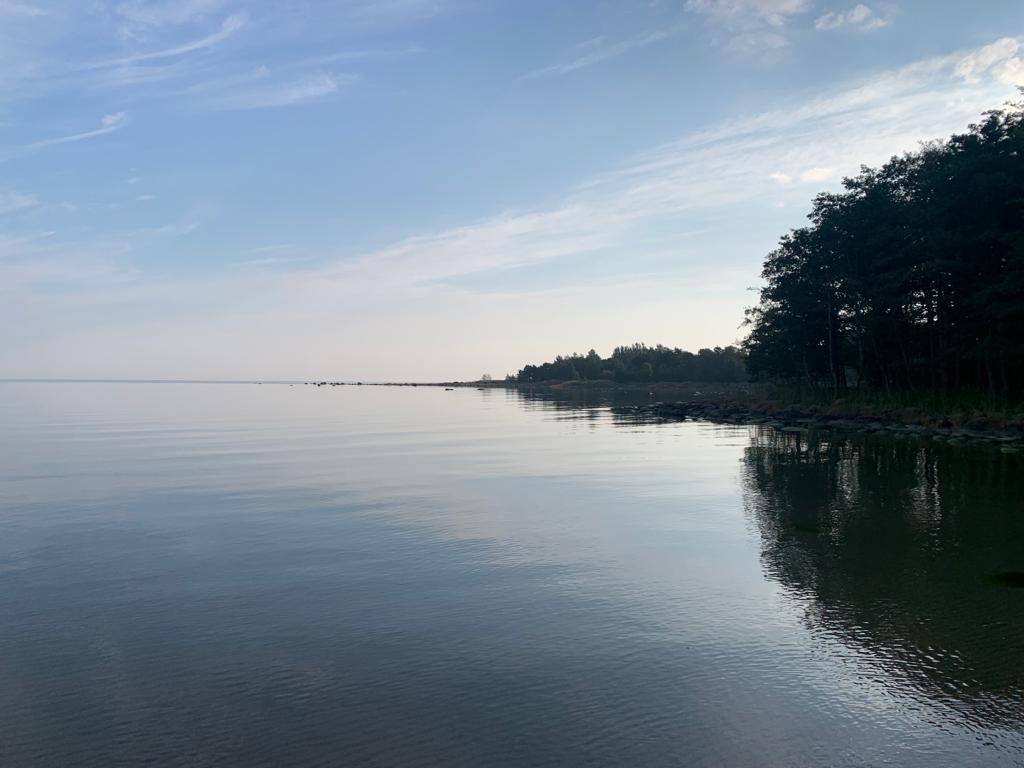
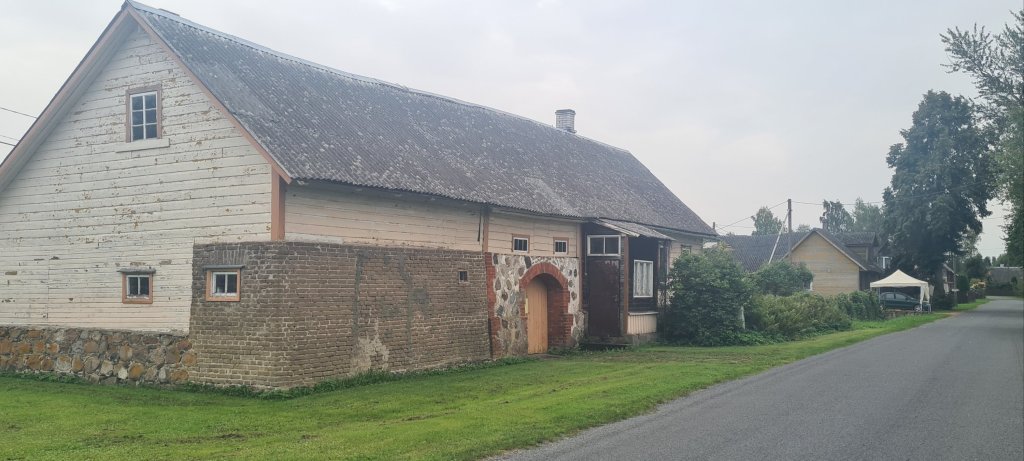
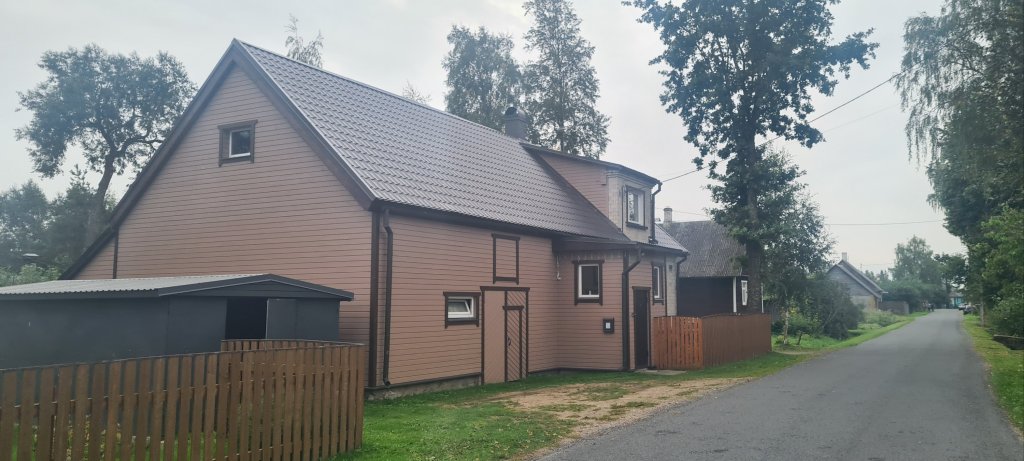
Old Believer’s Church. Shut. Mostly single storey wooden houses. View of Lake Peipsi. The Russian border runs through the middle. Only about 30 km across to Russian.





















 Clune Gap Years