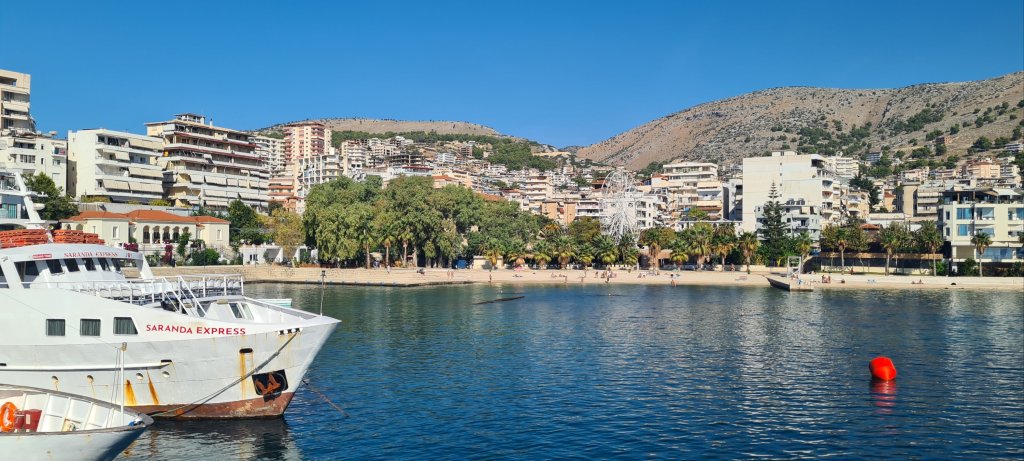
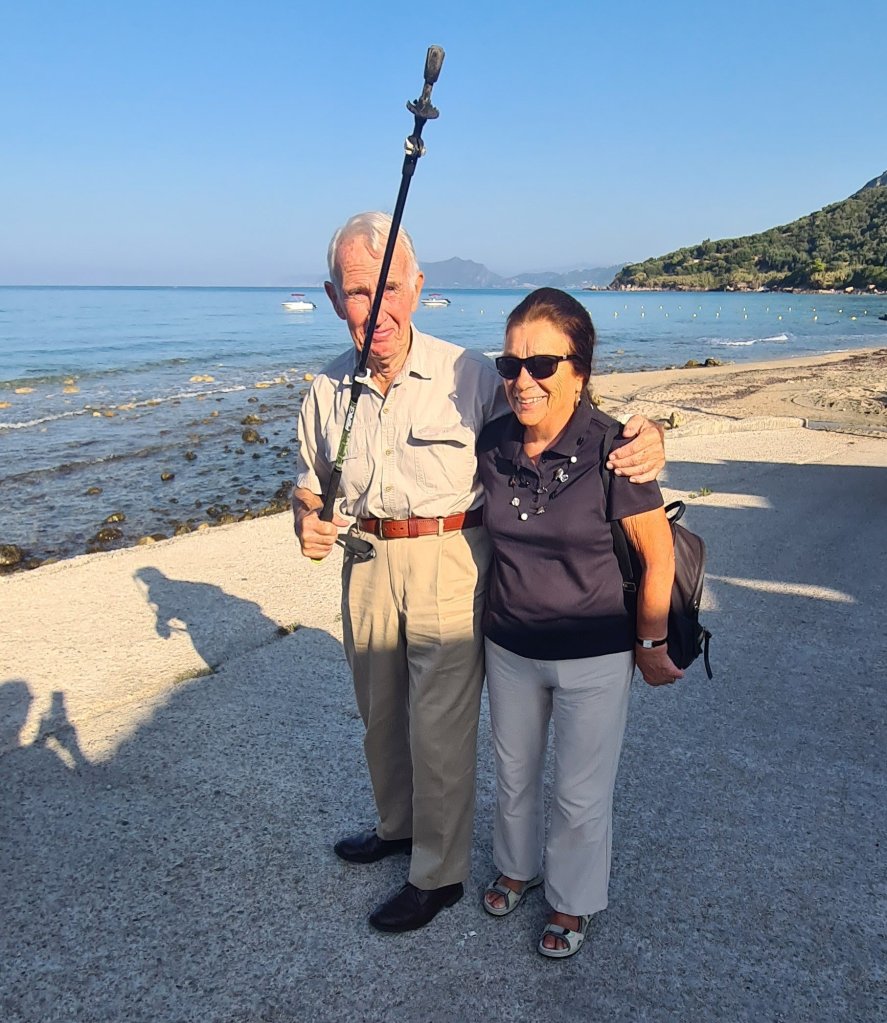
Up early to leave Gjirokaster as we had the Sarande to Corfu ferry. A house booked for 10 days and collecting the Aged Ps from the airport at 10 p.m.
Leaving CorfuArriving CorfuFirst stop. Busiest Lidl ever grrView from the house. No garden as given over to growing produce
The over effusive host had left us lots of goodies, tomatoes, cakes, juice and cakes, but not means of sweeping the floor or cleaning surfaces. And we had to empty and remove the roof box to fit in the off road parking. Fortunately, 3 bed house so the 3rd has become a storage room. At least the beds are comfy.
Corrie’s Post
Corrie ‘ere – again – I’ve not posted for a while – been busy relaxing and keeping an eye on K and J…..
Three months on and we still miss Oscar a lot, but time moves on…
My take on PELL – Poland Estonia Lithuania and Latvia ? In Poland you must mind your p’s and q’s or v’s and w’s…. Thus vodka is wodka etc – and speaking of gin, K and J had to go to a “Alkohole” to buy their alcohole. They decided to visit a steep hill – stuck me in a gondola – plastic bubble 300 feet in the air and wobbling !
In Polska no cats to chase but lots of nervous dogs and owners. To buy stuff you spend lots of slotty zlotys ! But lovely to see Simon and he was our tour guide for a bit. The Park people wouldn’t let me in to hear Chopin !
Some general Corrie observations – one of K’s favourite sayings is “I can’t see diddly squat” So – if she squats on her diddly she can see better ! I don’t think I have a diddly…..
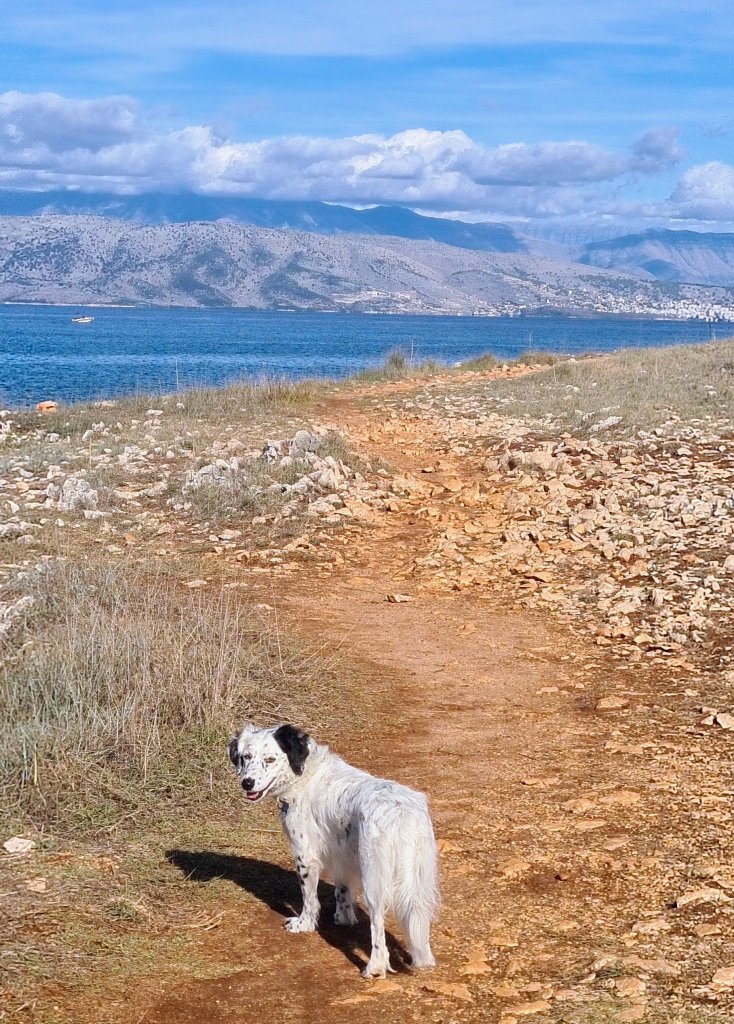
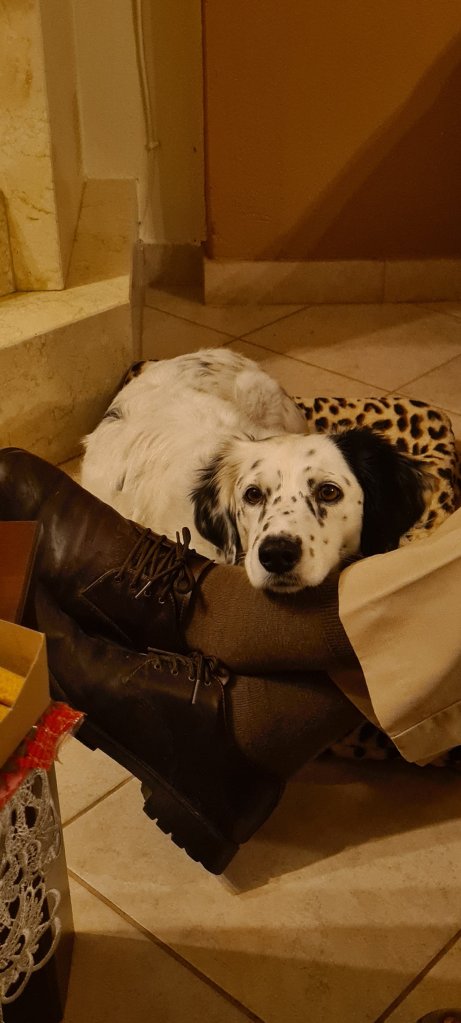
On walks, I now get extra treats – the Oscar share – oh and the end of ice cream cones…..
Next post on ELL, Albania and Corfu – I’ve got some catching up to do – but first I need to relax – K says I’m lazy – cheek ! She lay in bed today until 10:00 am !!!
Efharisto and paracolo…..
END WOOF!
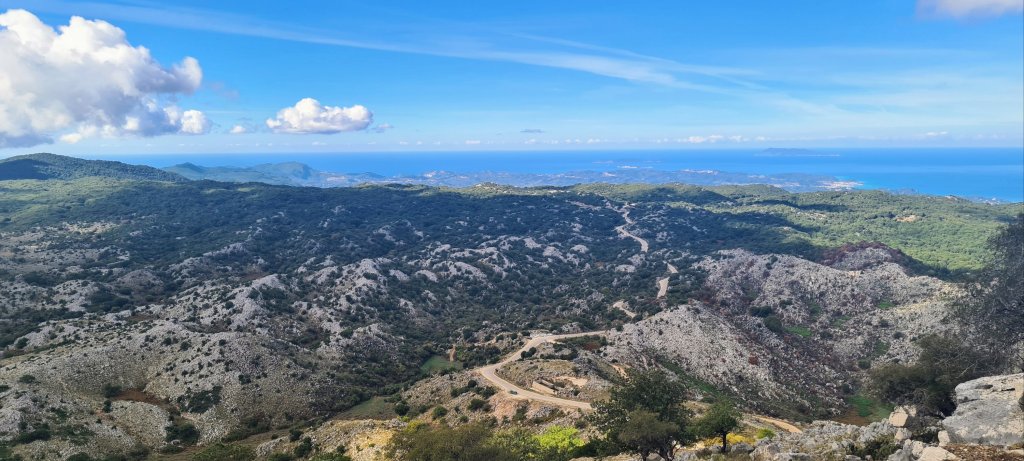
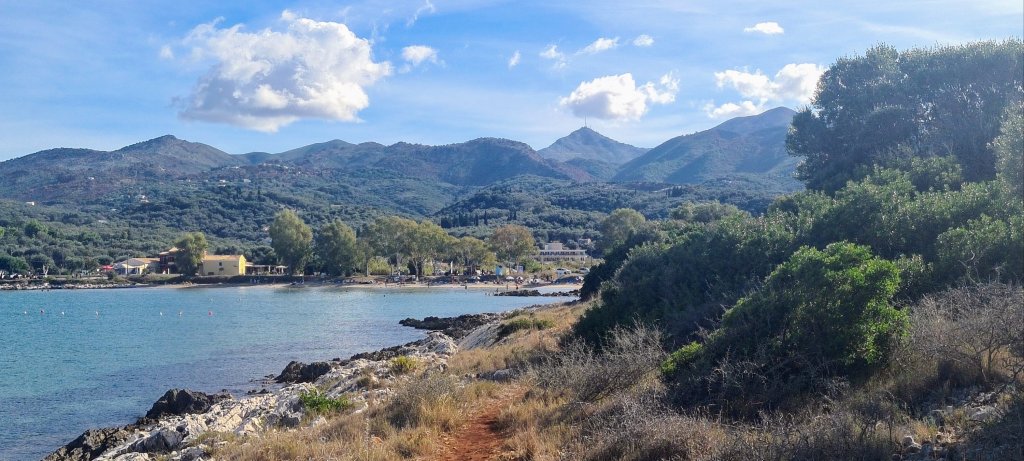
We’ve been pootling out and about. Crete is 14 times bigger than Corfu. So, it feels small. Even with 2 rain days, we will have done the main sights in our 10 night stay. It is lower, lusher and greener than Crete and we love the cylindrical Cypress trees. Some coasts have many pretty and small bays. And we been surprised that we haven’t seen many huge hotel resorts … more low level apartments. Except on the SW, where there are some very tired looking resorts.
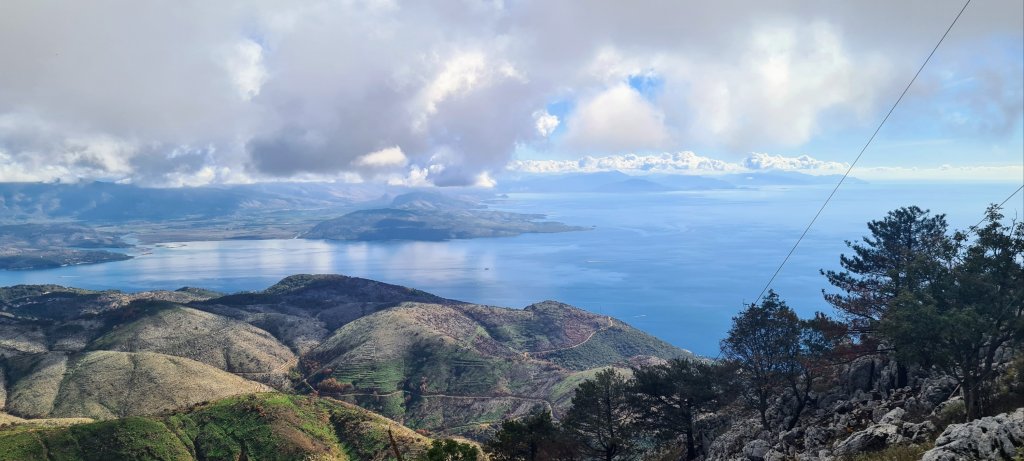
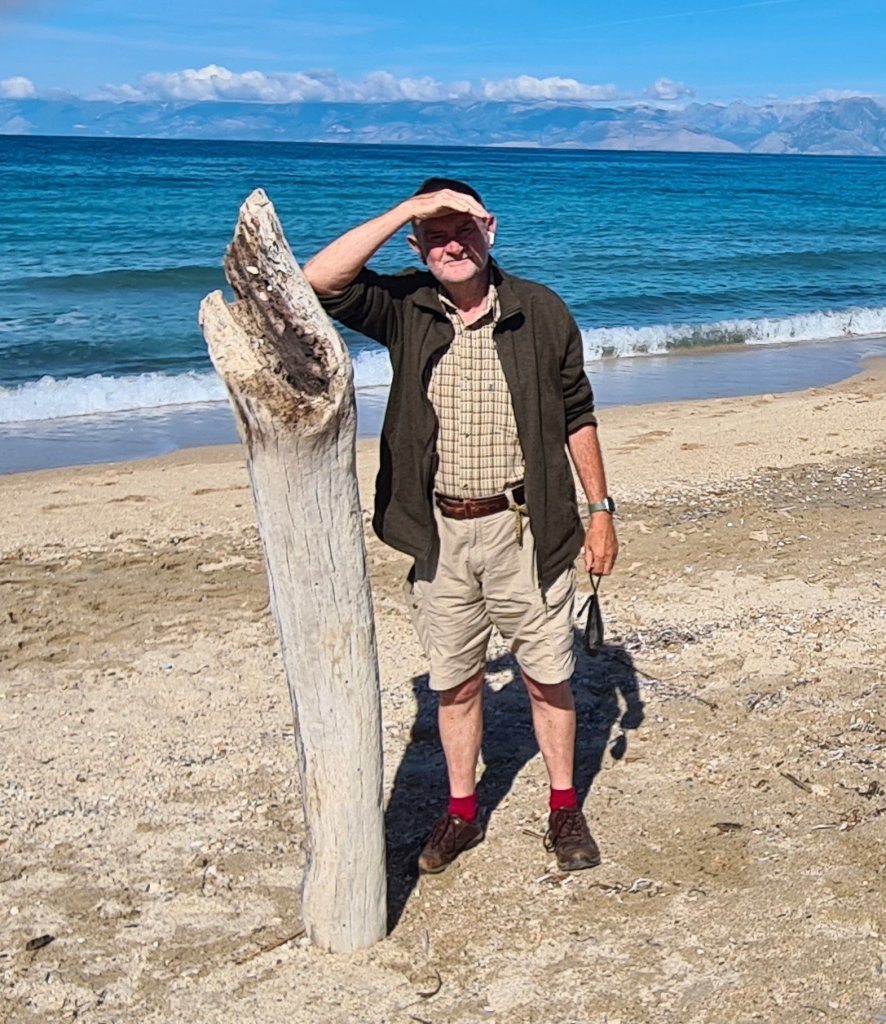
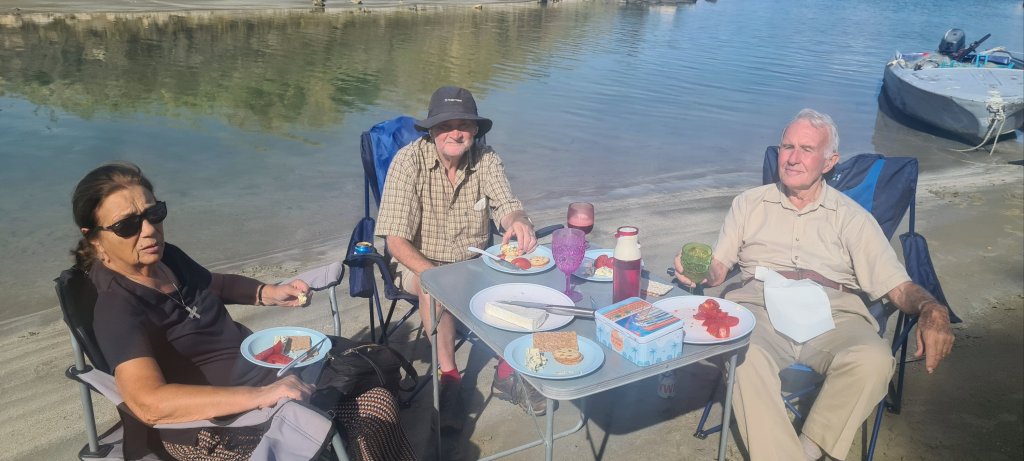
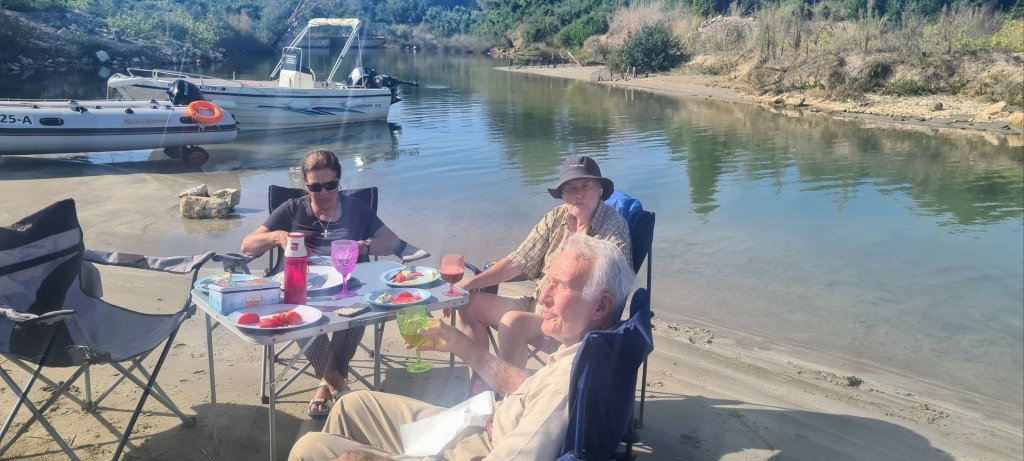
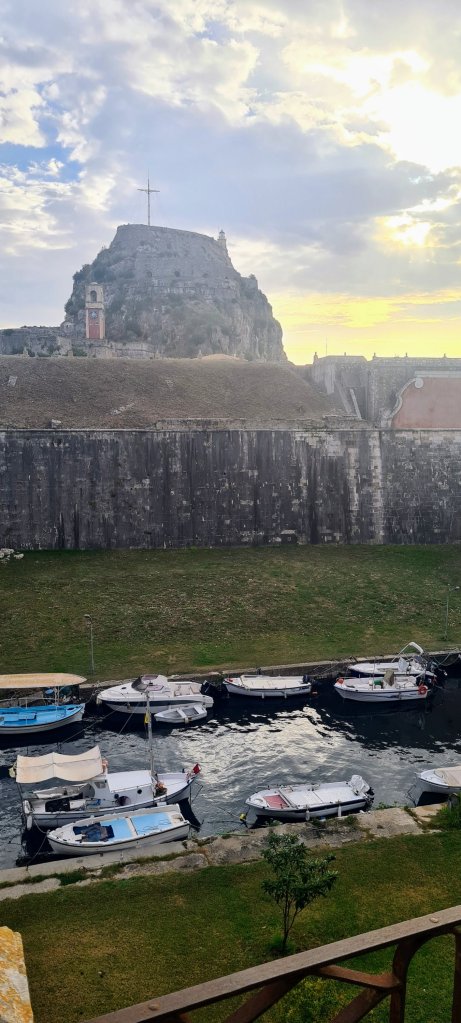
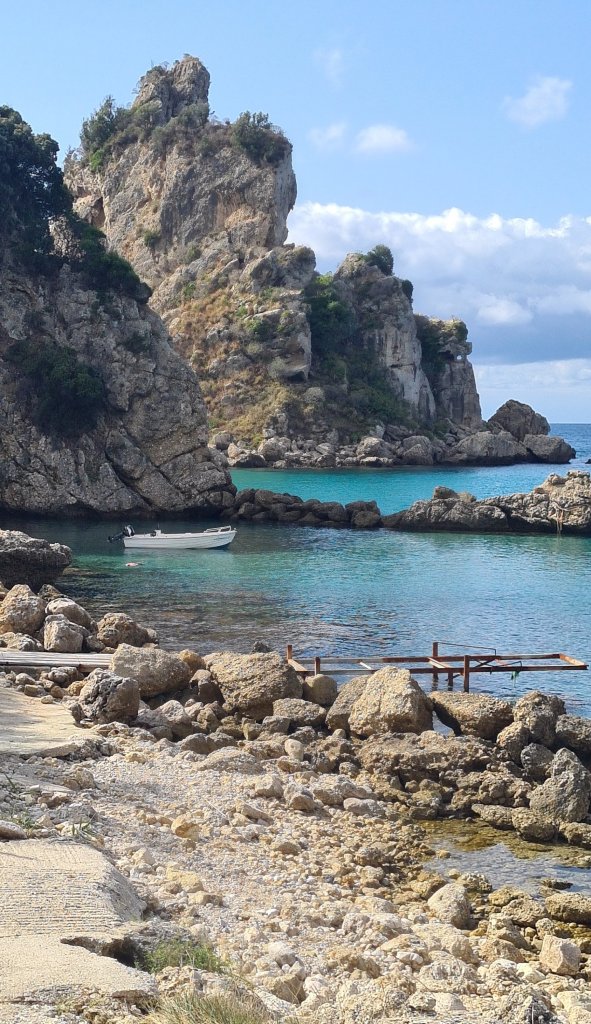
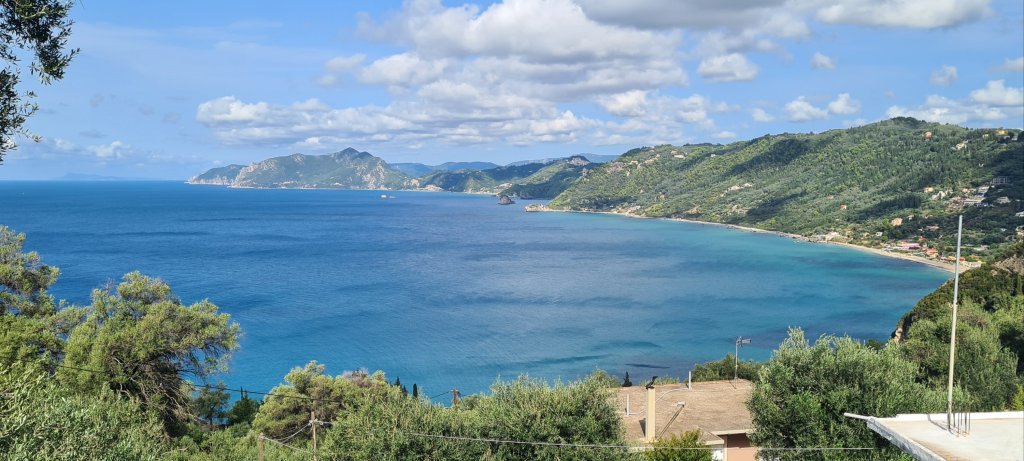
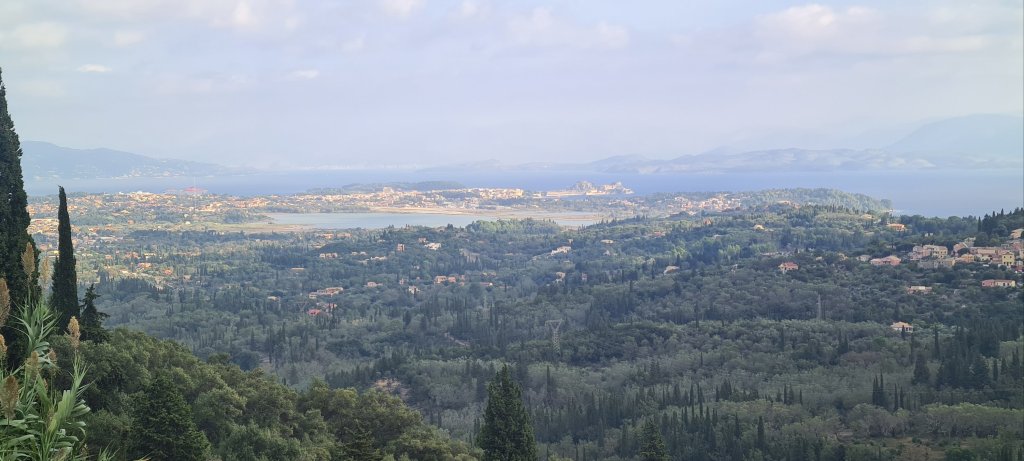
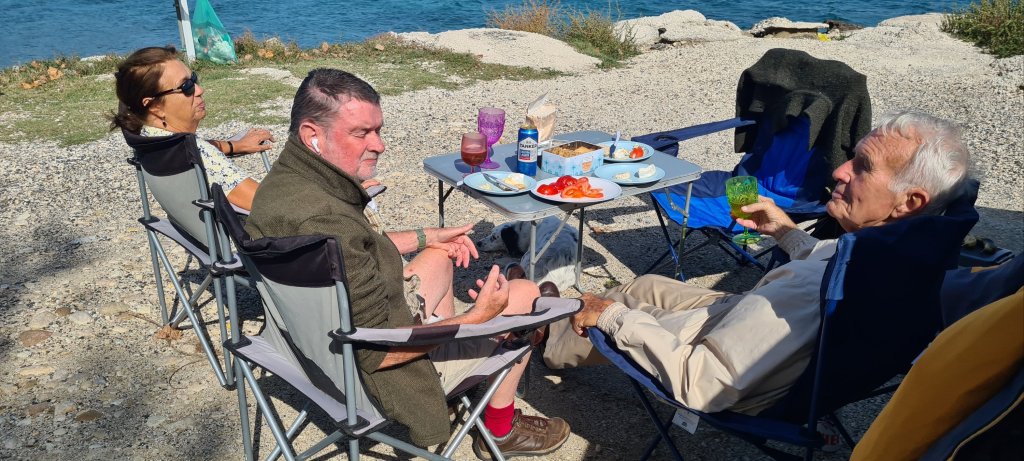
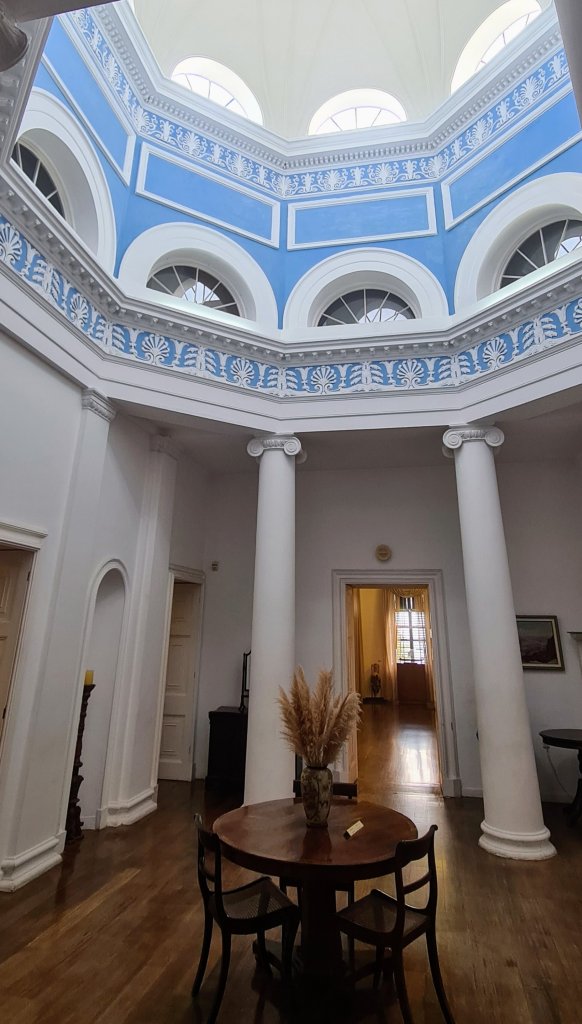
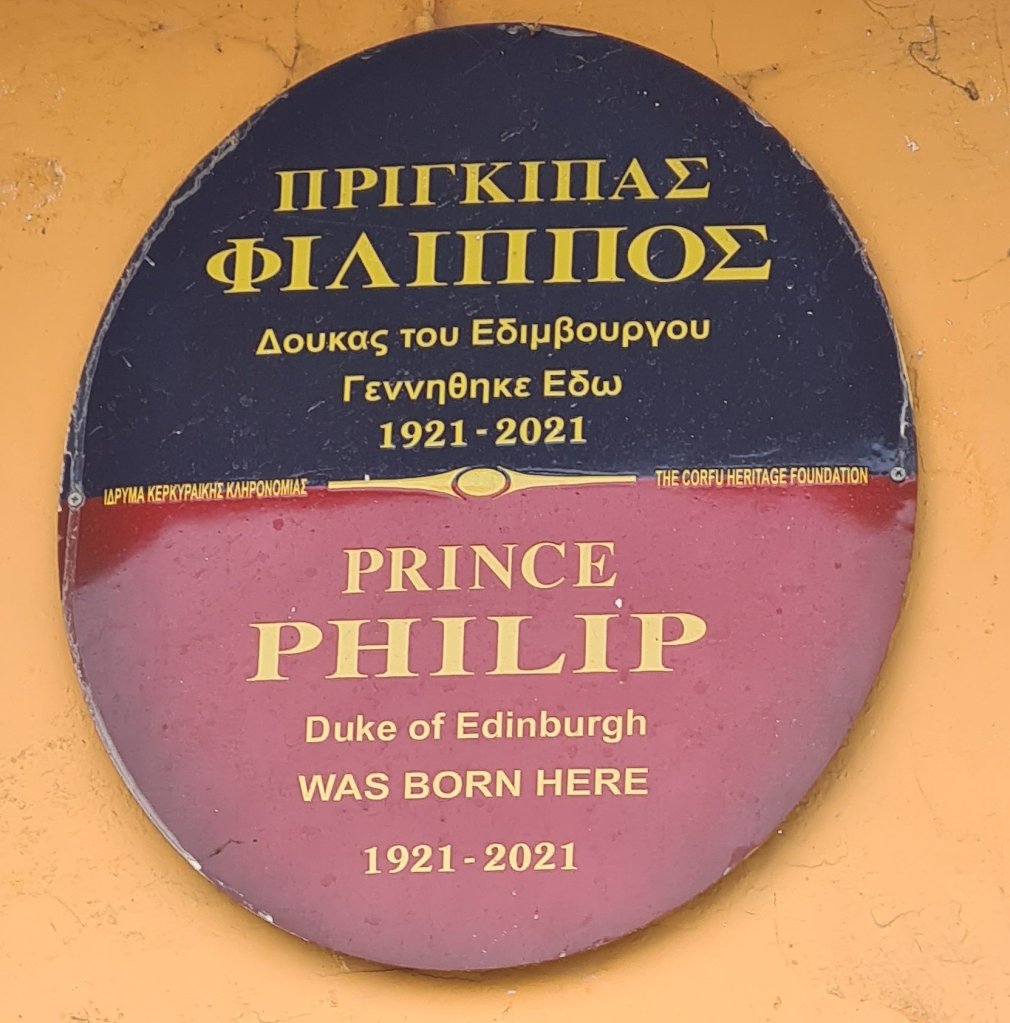
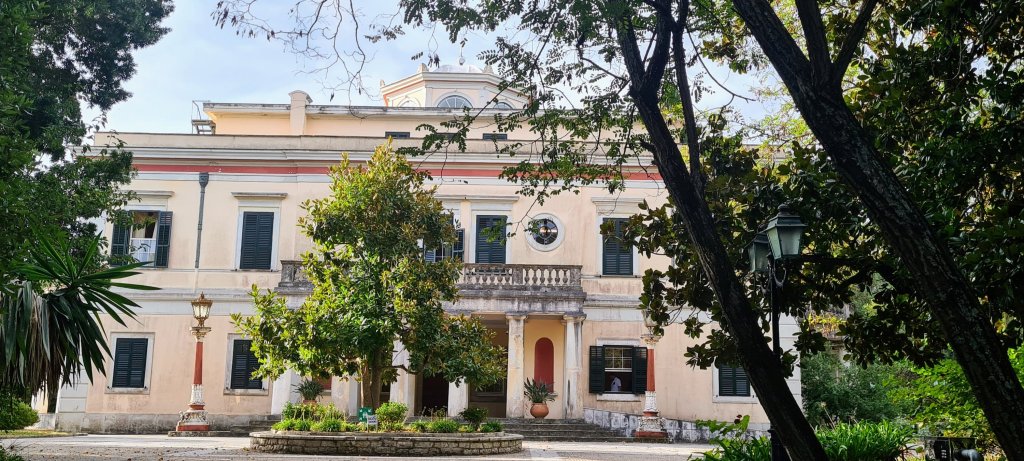
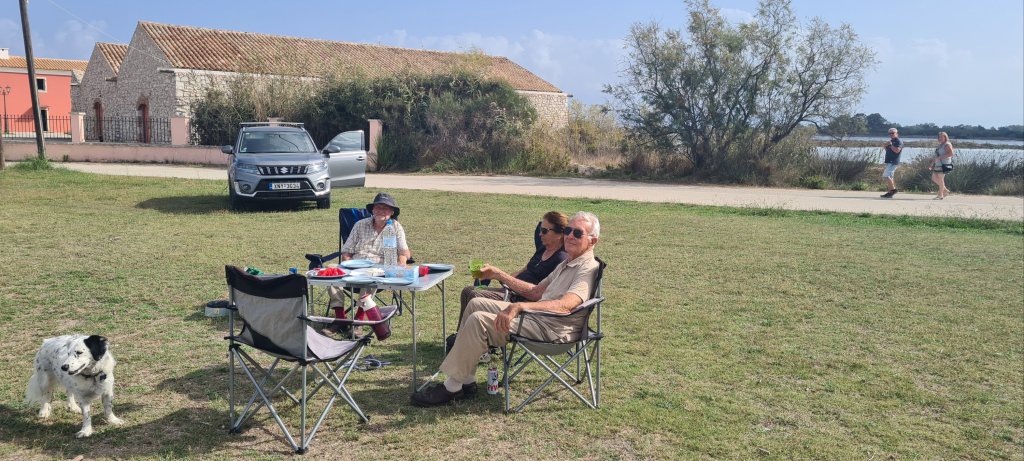
First MythosBorrowed Kerstin’s polesLagoon built by Venetians as a fish farmView overlooking Palaiokastritsa… stunningFirst picnic spot will take some beating, even though the car park was behind us Corfiot olive trees much taller and more holey than Cretan. Only produce every other year.Monastery on top of the tallest mountain Pantokrator, looks as if they’ve a direct comms with God. Amazing views across to Albania, where we will head back toafter our stay hereBeach walkOld Perithia. Was abandoned in 1960’s and 70’s, as no work. Now full of restaurants.Picnic spot and I dragged Mum on a clamberHarbour on eastOld fortressListon aka RivoliCorfu townDad stuck his finger up Durrell’s nose. Most folk patted it!View from a taverna, shame the food didn’t live up to it!View from 2nd highest mountain over Corfu town and we eventually found a picnic spot in the wind on SE coastMon Repos, built by British Commissioners. Then owned by the Greek Royal family. Prince Philip was born on a dining tableFabulous lunch out, followed by a cocktail for Mum on the beach. Part of the longest beach in SEAmazing picnic spot near MolosSalt flats worked till 1988
A town we really liked. Albania is proving very marmite. We’d told our accommodation host that we’d arrive at 4.00. We were 20 mins early and as we approached the property, he leapt out, waved and showed us where to park. A good start.
We set off for an amble up the hill to the old bazaar area. Then I spotted a view point on my phone map. It was up, up and up. But the views were worth it!
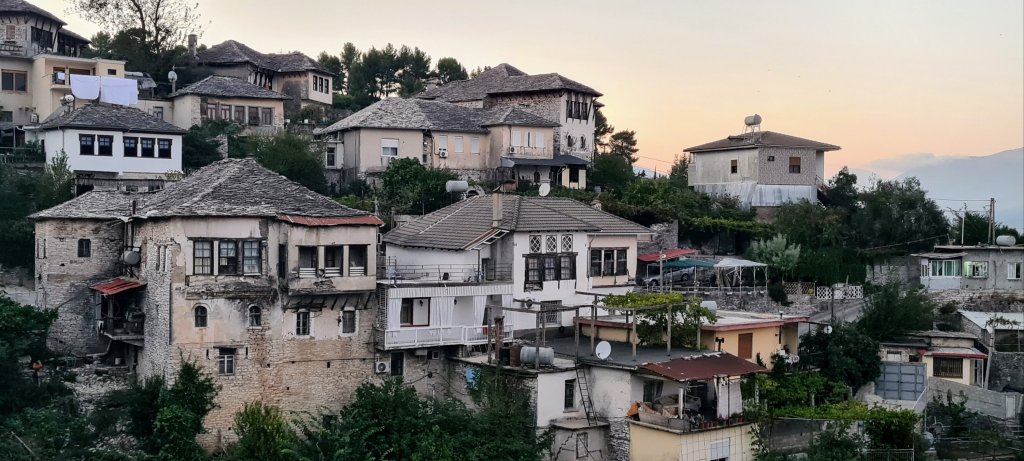
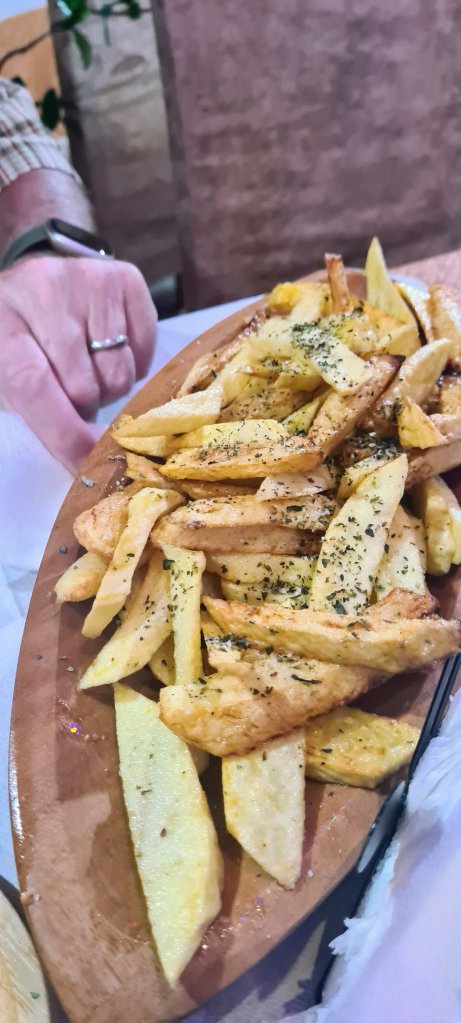
J refused to climb the last 87m!The castle was illuminated just as I reached the viewpoint. 😊 Sun setting behind usThe street was initially abandoned 😔 First view of the castleMosqueThe buzzing bazzarClimb up and upTypical local architectureMosque later lit tooGreat supper for under €20. Proper hand cut chips! Corrie helped with left overs.
Great initial vibes. Shame we didn’t sleep well! The bed was rock hard … someone else was obviously hard too … the walls were very thin and we heard everything! Yep, that too!
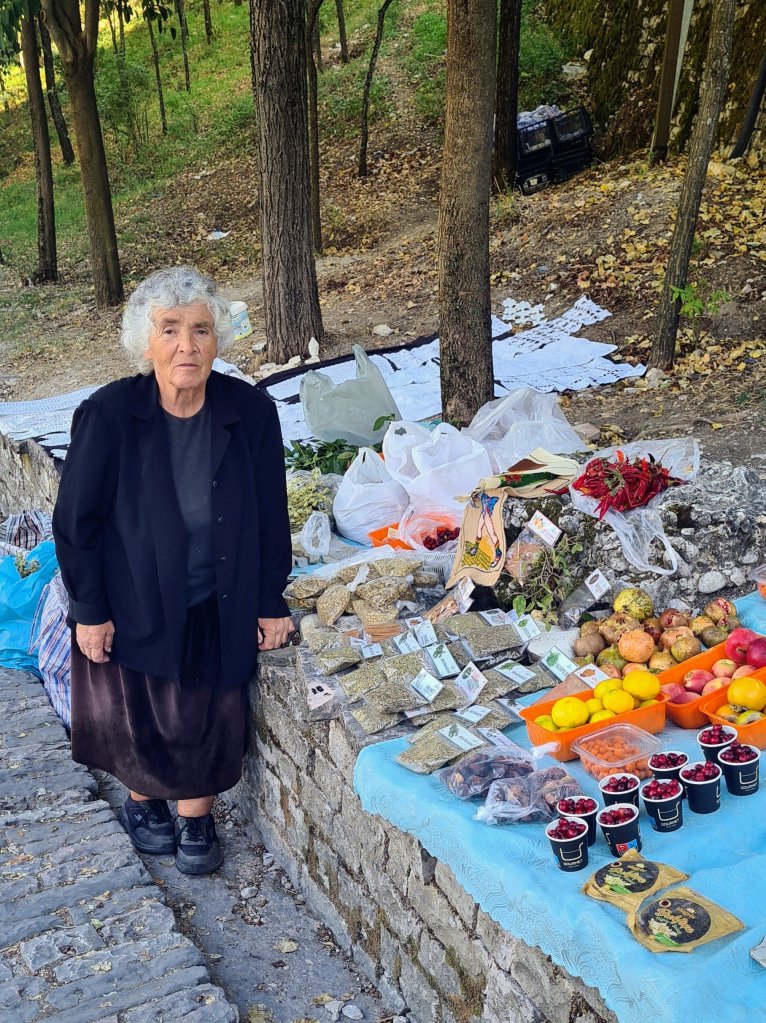
Room only, so breakfast coffee out in the bazaarThis lady was selling rock art that she carved herself. I didn’t haggle and she tried to press lots of other free goods on me.
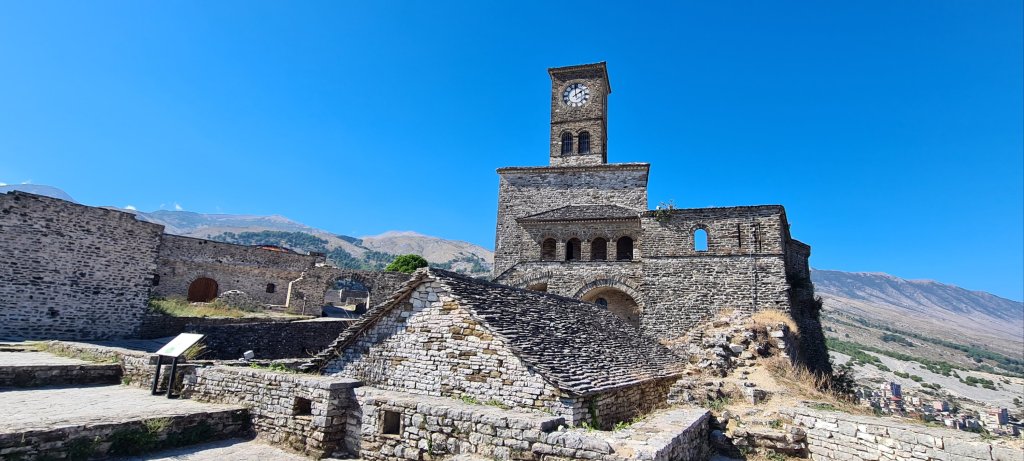
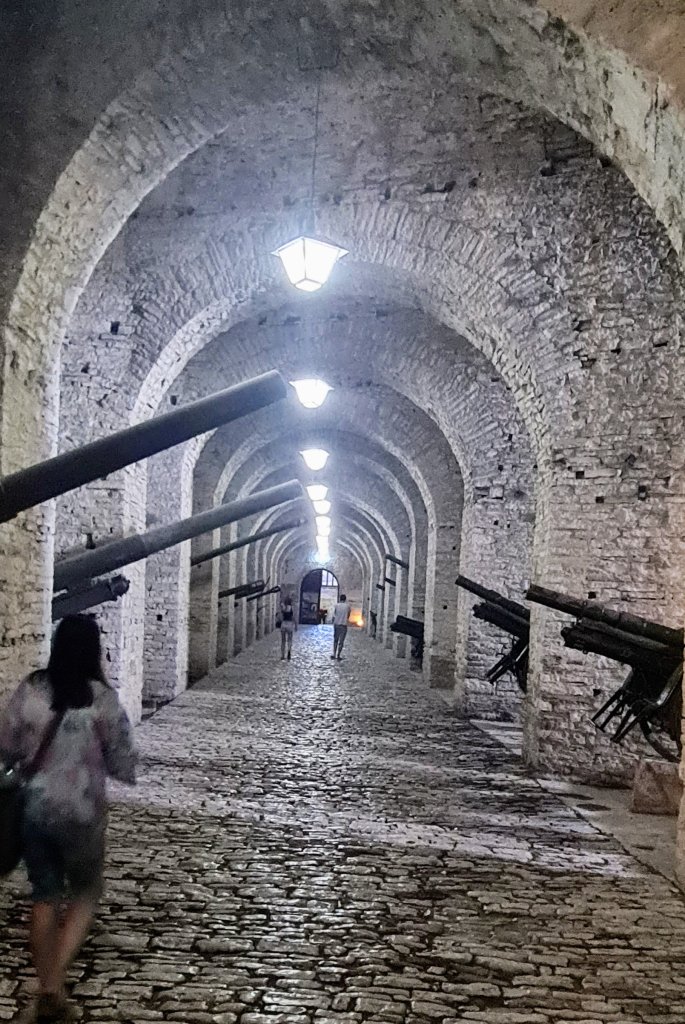
We have visited a fair few castles, but this one was impressive. Big walls. Big areas. Big views. And we love it when history joins up. The Ottoman Ali Pasha, who expanded the castle, is the same one whose castle we visited in Ionnina in Greece. We particularly remember him as he was brutal. He had his son’s wife thrown from a cliff.
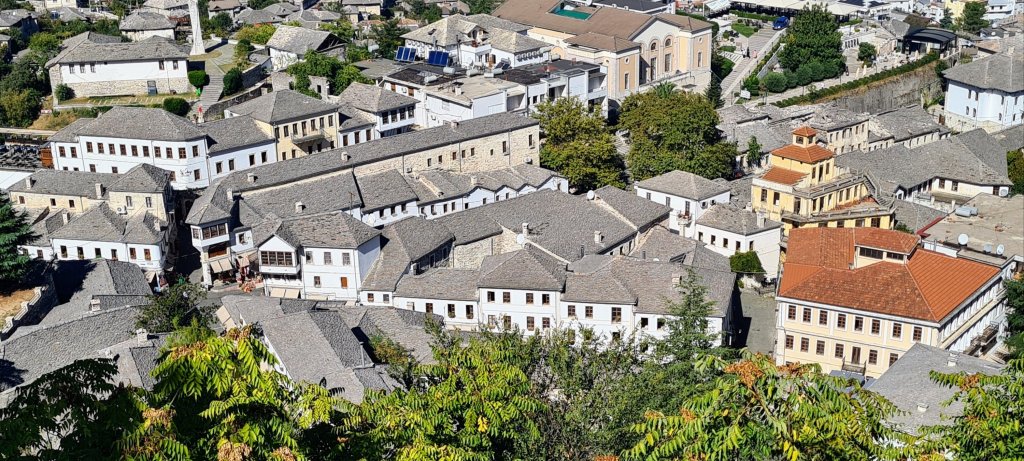
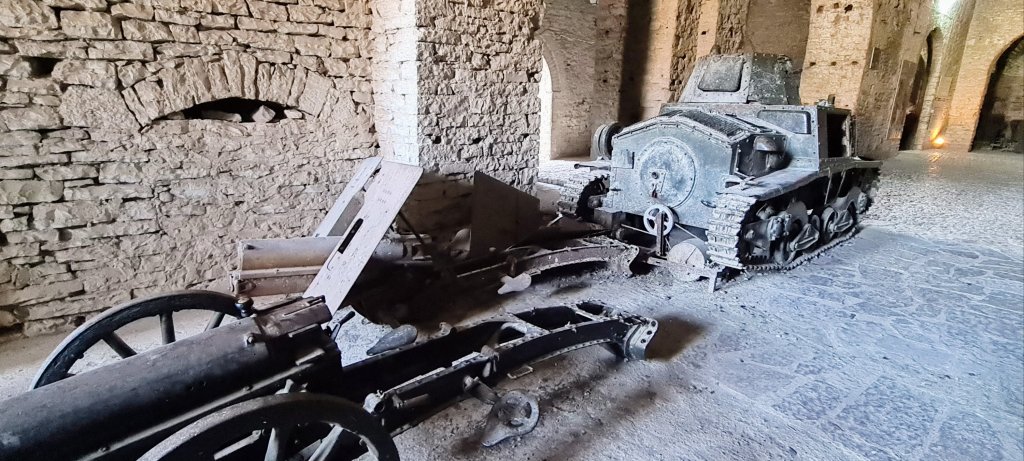
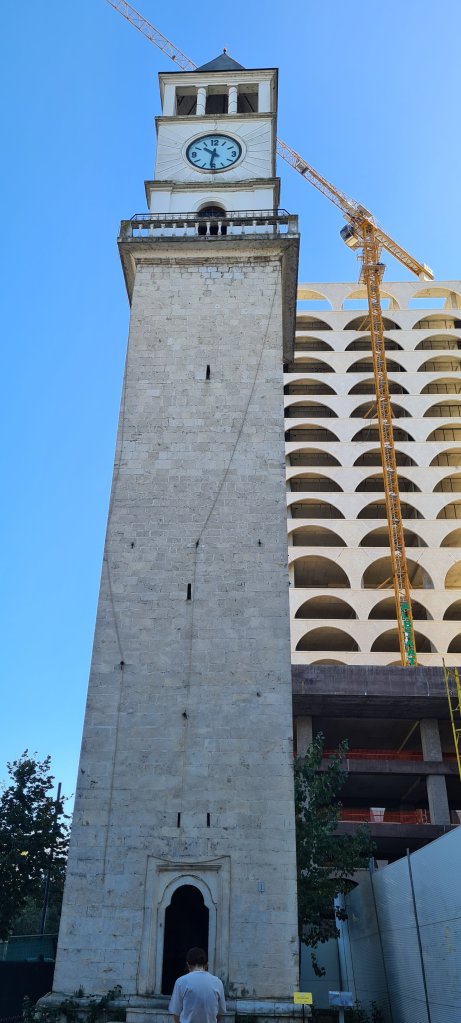
View of typical town housesItalian WW2 tank seen better days, but it’s a Fiat!The clock tower. Armoury belowIn 1969, an Amercan plane was forced to land in Tirana. Albania says it was spying and brought down by Albanian MIGs. USA says the pilot ran out of fuel due to fog. Fortunately, he was repatriated after a few weeks.
A light lunch at another small eatery. J went back for his nanny nap and I continued to two museums.
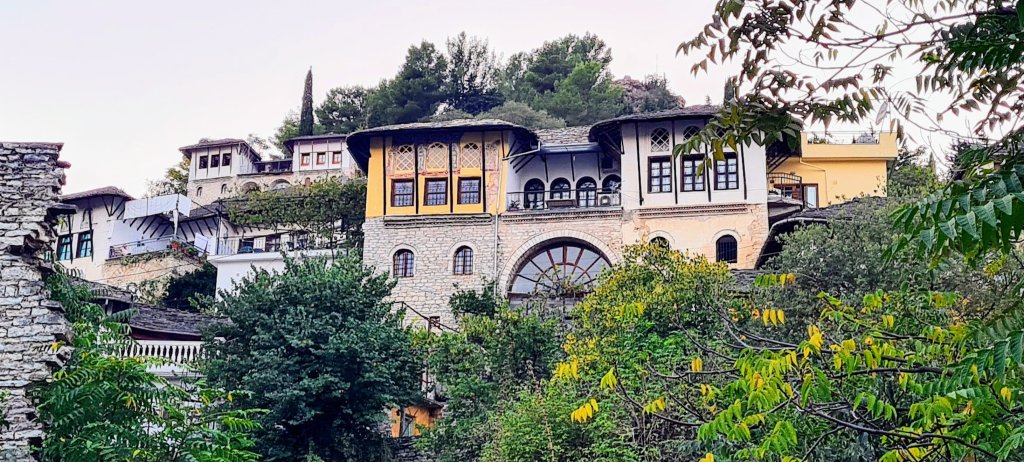
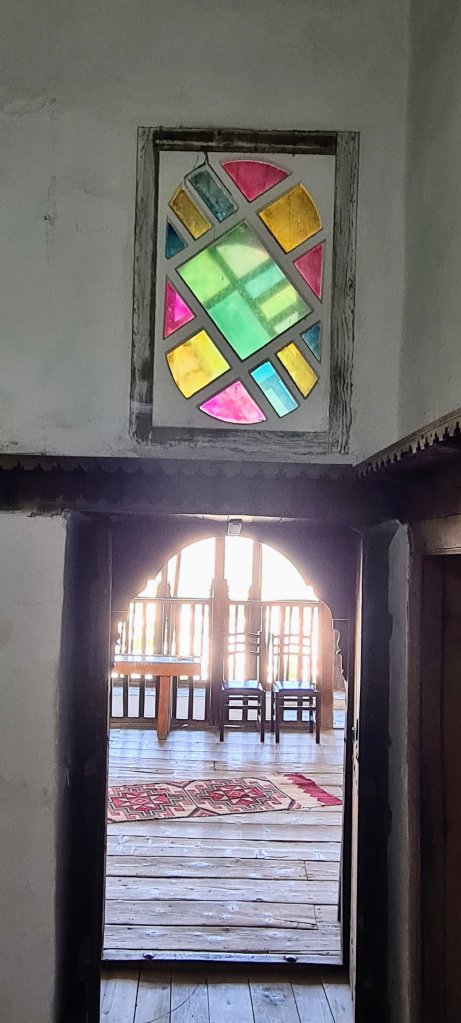
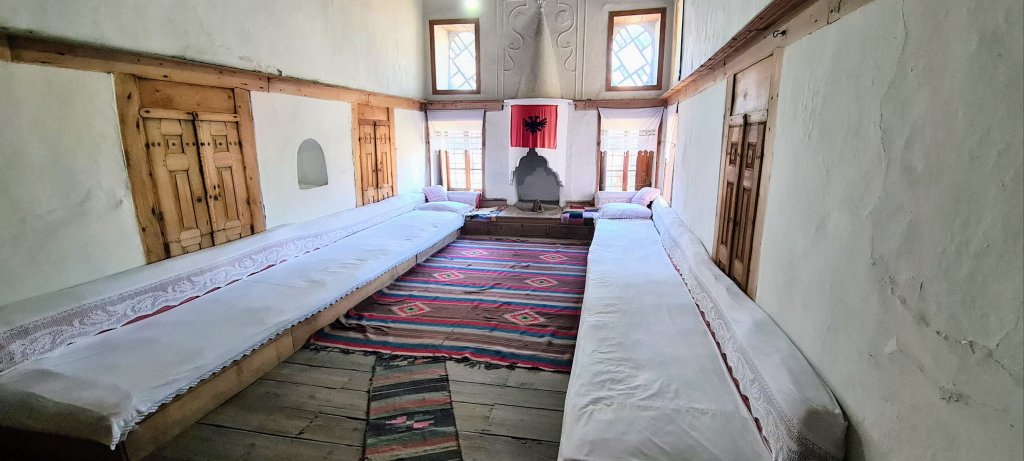
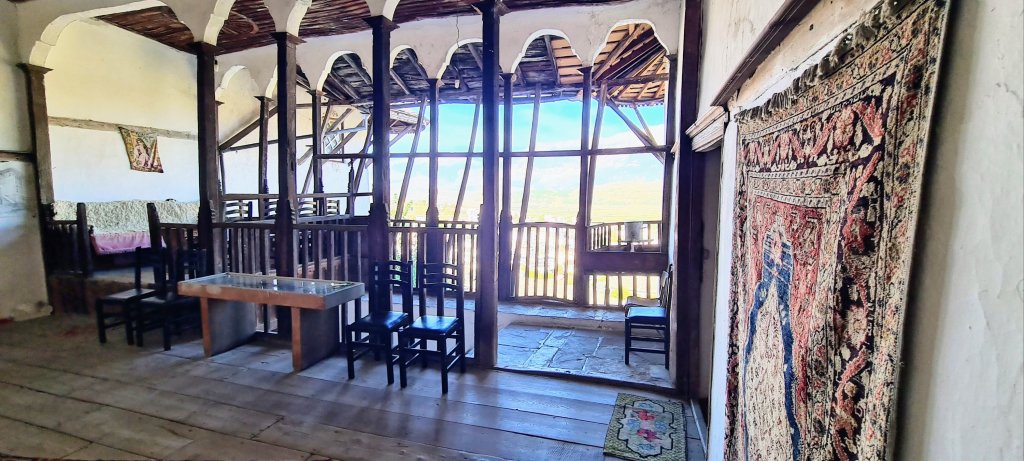
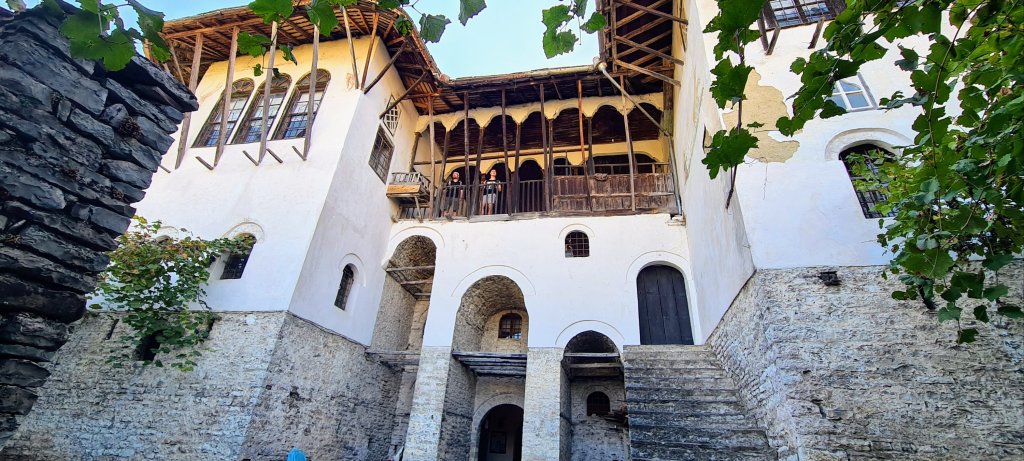
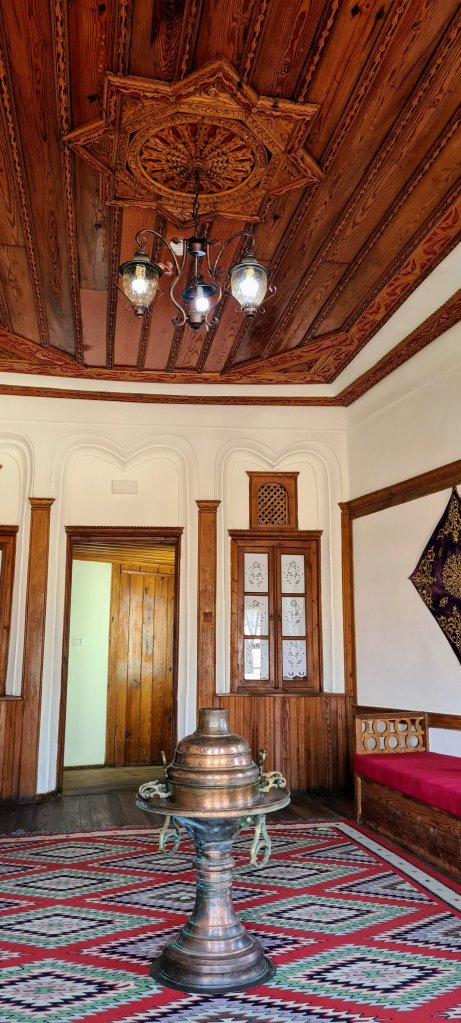
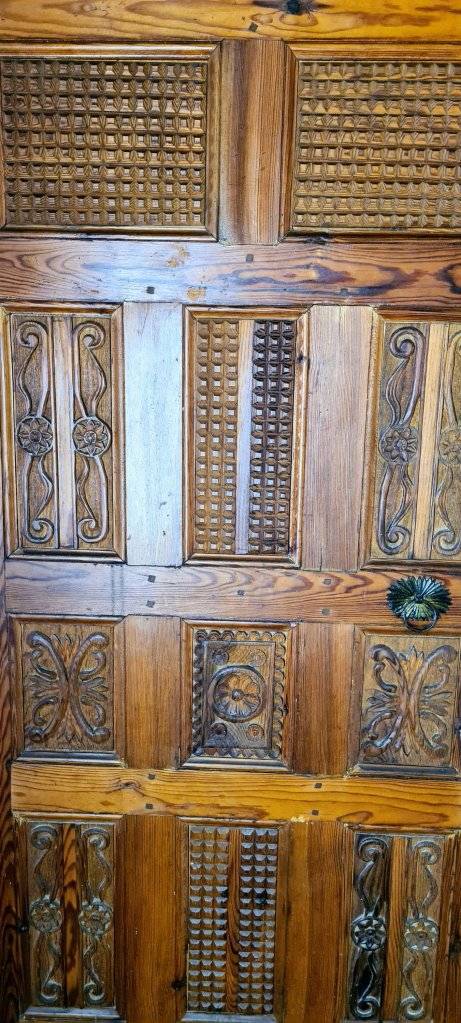
The first, Skenduli House, was impressive. Built in 1823, it was the most expensive house in town with 9 fireplaces, 6 bathrooms, 44 doors, 64 windows and 4 hamam!!! And the ticket lady took time to talk me through it and show me the wedding room. No pix allowed in there, but it was beautiful. Lots of windows and decoration. A screened gallery for the unmarried girls. Women waited in another room. So, only men in here until the bride enters for 10 minutes for the ceremony. As marriages were arranged, this was the first time she met her husband. Sexes were segregated for the feast too.
25 people of the extended family lived here. There were winter and summer rooms. Cooking was done outside due to the fire risk. The family had the house confiscated in the 1980s and only got it back after the fall of communism.
Original glassThe women’s wedding roomRoof has some holes!One of the hamam
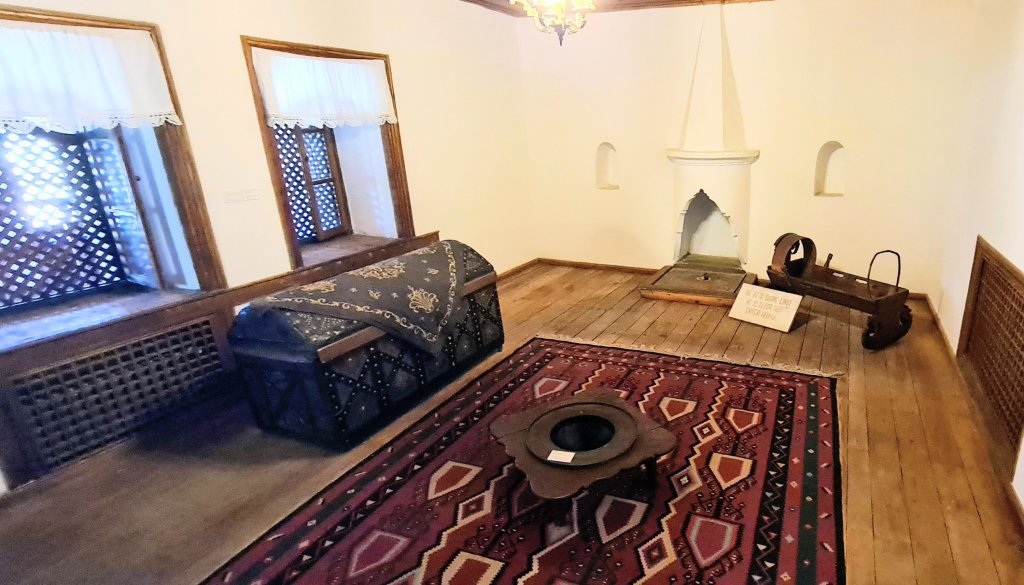
Skenduli house had housed the ethnicolgical museum until they had to hand back the property. It moved down the road to another large wealthy house. The birthplace of Enver Hohxa. Intetesting but nothing like as authentic or beautiful as Skenduli House.
The room where Hoxha was bornJust the list of Catholic clergy murdered during the atheism yearsLove a bit of embroidery, if someone else does it!Made from one piece of leatherLovely meal just above our accommodation… just as we ordered a town wide power cut. We got wine to keep us going.
Two nights in an apartment very central to sites. And thank goodness, it was a pleasant apartment. Nicely decorated and spacious. But why, so far, are none of apartments providing tea towels?
We did a walking tour but it was not up to much compared to those we did on the PELL trip. We pretty much knew everything from the guidebook and web. The guide wasn’t a historian and got a few facts wrong. Kindly, we (I) didn’t call her out on it. But it’s definitely a sanitised history. Wonder what is taught in schools? For instance … They revere King Zog and omit to recall that he ‘removed’ political enemies and fled in 1939, taking all the country’s gold. She said that during atheism, the religious clerics were not imprisoned or murdered. Etc!
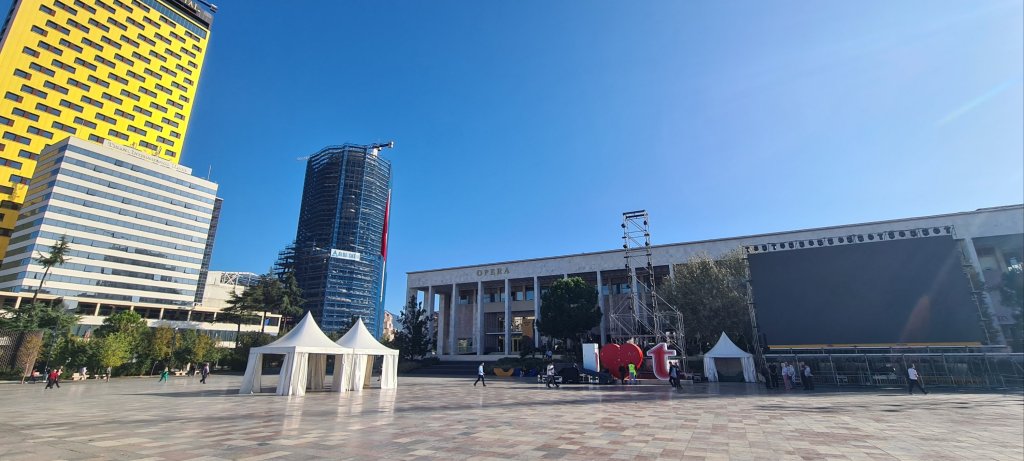
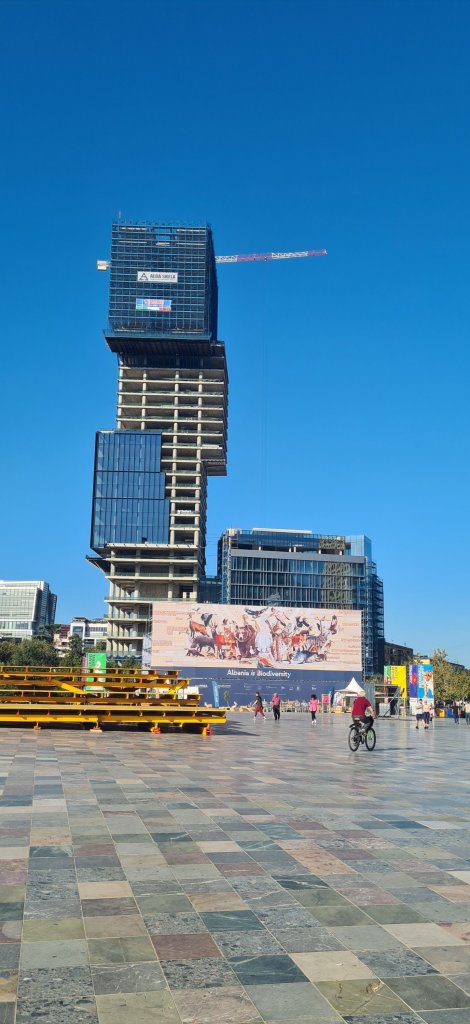
Skanderberg Square. The low building on the right is the cultural centre housing the opera House. The guide mentioned that performances are very popular but said they weren’t frequent. Another new tower construction. The Skanderberg Square was only reshaped, and traffic removed recently. Each paving stone comes from a different area of Albania. The mosaic was very recently restored by … Guess what … an overseas donorThe clock tower. It’s impossible to get pix around Tirana without catching building work going on.
Our guide proudly told us that a 10 tower sky scraper construction project was under way. Each to house shops, restaurants, offices and apartments. We couldn’t see the point when other infrastructure projects may help more people and stimulate the economy. Do we resorted to the good old Internet … articles state a high rise sky line is the vision of the PM and most of the bids to build, were won by people close to him. Ho hum.
On being asked about the largest Albanian export, we were told it is people. Again, we googled this. People had no support during Covid 19. Many used their savings to survive. Sold up. Many had already previously lost everything in a pyramid scheme in 1996-97. That collapse amounted to half the GDP!!! Affected about two thirds of the population. Rioting, 2000 people died, and the government collapsed. 30% of current GDP is from remittances from abroad – families receiving money from relatives abroad. The official minimum wage is €364 – June ’23. Petrol is €1.98 litre. Food is not cheap and accounts for 40% the monthly spend.
It’s not surprising that in 2022, 46,460 left Albania. 10.5% up on ’21. And 36,000 are young people. Stats from the Albanian institute of statistics, so likely to be conservative.
Interesting article on how many end up in the UK. Quite shocking how few UK asylum applications are processed p.a. compared to France. https://www.bbc.com/news/explainers-63473022
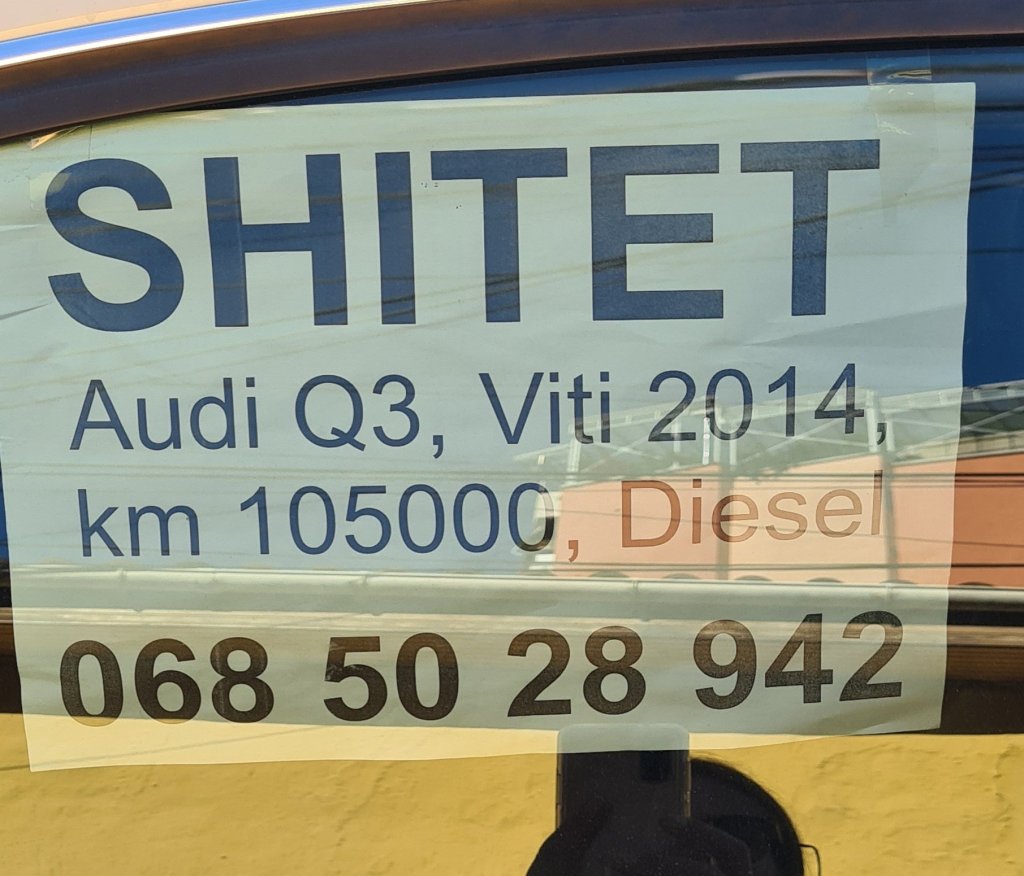
Albania is the 7th largest cultivator of cannabis worldwide. The market developed post the fall of communism. Oportinism and lack of civic order. We saw a huge number of newish Range Rovers, Mercs and Audis, as well as older ones. Quite a few with British plates. Maddy said all her friends’ drug dealers in the UK are Albanian.
Since the Russian invasion of Ukraine, there has been increased EU investment as Albania is seen as another geographical buffer. Albania has been keen to join the EU and is making good progress to meet the conditions … apparently!
Anyway, tirade over … back to the tour.
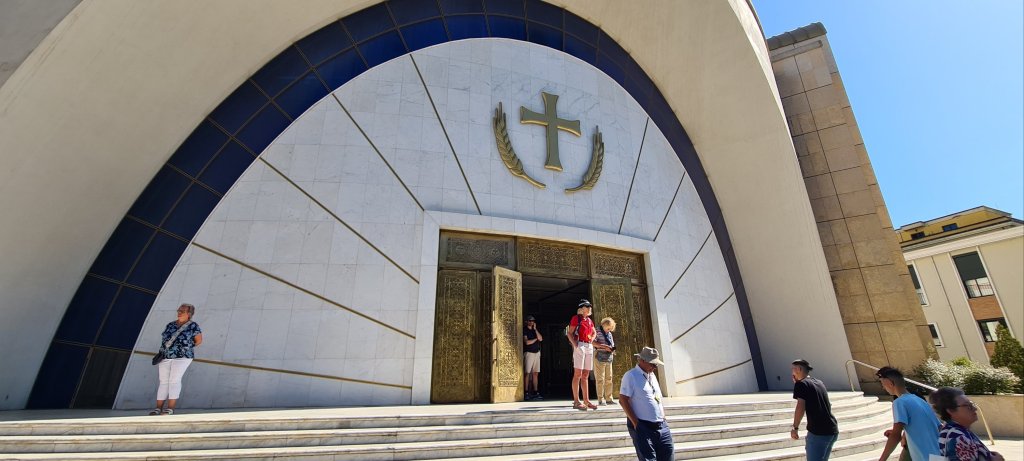
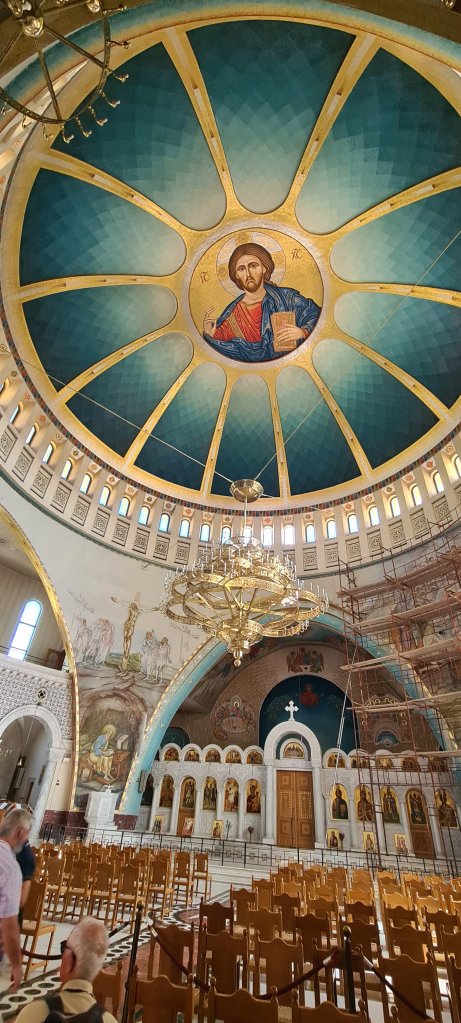
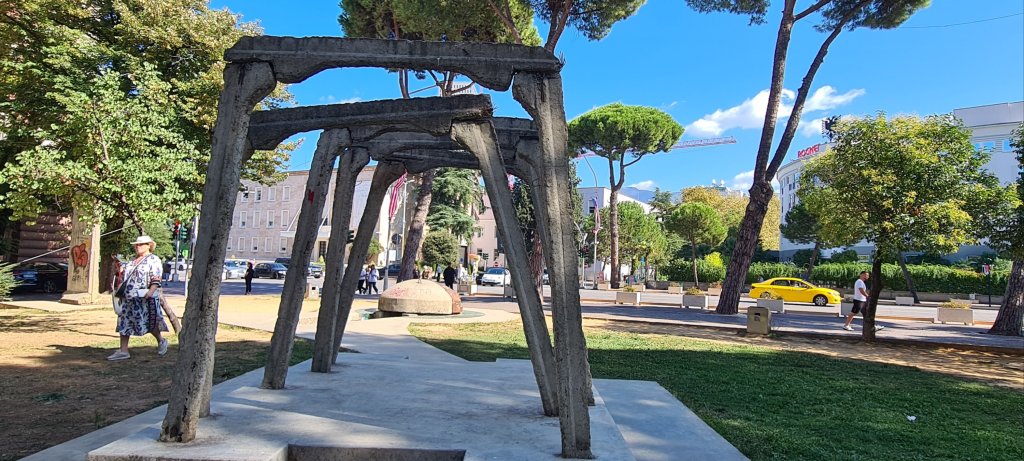
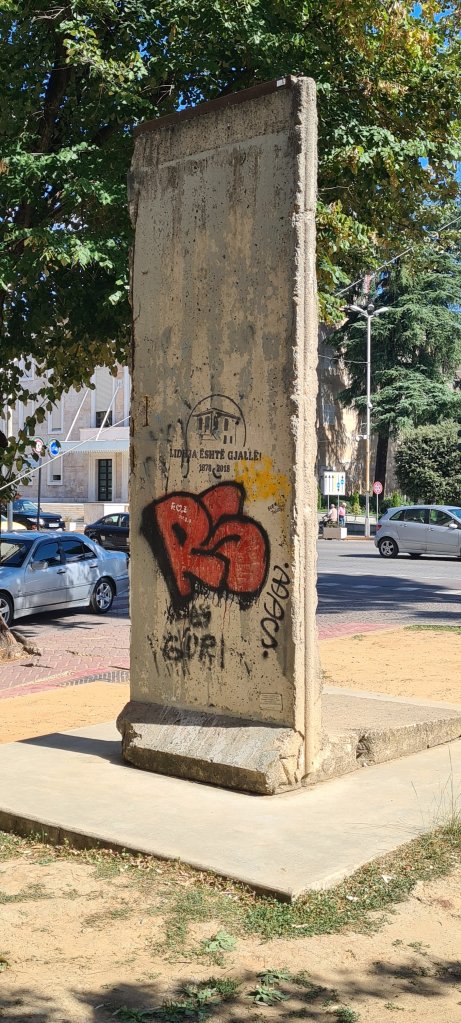
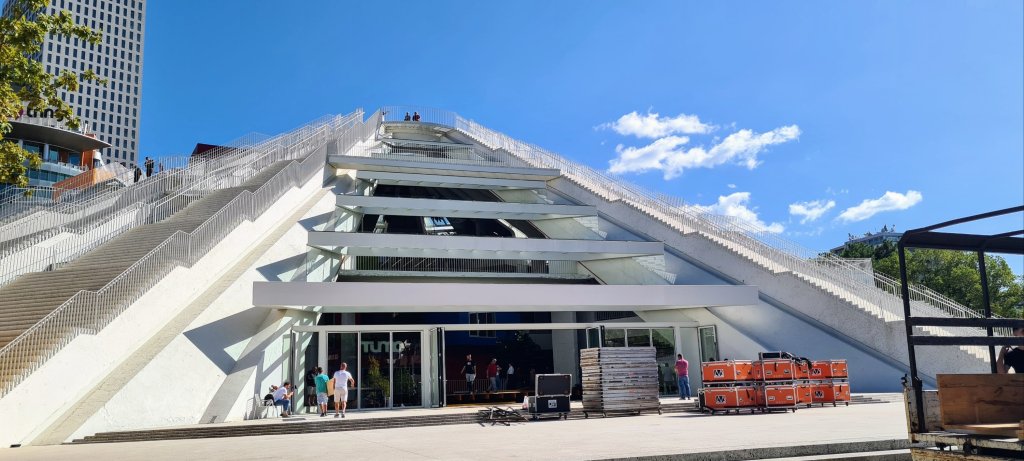
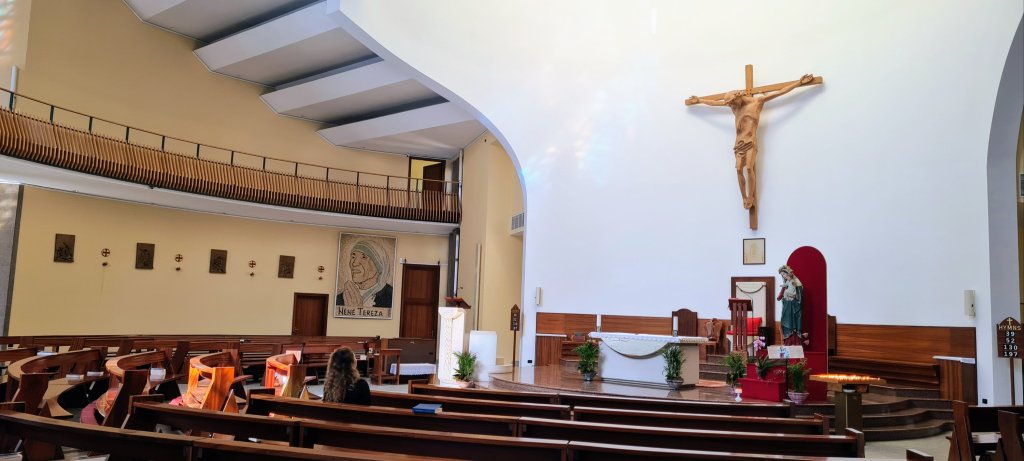
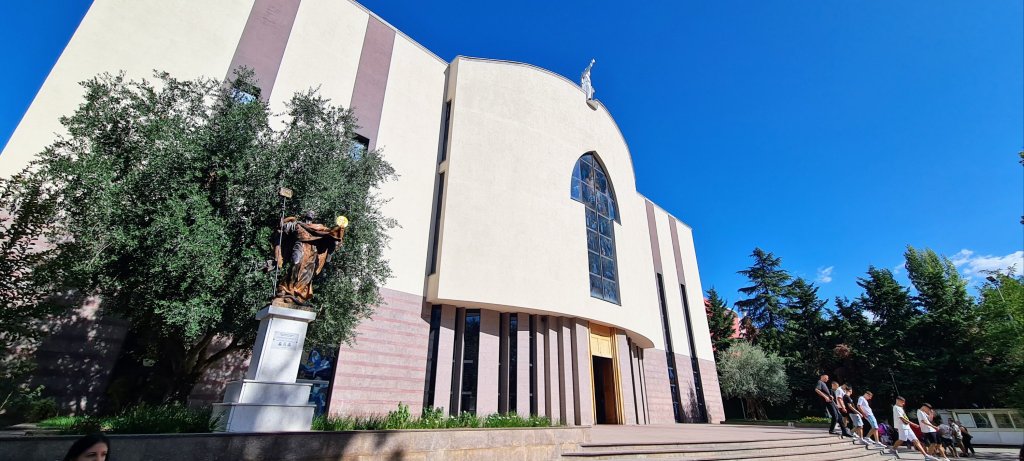
New mosque … forget who paid for it. You can see one of the thousands of bunkers that Hoxha had built through the metal arch. The concrete arches come from a mine where many lost their lives. The wall is part of the Berlin Wall.The Pyramid still under refurbishment. Built as a museum to celebrate Hoxha in 1988, then a conference centre after the collapse of communism, a NATO base during the 1999 Kosovo war, then a youth IT centre. Now, more restaurants.Modern Catholic Church
Lunch near the New (rebuilt) Market; we did not select sheep’s head or intestines!
The new market. Some fruit and veg, but the rest was more like a flea market selling odd parts of things and bric a brac.Love the red and green traffic lights. But, I guess they are largely ignored as traffic police with whistles on most junctions.
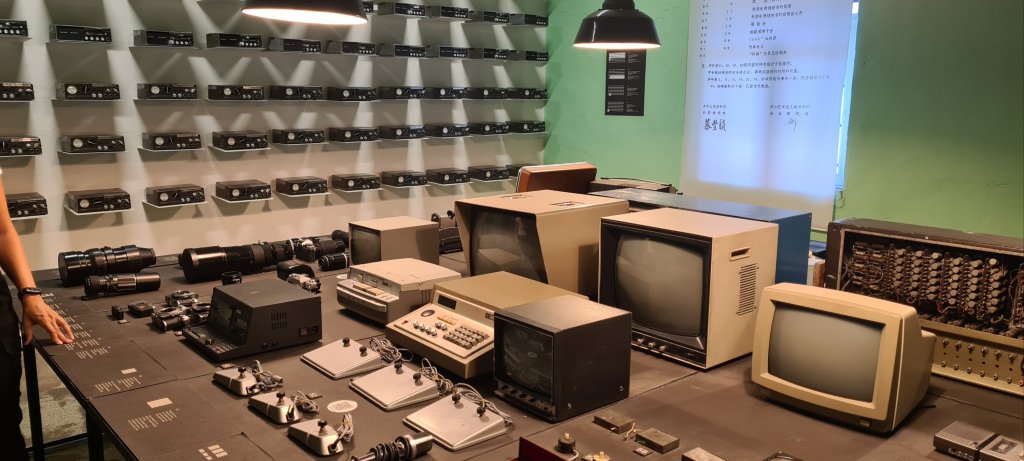
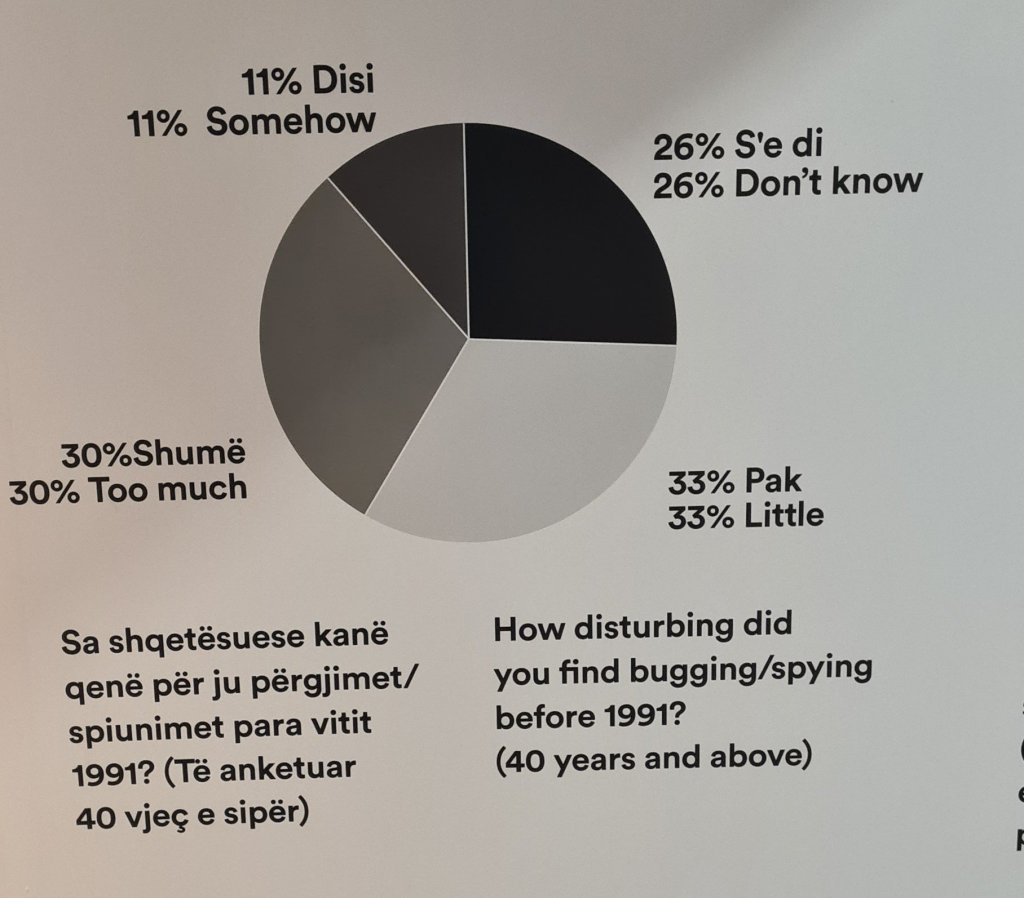
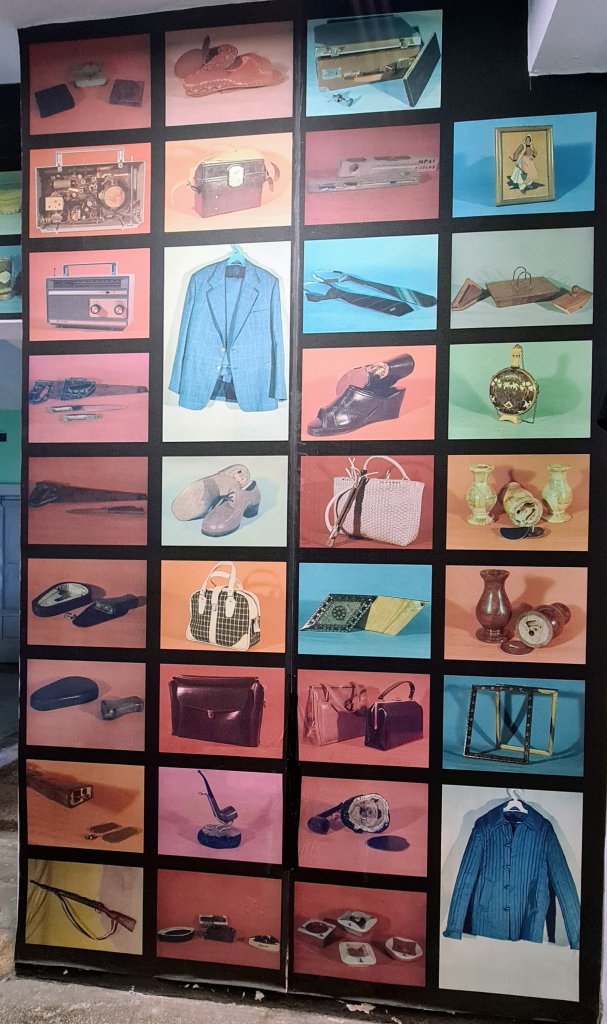
I left J nanny napping and visited the Museum of Leaves. The main office for eavesdropping and spying on residents and foreign visitors by the organisation Sigurimi. Equipment came from Yugoslavia, Russia and China until they fell out. Then, Albania had to buy from the west, with hard currency.
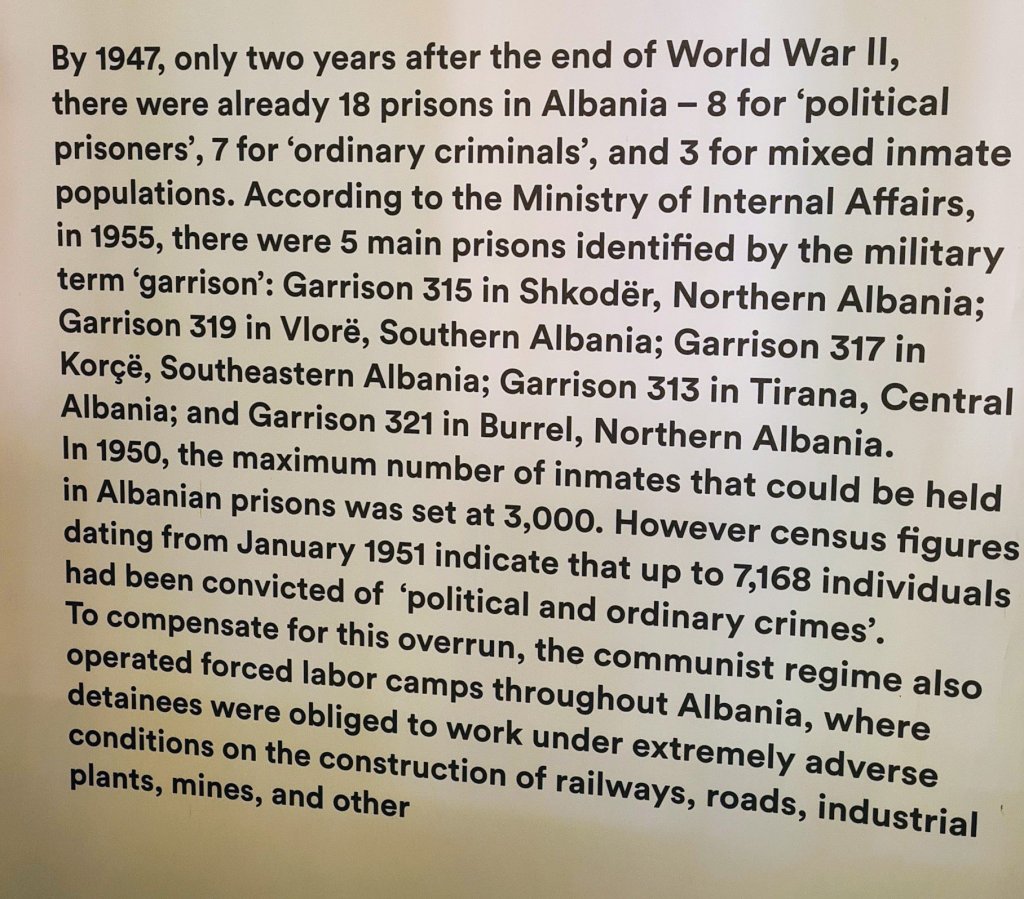
Amazing by today’s standards how big all the surveillancekit was. From a survey early ’70. The network of spies cascaded down. Typical bug placement locationsThe web says 5,000-25,000 Albanians were killed during the communist era. Tens of thousands were imprisoned and worked in labour camps.
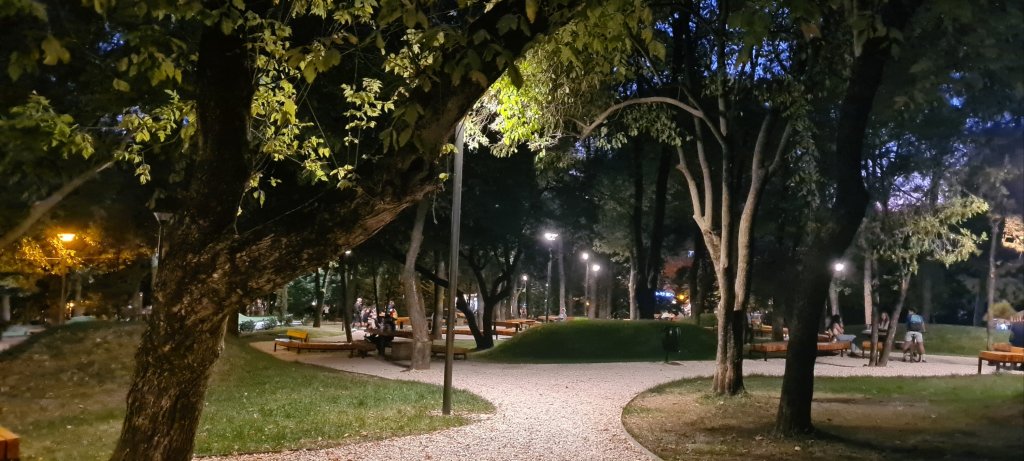
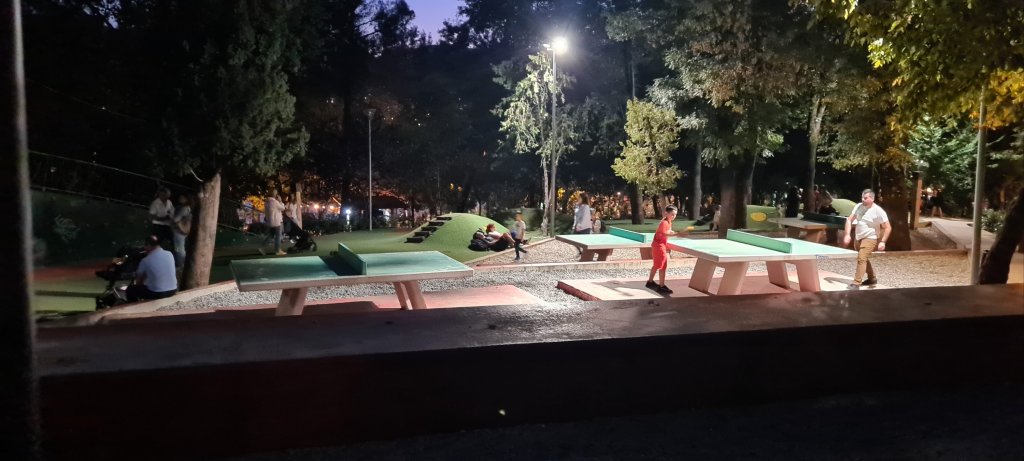
There’s a shortage of central green spaces in Tirana. They’ve been built on. But early evening we walked to a large park south of the city. We needed to breathe. It was dusk, but it was buzzing.
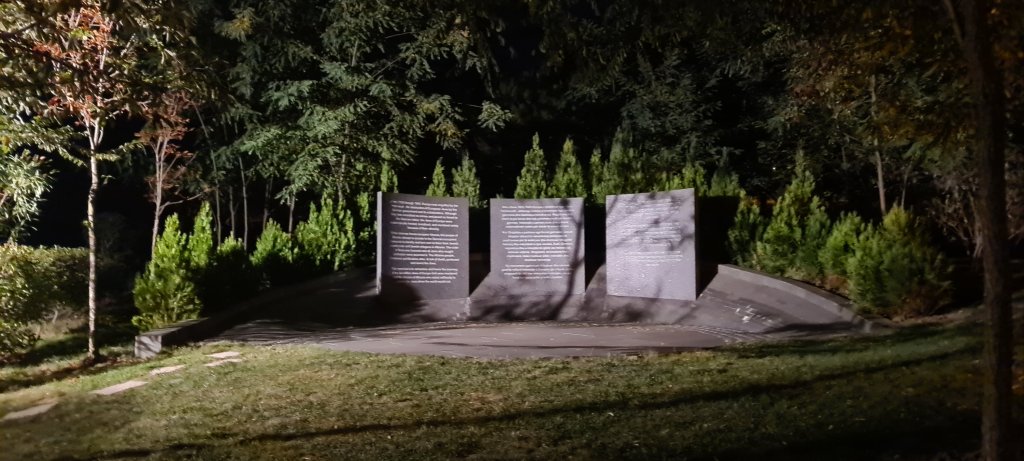
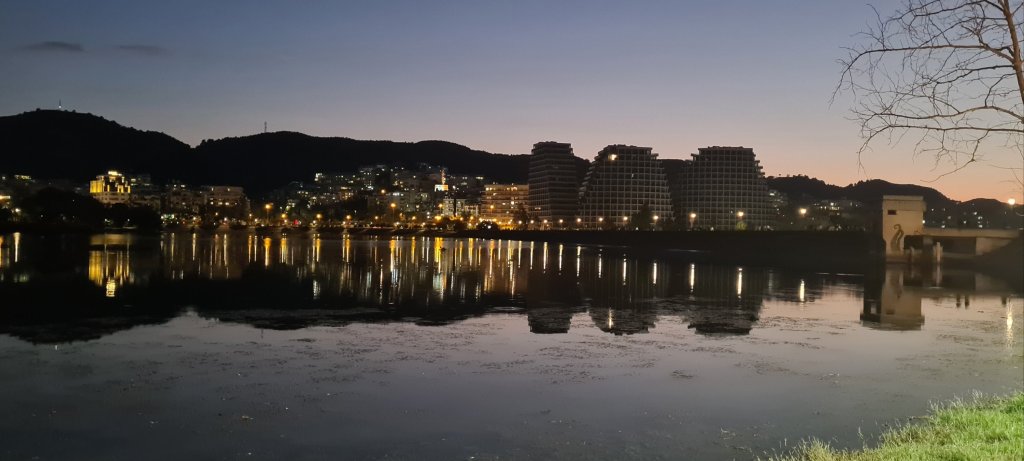
Massive activity areas Celebrating that Albania accepted fleeing Jews during WW2So lovely for a lake side table to be vacated just as we passedLovely view but more unfinished construction Yep, shitet means for sale 😆
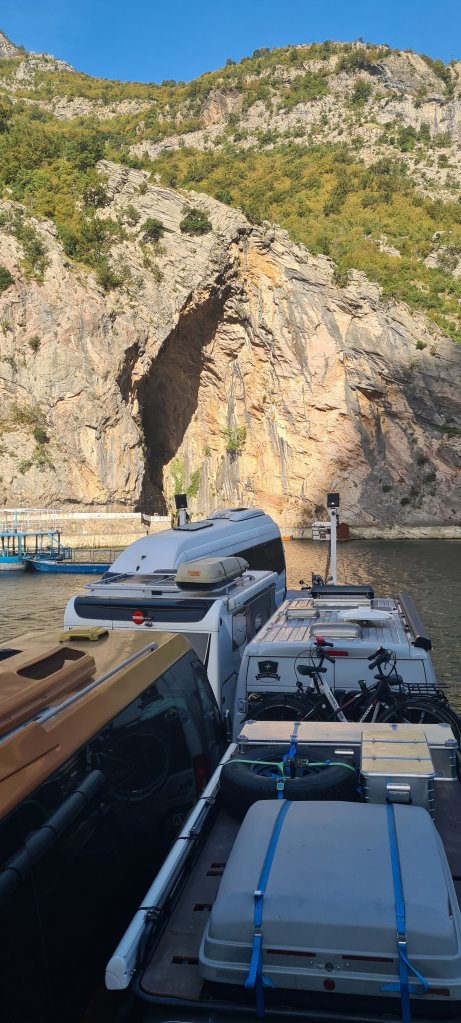
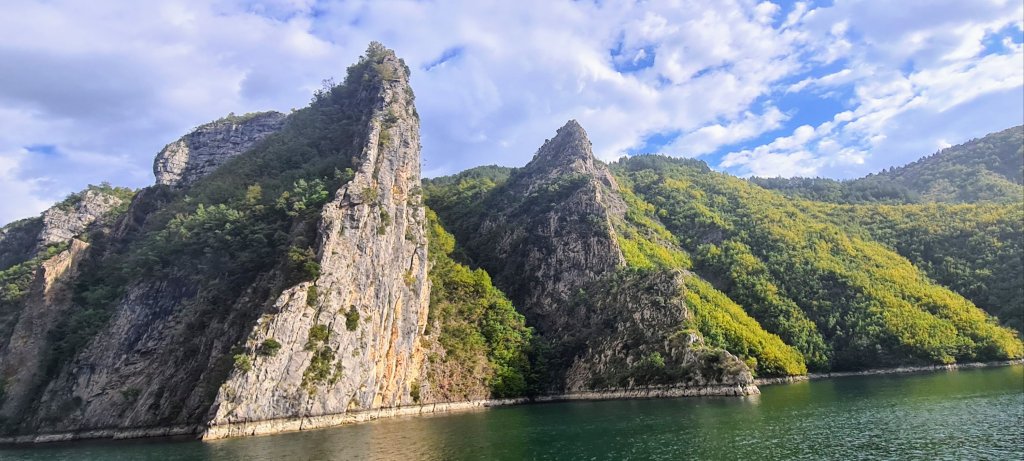
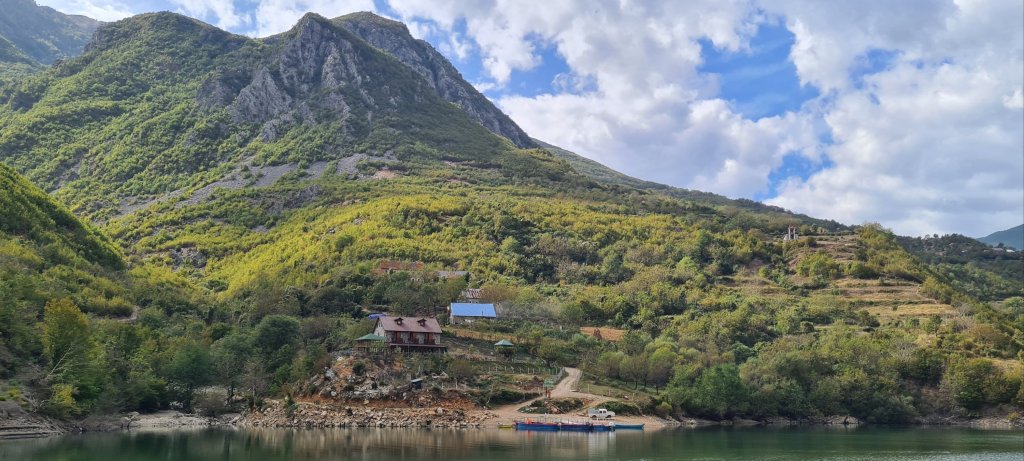
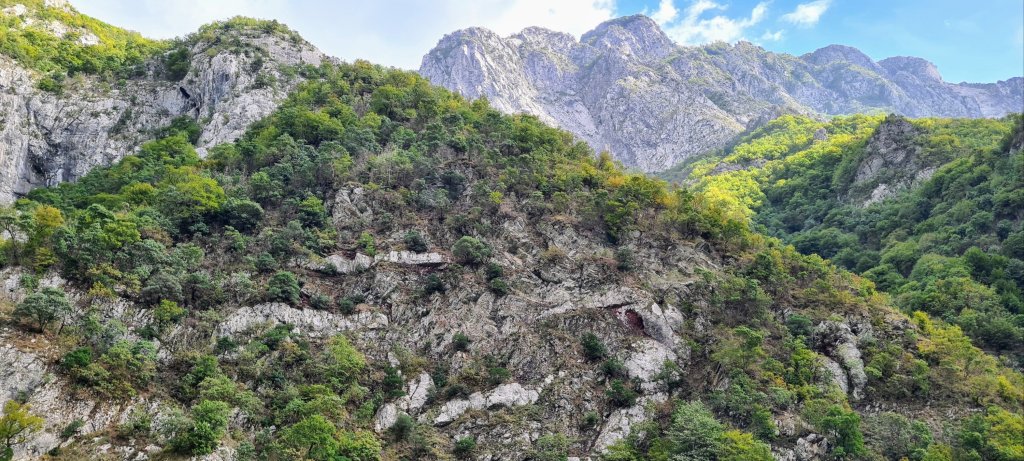
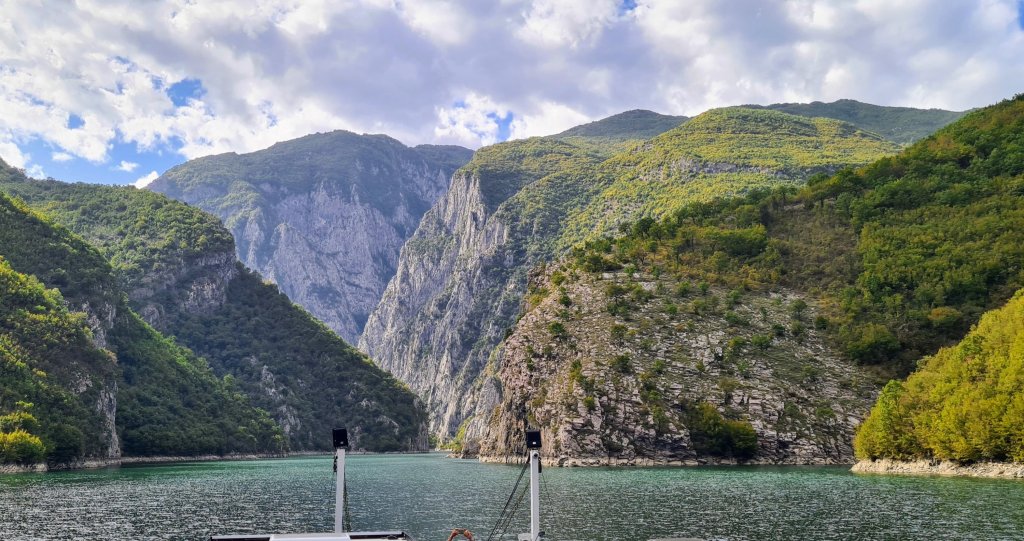
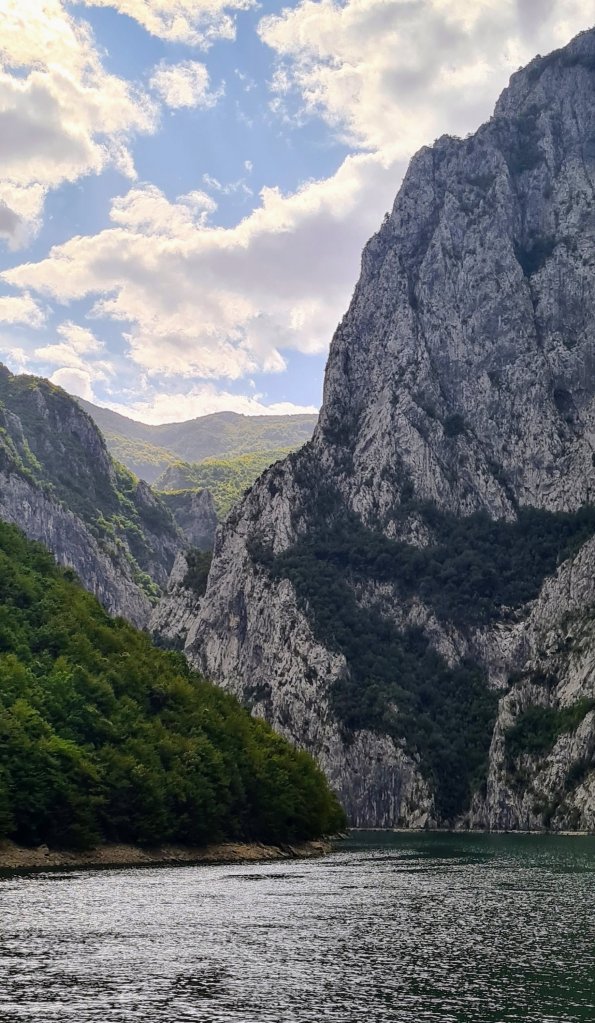
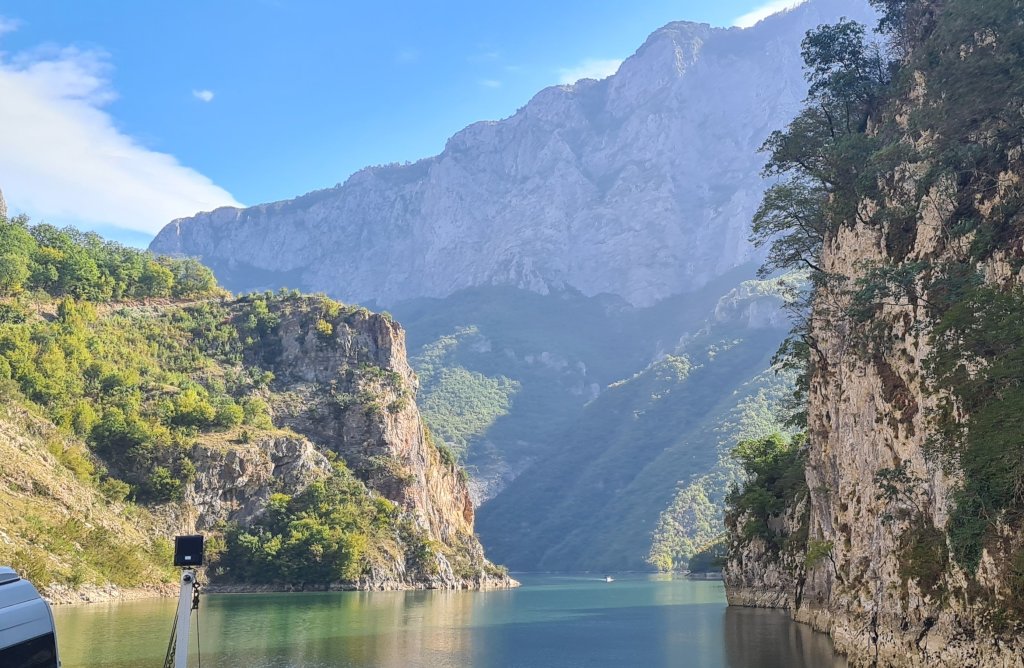
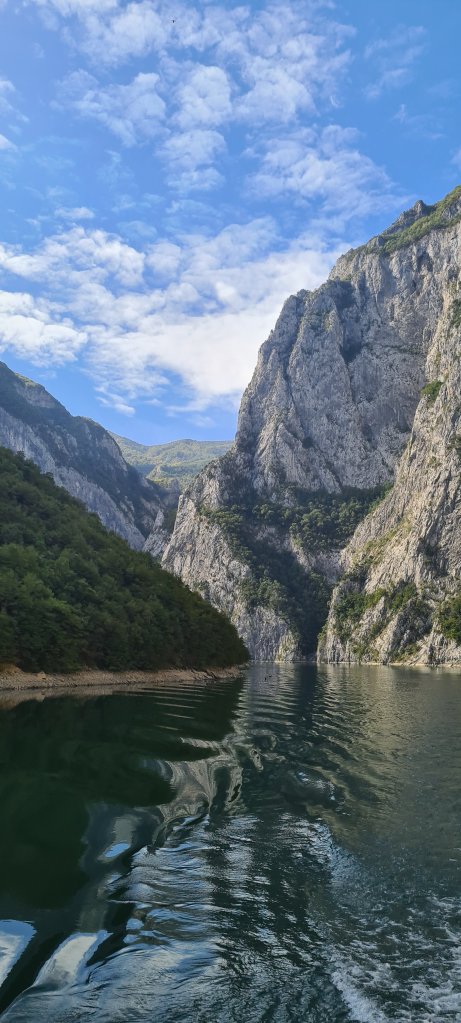
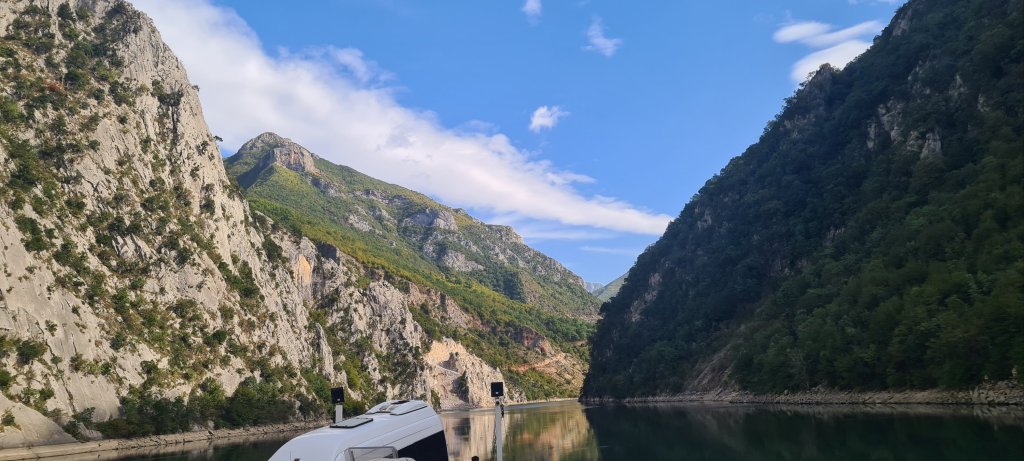
This ferry ride is rated as one of the world’s most beautiful. It certainly bests Gerainger Fjord in Norway. The one I’d booked is a car ferry, and tourists use this route to go walking in the mountains or drive into Kosovo. Had, we had the time, we would have forked out the additional £45 ish to take the car one way. Each leg is 2 hours, plus delays due to chaotic loading. Good value for the return ticket for 2 foot passengers at £33.
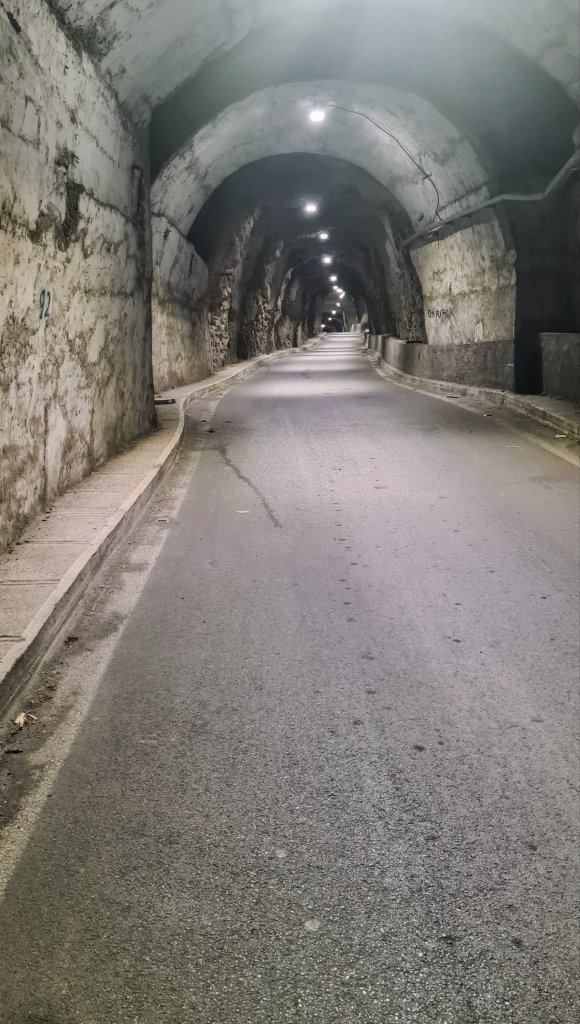
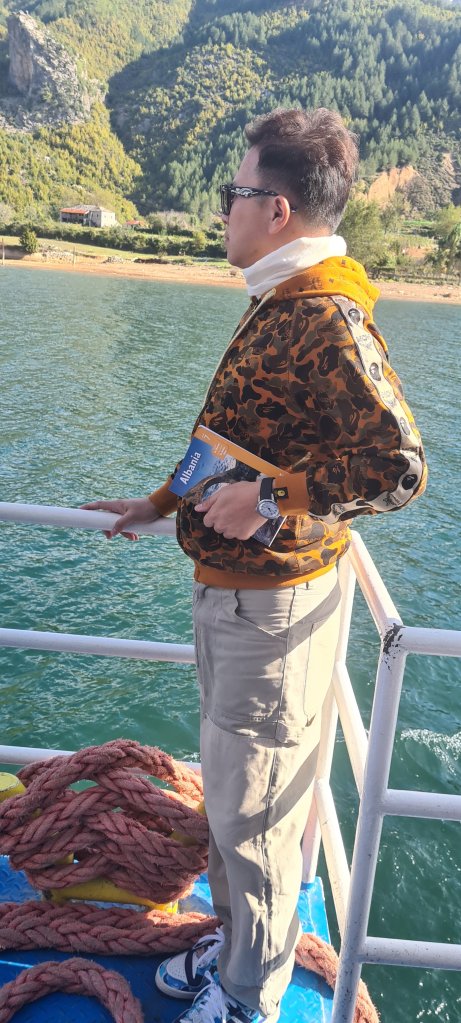
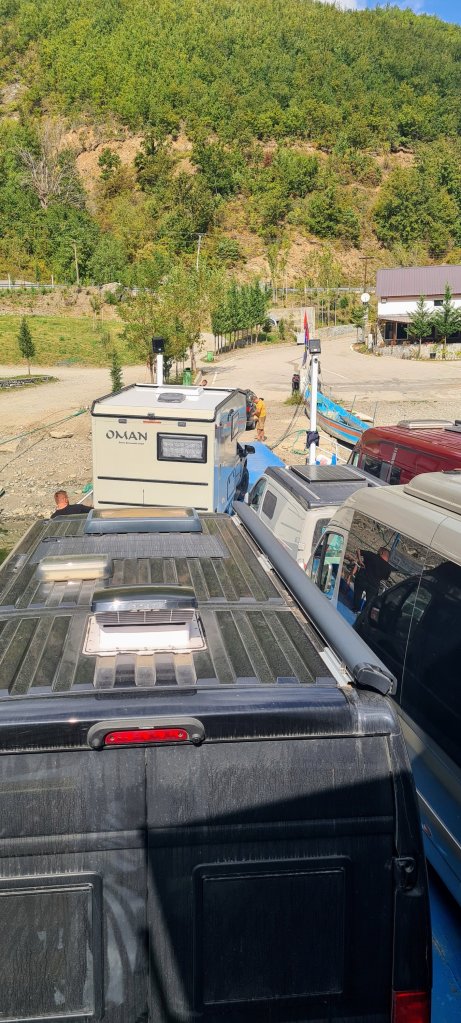
Most of the loading chaos is due to this 470m tunel. One way with a couple of passing places. And foot passengers walk through. The very small harbour area. Vehicles had to keep shunting to make space for others about to load. I’d read that it could be windy up top. Even though we were early on board, we bagged 2 of the last adjacent seats inside This mini bus was resting on the forward door! A minibus group of Malays borrowed my Albania guidebook to pose for pix … they all thought it hilarious. They dog napped Corrie and took turns to photograph themselves with her. Think I was shown 4 of their dogs on their phones … all good fun. More small campers on the return
A few years ago, we’d planned to take Jez and drive the NE. Whilst smaller motorhomes did make the trip, I don’t think my nerves could’ve taken the reverse across a metal plank.
We then drove the return 32km crap road back to tarmac and onto Tirana. We thought the driving the worst ever before. This was the worst worst ever. Tirana is overpopulated, high density, and manic. Everyone is in a tearing hurry. It was another underground car park! But J watched me inch down, whilst the car park attendant shouted at me to hurry up as another car was behind me. Who incidentally was hitting his horn too! I’m afraid I shouted back when the attendant shouted in my face … not a proud moment. And the waiter at supper tried to short change us. Not sure we’re going to like Tirana.
Although, I think they are pronounced the same. We had booked an apartment with parking. I’d messaged our height with the roofbox, in case the parking was underground. No problem! Of course, it was underground and of course, we didn’t fit! Resulting in a very steep reverse back up the slope in the heavily laden car! Street parking it was, then. Our host assured us that Albania is safe and car theft is rare. Not what we’d heard, but perhaps all the ageing Mercs were stolen in W Europe, not here! We were more worried about the fact that we had to leave stuff in it. We checked on it periodically. But he was right, and the car and our stuff were safe.
In the apartment, we hooked up to the wifi and watched the England game. And I deployed the washing machine.
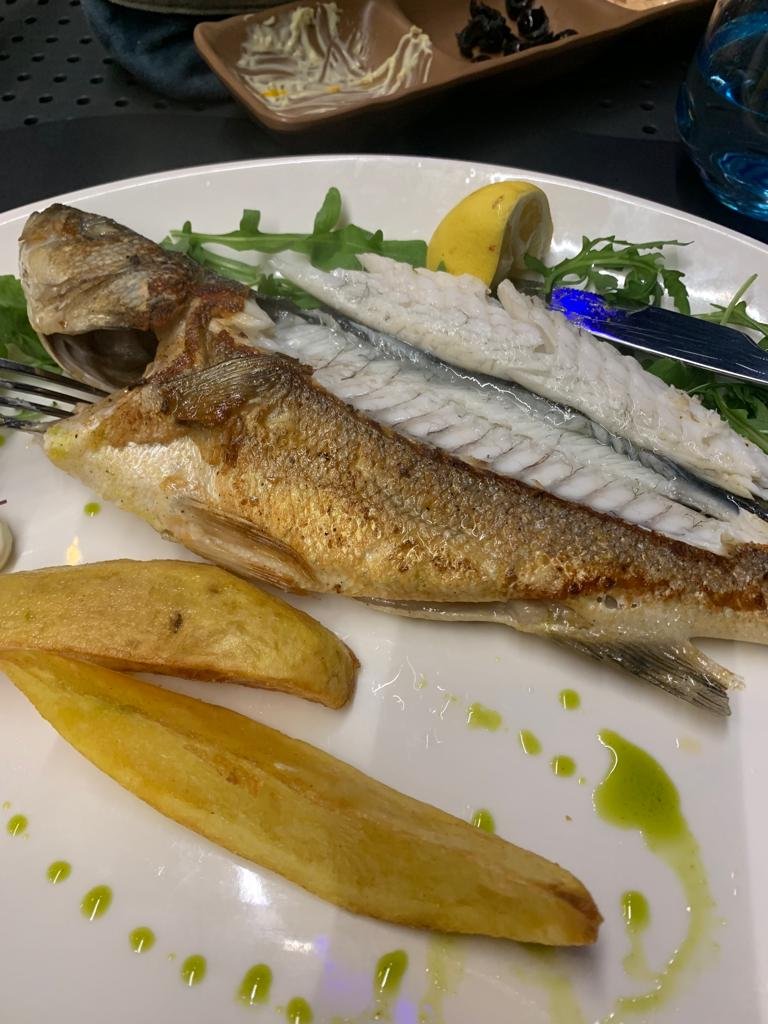
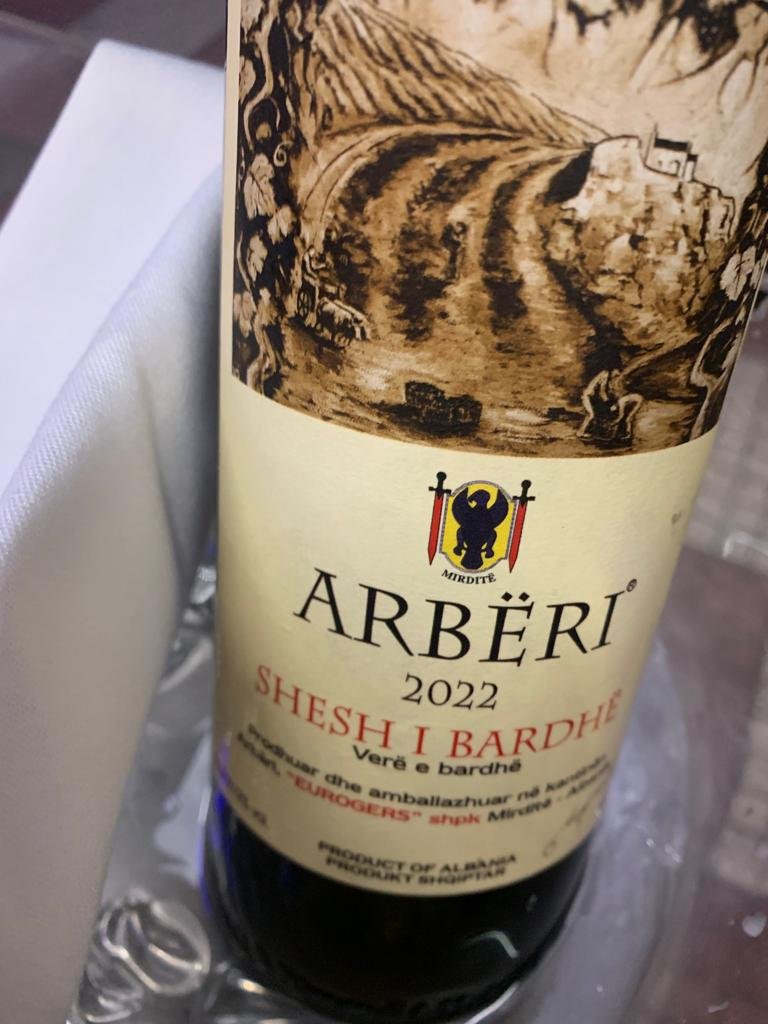
Great that Wales and Ireland also through, but not sure England will survive the next round based on this game. Our first Albanian wine. Nice but not specialNearby fish restaurant was recommended by our host. Sea bass offered on or off the bone. And beautifully cooked.
A no drive day to wander Shkoder and purchase a sim … £14.75 for a month 10gb. Whilst all the accommodation we’ve booked has wifi, we need it when out and about, as much for Google translate!
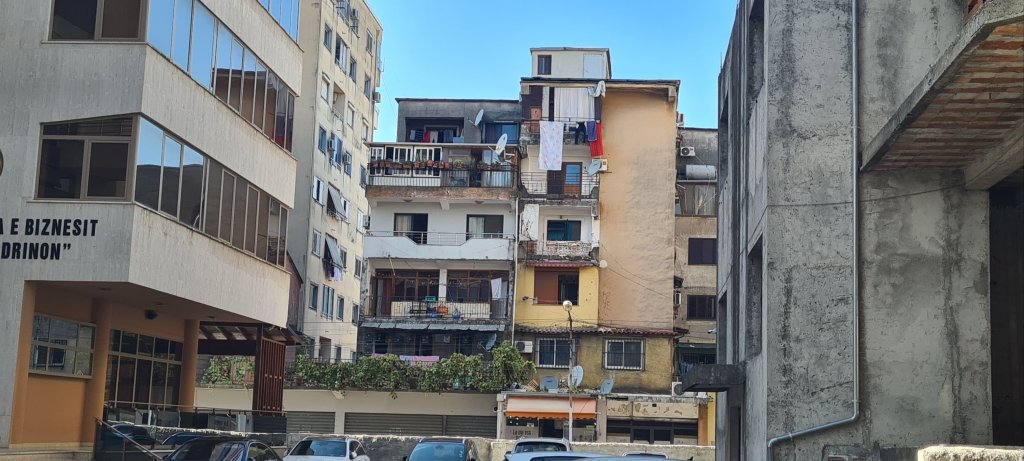
Albania was declared the first ever atheist country from 1967. Most churches and mosques were either destroyed or redeployed. This Catholic St Stephen’s cathedral was used as a sports hall.Most priestsand imams were imprisoned or executed.Mother Teresa is claimed by Albania as their own, although she was born in North Macedonia. The flowers were left on her recent Saints DayThe main Mosque. The original was destroyed in 1905 by an earthquake. The Ottomans rebuilt it in 1910, only for it to be pulled down in 1960’s during the atheism period. Rebuilt in 1995 by a private sponsor.What a waste £££. Most buildings seem to have been privately funded from overseas. Half the main pedestrian Street.Typical mid rise accommodation
We didn’t get far down the main street before we stopped for a boozy salad. No alcohol in the salad, but lots in us. In the evening, after a nanny nap, we found the other end of the long main street, with lots of stray and over friendly dogs. And people. So many folk out. Had a rubbish grill meal but chatted to an Australian Slovenian couple who told us of their fave places for our return trip. Yes, we’ve decided that we really ought to do Albania properly. So after our 10 days in Corfu with the Aged Ps, we come back. Got the month on a sim now!
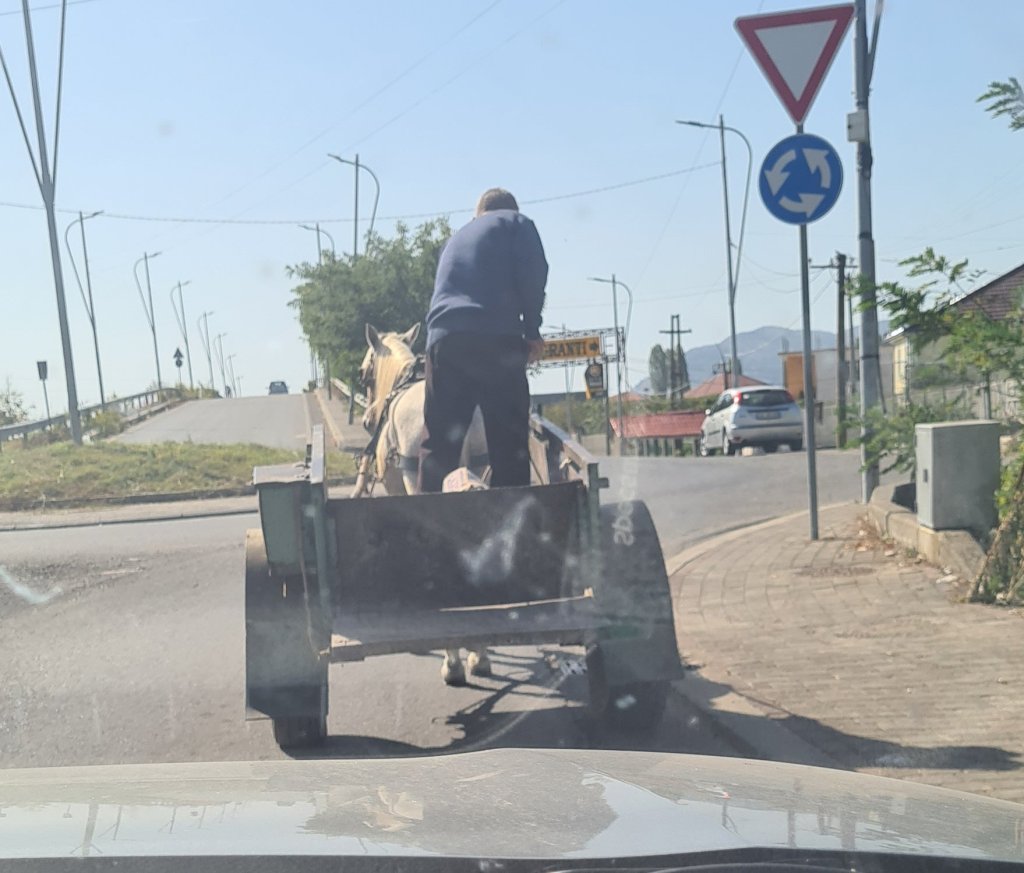
The other end of the main streetThe mosque again, but lit upCaged canaries here too 😔 Driving school cars are often aging Mercs. One man and hishorseOne man and his cow
Leaving Shkoder town, we headed for Rozafa Castle. But the road kept shrinking, and cars just kept coming the other way. We valued our car panels and nerves, so we aborted.
Roads fine to our next stop, but driving not. We driven in Paris during rush hour. Milan, Naples and Sicily. Never ever have we experienced under taking, over taking, and general free for all at roundabouts and junctions. Throw in the cyclists, pedestrians, and the odd cow or donkey who all think they have right of way. The government has imposed very slow speed limits, which everyone ignores. And a LOT of speed bumps.
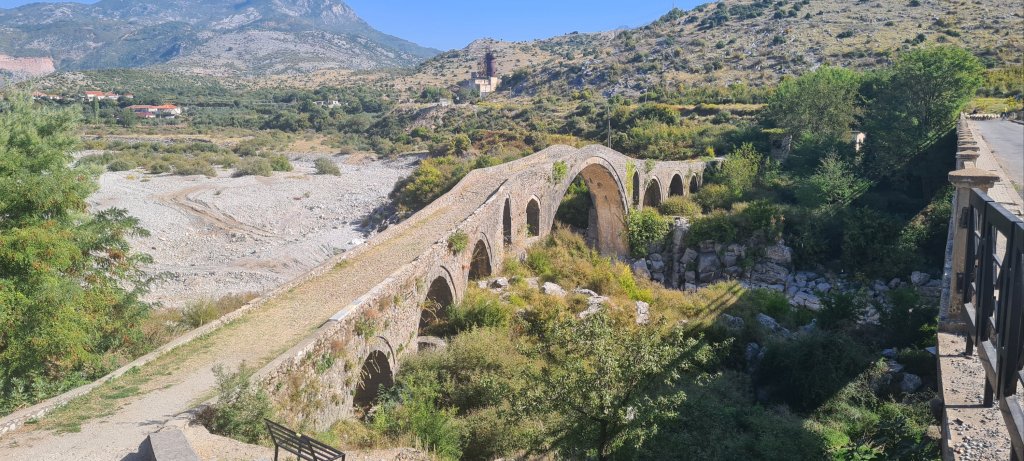
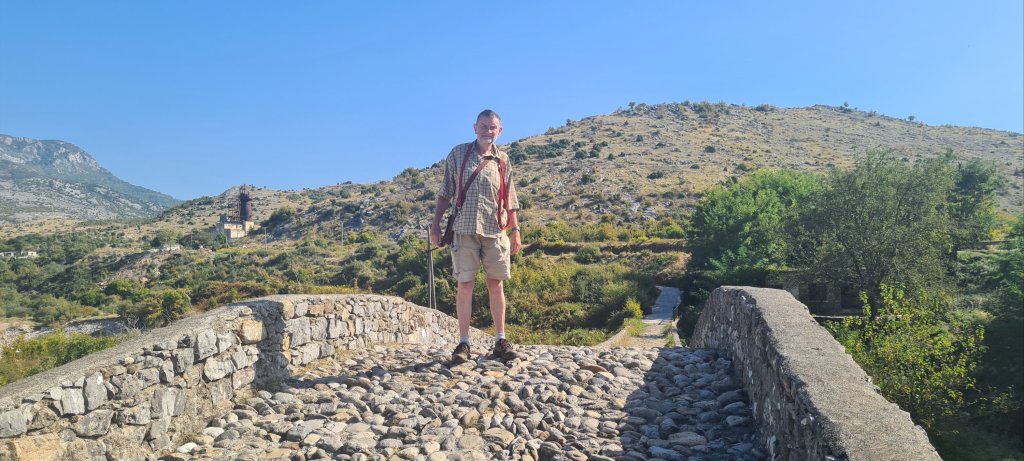
We arrived, car panels intact, to stop at the Mesi bridge built in 1770, one of the longest Ottoman bridges. Reinforced with additional arches (13 of them), so architecturally significant. Despite the river being dry now, there are huge river bank defences, so there must be a torrential flow after rain.
It has been restored but the force of water has created cracks. Remains of the old new bridgeIt ain’t straightProtective banks
We aborted the next castle too, as didn’t like the path up. So it wasn’t to be a castles day! According to the guidebook, the Ottomans had destroyed it, so it was probably little to see. And what there would have been, would have been overgrown like the path.
Walk through this hamlet to the 2nd aborted castleProper mountains 9Chicksat our lunch stop. Chicken had to pre-ordered … I’m sure they would have wrung the neck of one of the garden ones!
We then headed up to Koman. Another interesting road. I use the term loosely. 32km of bits of tarmac with lots of disintegration and subsidence. A very slow drive but lovely views. Would have been great for wild camping in the van. Overnight was a hotel in Koman and a fab meal at a local restaurant. So much food, it was also lunch the next day. Bonus, as we’d been told only a sandwich shop at ferry port.
Fisheries along the road to KomanI lay on a hotel sun lounger for a while … recovering from the bumpy road!




















































 Clune Gap Years