13-14/08/2023
Leaving the bustle of Karpacz, we motored to Magnolia Park. Sounds like an American TV show? Appropriate, as it was a huge retail mall. There was a Decathalon, but I restrained myself. I don’t like shopping but always find something I most definitely need in outdoor shops. I did make use of both the toilets and Carrefour!
I accosted several people with a gin dobry (hello, not a gin and mixer), and do you speak English? A Russian native speaker with excellent English helped me. I would love to have asked how come she speaks Russian, but I’d already delayed her enough. I downloaded the Jakdojade transport app. It is brilliant. Real-time info on when busses and trams nearby are leaving for your selected destination. And a gps map to help you walk to your stop. It’s a model of how a transport system should work. J, being over 65, was free and each trip was under £1 for me.
After a quick lunch, we went into Wroclaw. No gps.my city downloadable walking tour, despite it being Poland’s 3rd largest city. I asked in the Tourist Information, but none available I was told! I later found an interactive map, which helped guide us. In the meantime, we used the guidebook and tried to identify the main sites. We ended up on the original city originally an island, which houses the ecclesiastical area. Nice.


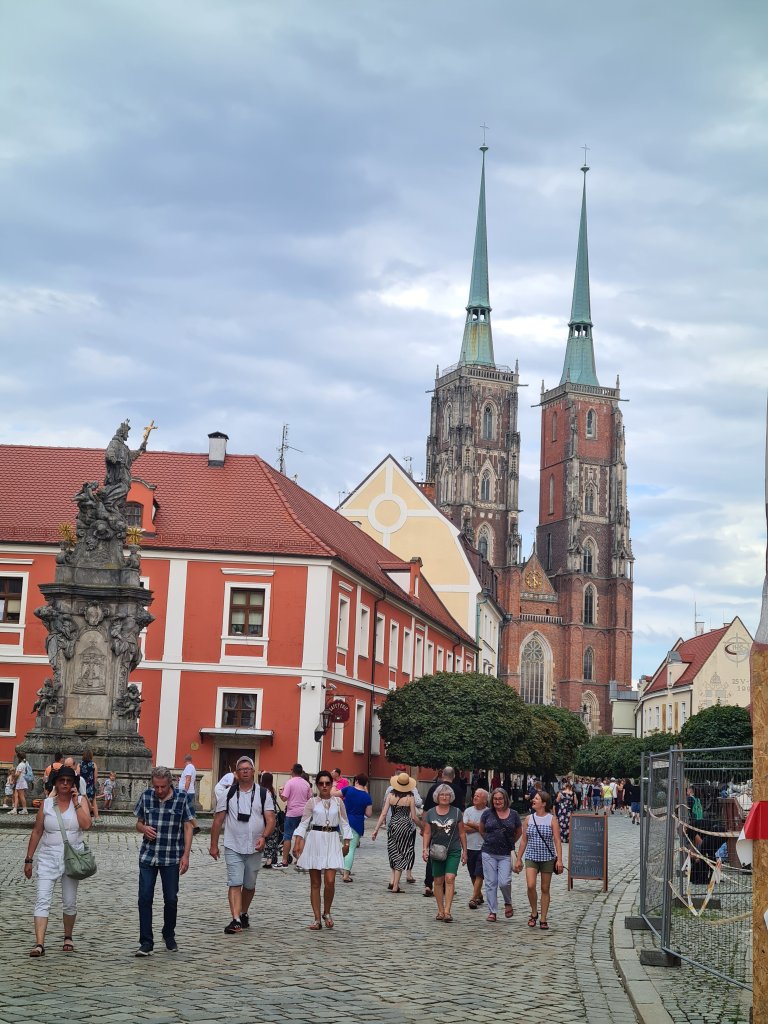

Desperate for a sit down (and pee) we sought out a cafe. No. 1 choice was aborted … 20 mins to get a menu and then no sign of staff to take the order. We left! No. 2 choice was a gem. After my first Apperol of the trip, 2 actually, we decided to eat there. The young girls were lovely and we had taken root.


On Monday we wandered a few more sights, before brunch.
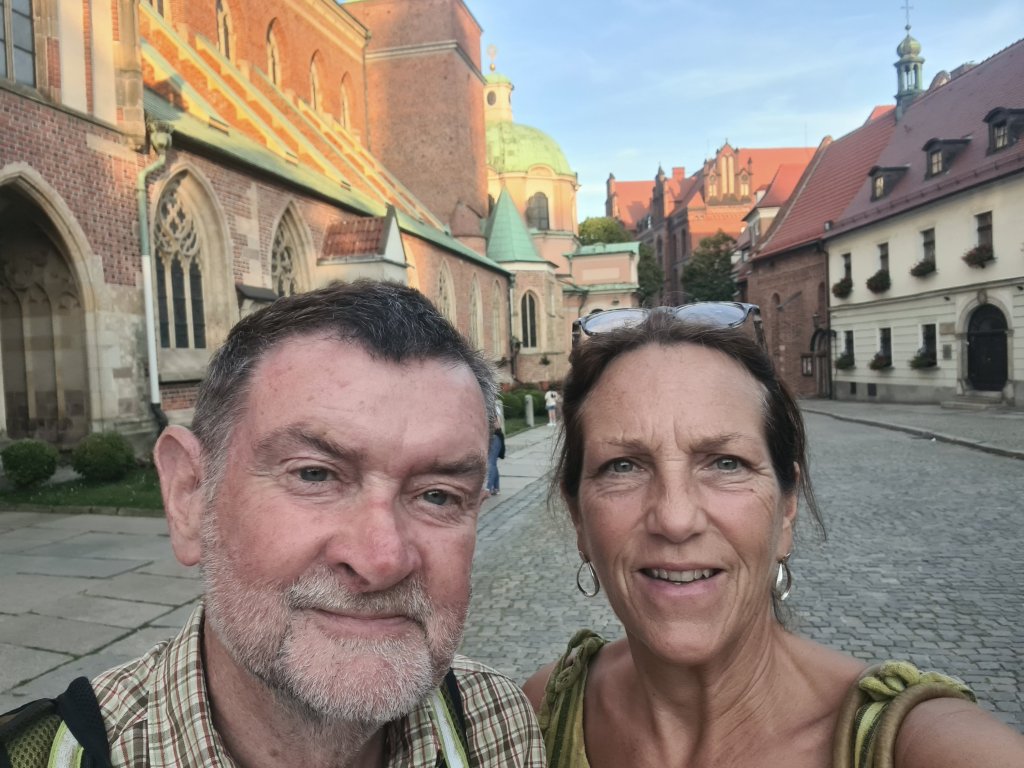
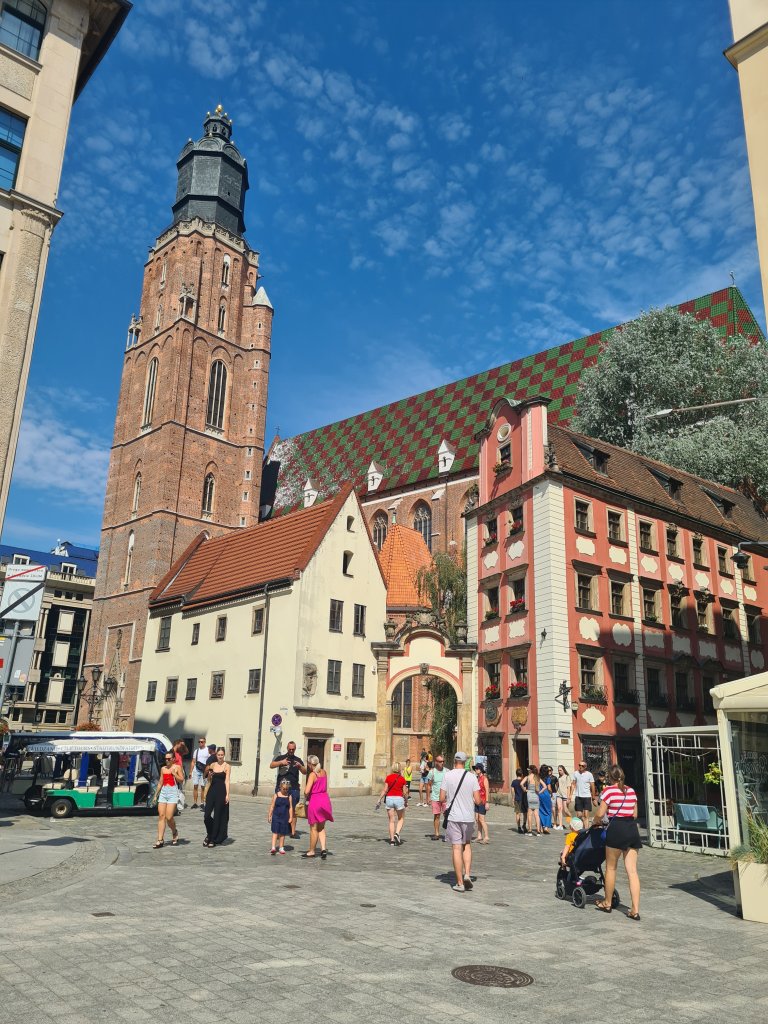


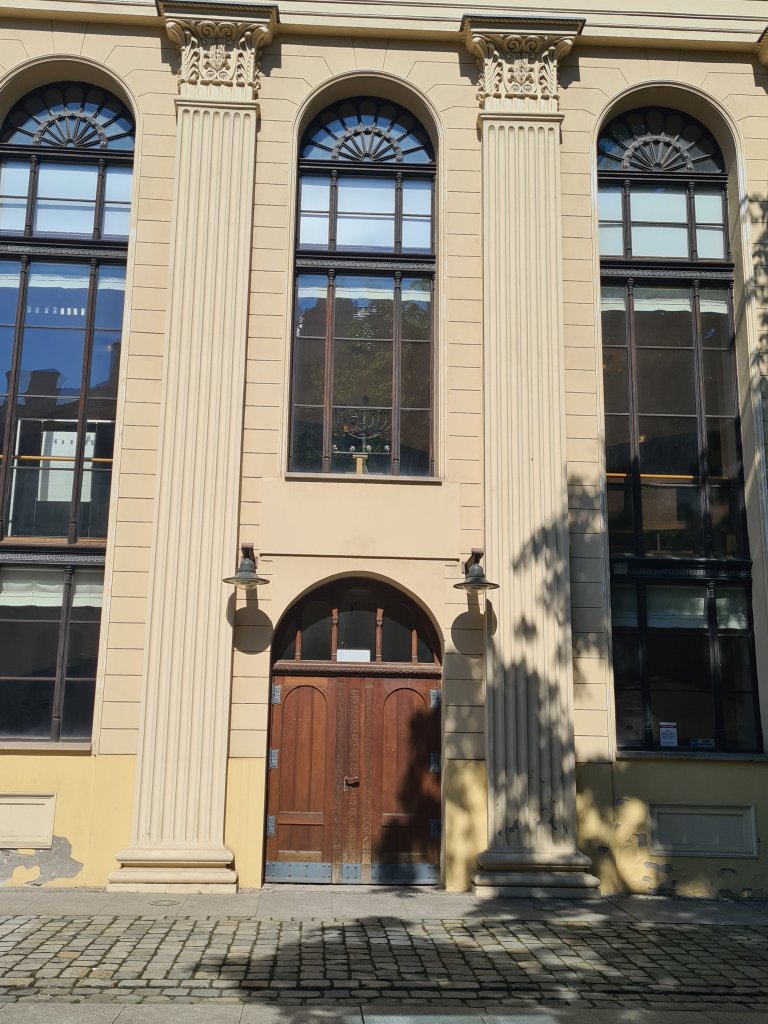
We joined a ‘free / tip what you think’ walking tour with the focus on Wroclaw Jews and WW2. Local Lucas had read history and been a tour guide for 11 years. Excellent English and possibly one of the best walking tours we’ve done. This part of Poland had been German until 1948. It had the 3rd largest Jewish population in Germany. The town was heavily pro Nazi. After Krystallnacht, half the Jews fled. The remainder ended up at extermination camps. Treatment of Jews in Wroclaw swung from inclusion to persecution over the previous centuries. And even more sadly persecution in 1968. The economy was in freefall, and people couldn’t afford bread. The government had cast blame. It landed on the Jews. A number were allowed to get passports and leave Poland. Only 54 years ago!
Not until 1945 did Wroclaw receive a few Allied bombs but was ‘given’ to the Russians to invade. Women and children fled to the hills in the south, but 90,000 perished in the January hard winter of 1945. Men and boys were forced to stay and hold the city. They were more scared of the Nazi mayor who publicly executed any dissenters. Wroclaw fell after very heavy bombing 2 days after Berlin.
Post war, the borders were re-drawn again. Poland effectively shifted west, losing eastern land to the Ukraine and gaining German land to the west. Wholesale populations moved. Lovely Lucas explained his grandmother had been displaced from what is now the Ukraine. With the shortage of housing, they shared an apartment with Germans for 5 years, until the Germans were given 2 hours notice by the Russian police to pack and join a train, taking them to Germany. Under Communist rule, Poles could buy farms and apartments for about 10% of their value. Lucas said, like elsewhere, young Poles now can’t afford to purchase their own home.


 Clune Gap Years