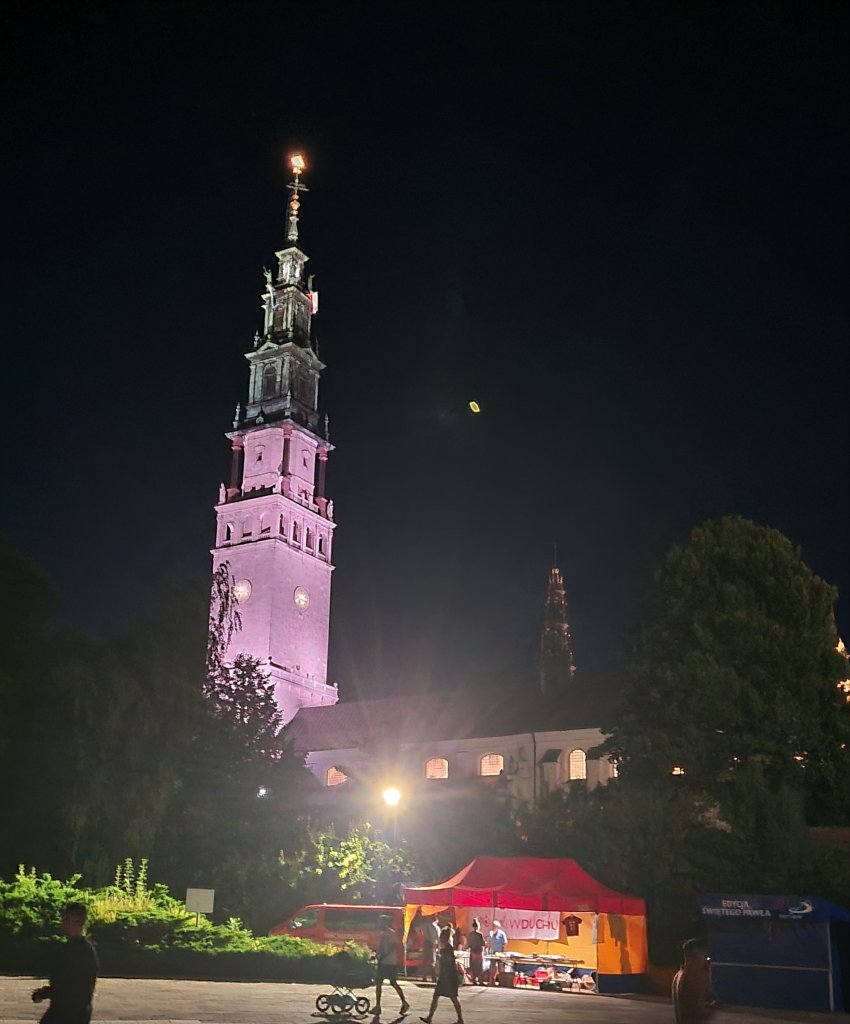
Yesterday we left Wroclaw and drove 3.5hrs to Jasna Gorna, monastery with a black Madonna.
It was a more interesting journey than it should have been. Especially after a busy day.
We drove on an eflow motorway. Up to now, there have been toll booths. I’d downloaded the app, entered our reg, but had no facility to create an account. It just returned the message that under 3.5 tons are free. Jez is most decidedly not under 3.5 tons. An email has since gone to eflow.
A sign appeared on the next motorway … 15km of bumps. The speed limit reduced from 140km to 80. I was lucky to be do 40km in places. It was like an old amusement ride I used to take Maddy as a toddler to, called the cake walk. Basically a walkway rocked and bucked and tried to throw you off.
As we approached Jasna Gora, the roadworks were long and rough. Lots of sections of one way with lights. Raised man holes. And switching across a raised central reservation to the other side … frequently. I have yet to inspect if the contents of my wardrobe have left their rail.
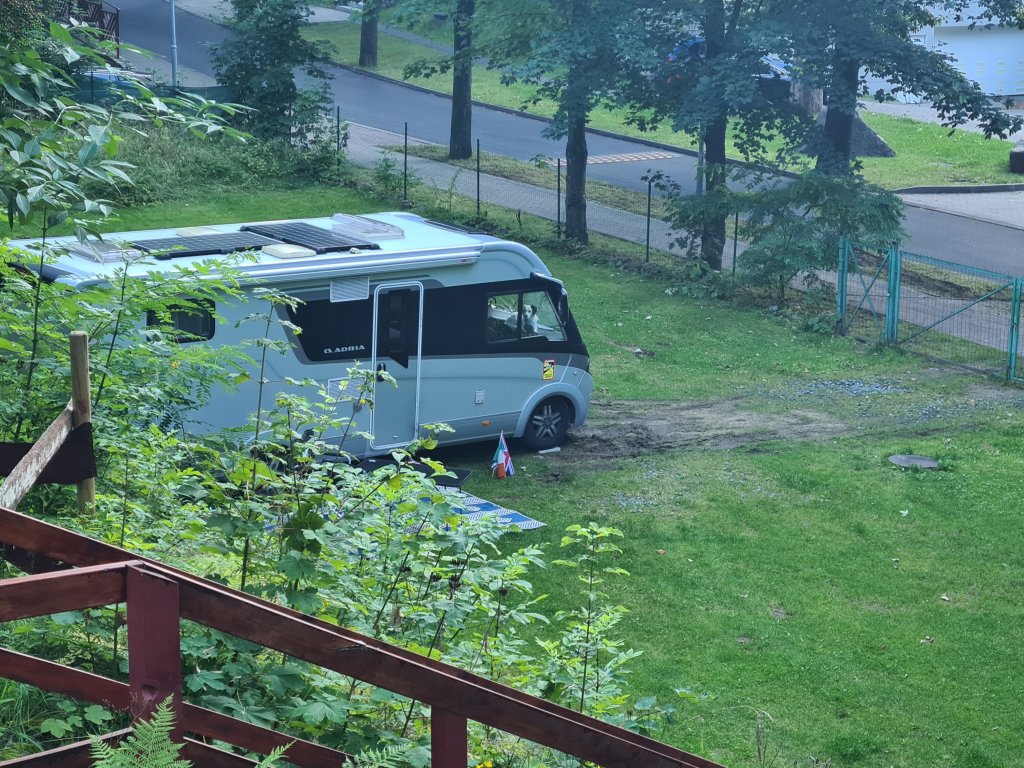
Arriving at the car park, we were lucky to get a space. The car park attendant had me back and forth until I was perfectly on the white line. £16 just to park for 15 hours … dearer than the Karpacz campsite, which had services.
Roadworks, not fun in the dark last night.
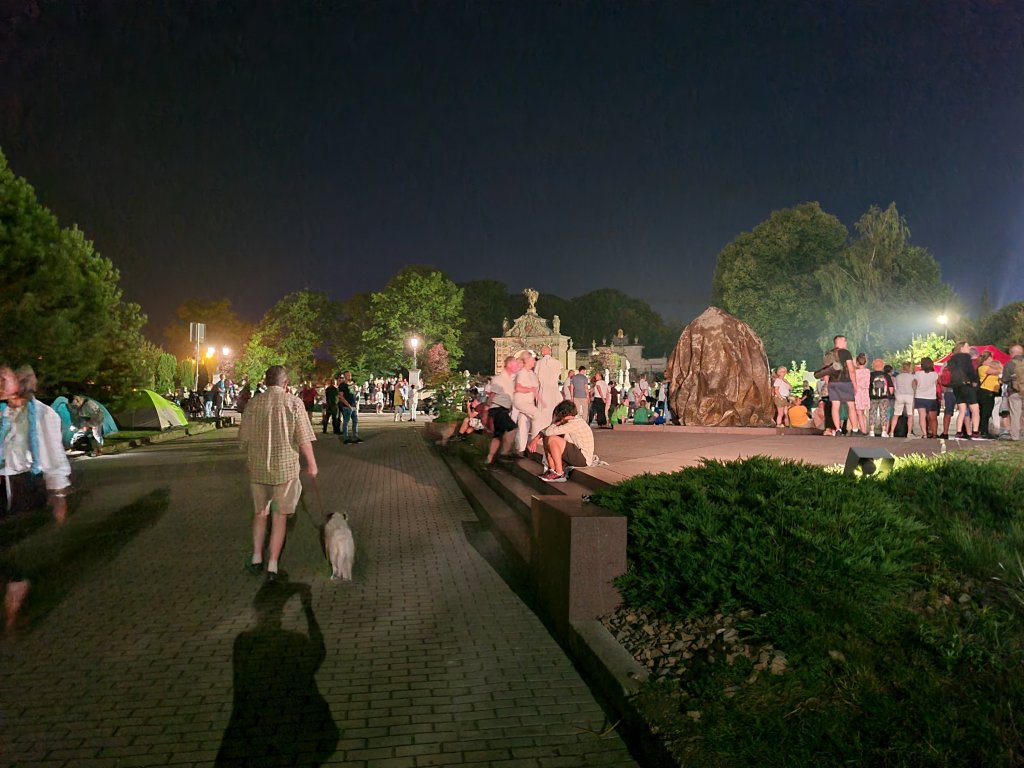
Last night was supposed to have been dry, but I reckoned I deserved a glass or two after a wander to get a sense of place and to see how the Poles celebrate the Feast of Assumption.
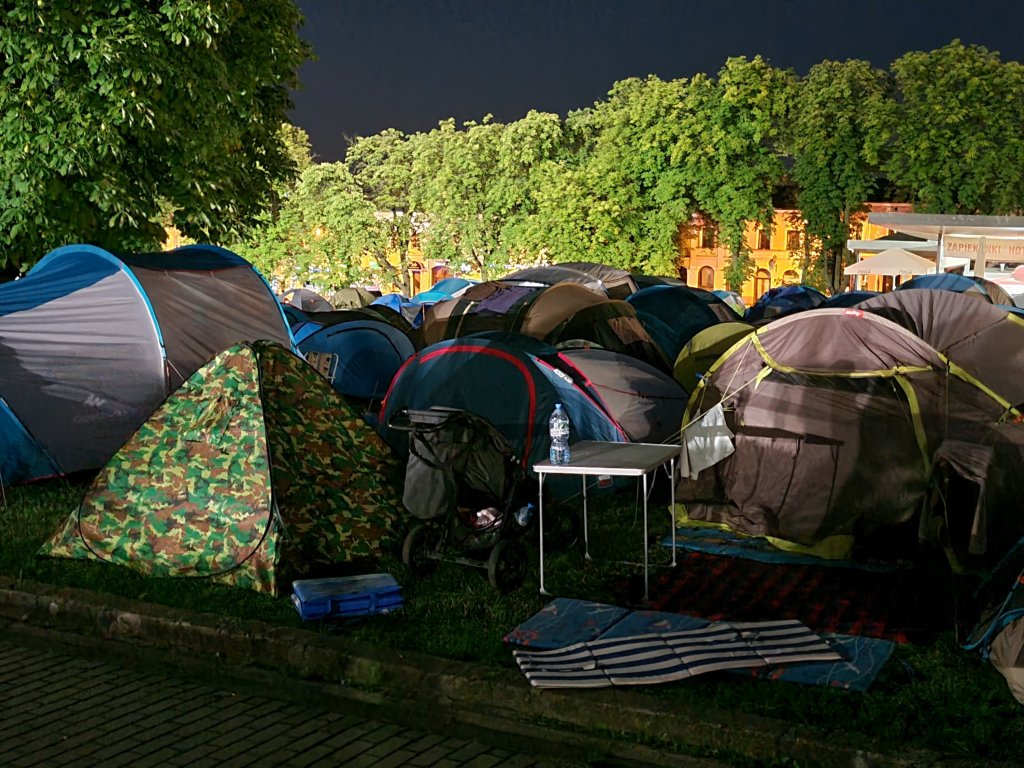
10s of thousands of people. Families, all ages and groups. Some in festival tentsand others slept in their cars. Jasna Gora also had block upon block of accommodation. We’d arrived at the largest pilgrimage site in all of Poland on its busiest day!
My back and sciatica were starting to niggle, so this morning, I did pilates in the shade of the van in the car park. J headed off to attend the 9.30 mass, thinking there would be a live broadcast in the field to the throng of people. It wasn’t. Deciding we’d had enough of crowds, we left with no mass for J and neither of us seeing the black Madonna.
A 2 hour drive back through the roadworks, but leaving the motorway before the cake walk ripples, to the largest dessert in central Europe. Pustynia Bledowska was created due to deforestation. The timber was used in nearby silver and lead mines. It really is a great spot. Locals coming for the view. A good chat with a family and an ice cream seller. 😊
Our afternoon and overnight parking spot with a view of the dessert. It’s mostly used as a military training ground. Afternoon walk in the cool of the beach trees.To 2 small lakes where families were swimming and sun bathing.
Leaving the bustle of Karpacz, we motored to Magnolia Park. Sounds like an American TV show? Appropriate, as it was a huge retail mall. There was a Decathalon, but I restrained myself. I don’t like shopping but always find something I most definitely need in outdoor shops. I did make use of both the toilets and Carrefour!
I accosted several people with a gin dobry (hello, not a gin and mixer), and do you speak English? A Russian native speaker with excellent English helped me. I would love to have asked how come she speaks Russian, but I’d already delayed her enough. I downloaded the Jakdojade transport app. It is brilliant. Real-time info on when busses and trams nearby are leaving for your selected destination. And a gps map to help you walk to your stop. It’s a model of how a transport system should work. J, being over 65, was free and each trip was under £1 for me.
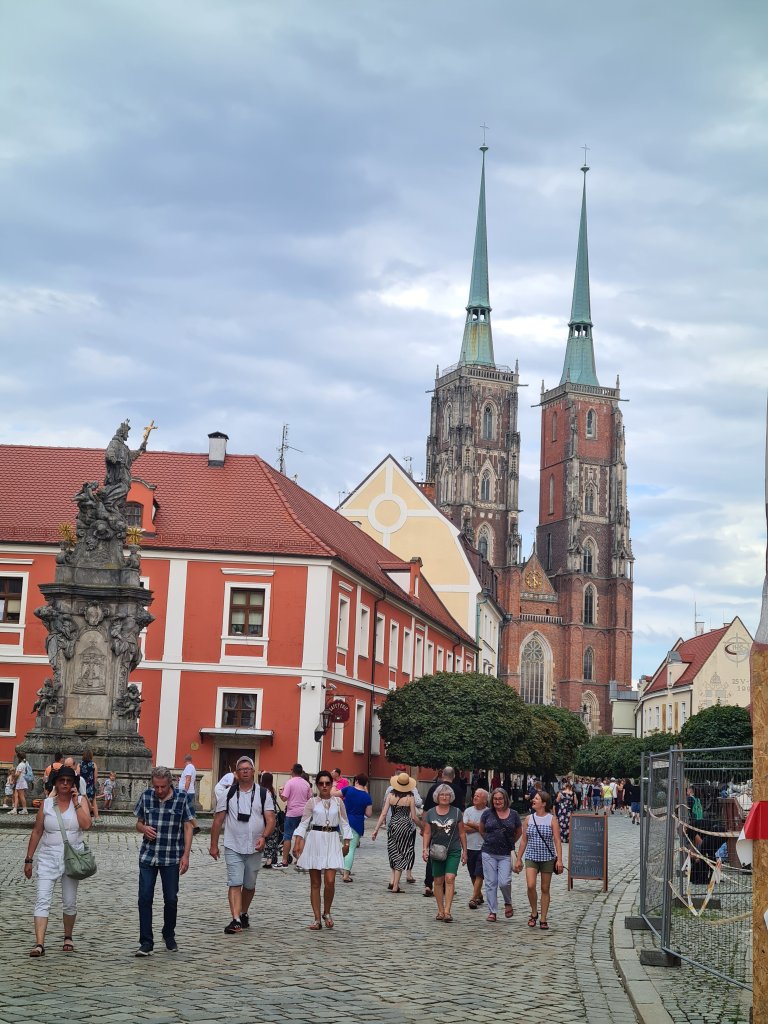
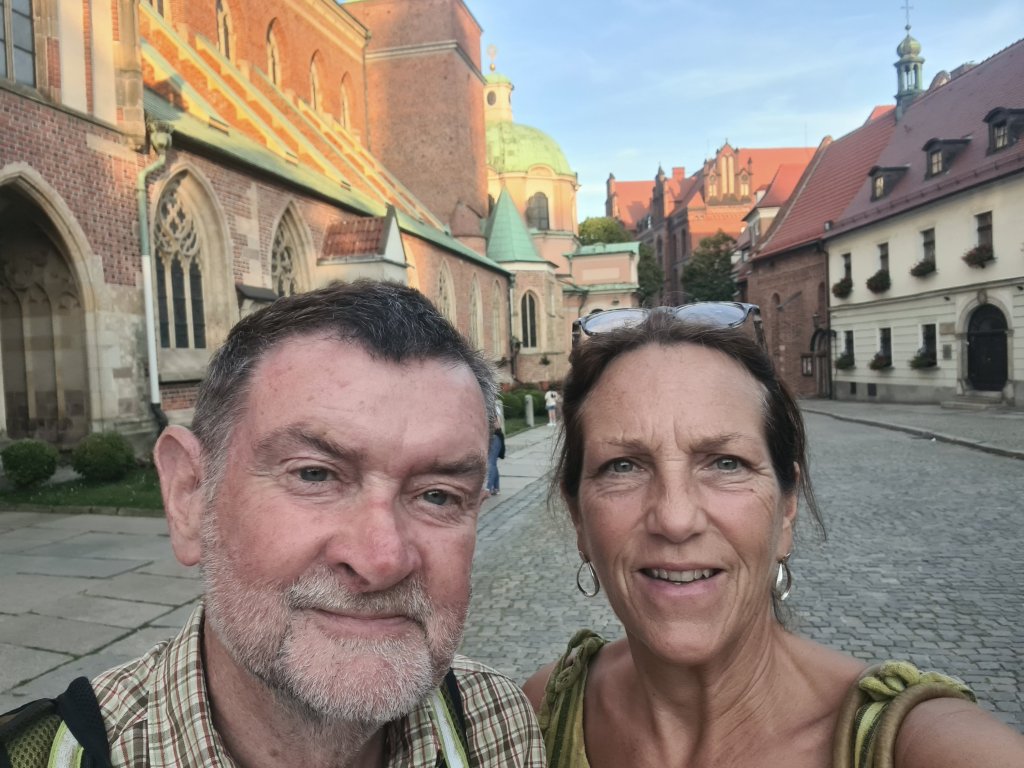
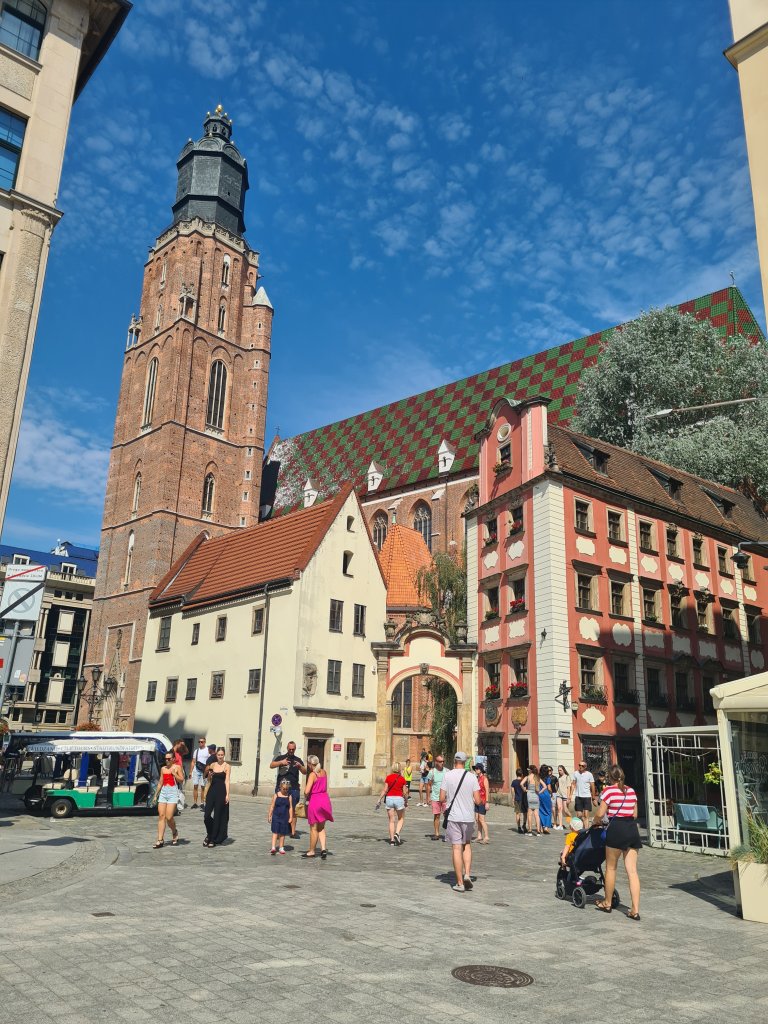
After a quick lunch, we went into Wroclaw. No gps.my city downloadable walking tour, despite it being Poland’s 3rd largest city. I asked in the Tourist Information, but none available I was told! I later found an interactive map, which helped guide us. In the meantime, we used the guidebook and tried to identify the main sites. We ended up on the original city originally an island, which houses the ecclesiastical area. Nice.
The market squareGothic Town Hall Ostrow Tumski where the bishopric was formed in 1000. The city moved in 1292Kids wandering around with maps and stickers (and parents!)Dwarf hunting. They were created as an amusing dig at the idiosyncrasies of Communism and now represent significant events.
Desperate for a sit down (and pee) we sought out a cafe. No. 1 choice was aborted … 20 mins to get a menu and then no sign of staff to take the order. We left! No. 2 choice was a gem. After my first Apperol of the trip, 2 actually, we decided to eat there. The young girls were lovely and we had taken root.
J’s delicious salmon on black quinoa and citrus notes.Always a risk that duck breast will not be tender … this was perfect with raspberry and rhubarb notes!!
On Monday we wandered a few more sights, before brunch.
Hansel and Gretel houses, as they’re holding hands!The old prison Eggs royale for brunch for both of us.
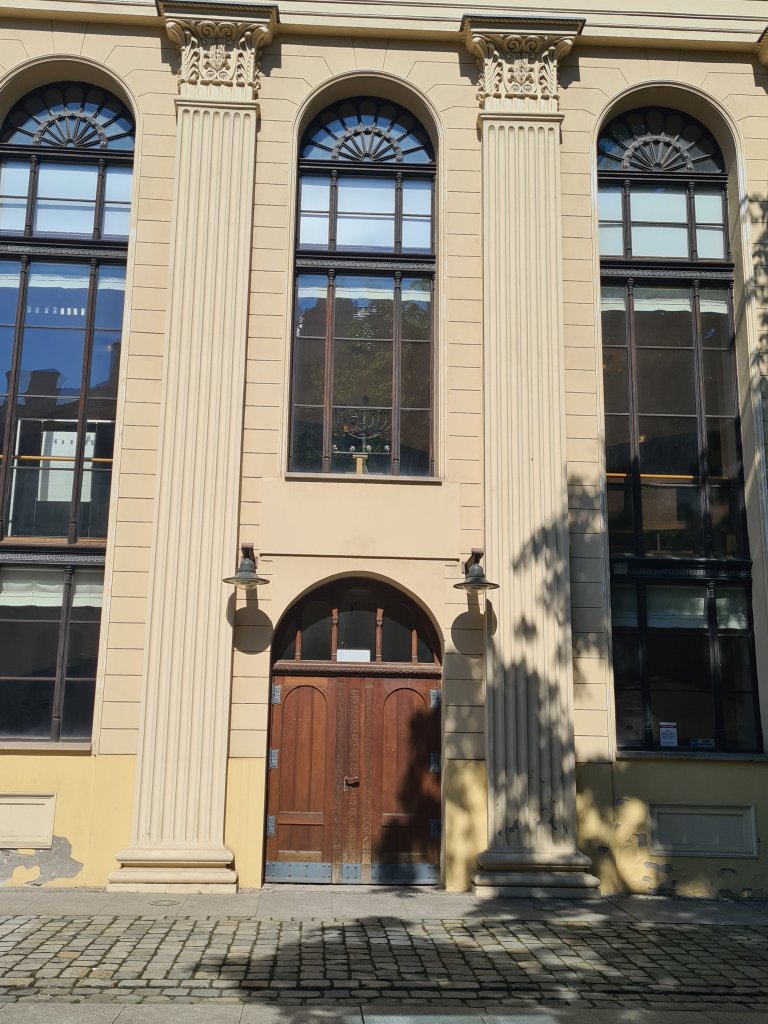
We joined a ‘free / tip what you think’ walking tour with the focus on Wroclaw Jews and WW2. Local Lucas had read history and been a tour guide for 11 years. Excellent English and possibly one of the best walking tours we’ve done. This part of Poland had been German until 1948. It had the 3rd largest Jewish population in Germany. The town was heavily pro Nazi. After Krystallnacht, half the Jews fled. The remainder ended up at extermination camps. Treatment of Jews in Wroclaw swung from inclusion to persecution over the previous centuries. And even more sadly persecution in 1968. The economy was in freefall, and people couldn’t afford bread. The government had cast blame. It landed on the Jews. A number were allowed to get passports and leave Poland. Only 54 years ago!
Not until 1945 did Wroclaw receive a few Allied bombs but was ‘given’ to the Russians to invade. Women and children fled to the hills in the south, but 90,000 perished in the January hard winter of 1945. Men and boys were forced to stay and hold the city. They were more scared of the Nazi mayor who publicly executed any dissenters. Wroclaw fell after very heavy bombing 2 days after Berlin.
Post war, the borders were re-drawn again. Poland effectively shifted west, losing eastern land to the Ukraine and gaining German land to the west. Wholesale populations moved. Lovely Lucas explained his grandmother had been displaced from what is now the Ukraine. With the shortage of housing, they shared an apartment with Germans for 5 years, until the Germans were given 2 hours notice by the Russian police to pack and join a train, taking them to Germany. Under Communist rule, Poles could buy farms and apartments for about 10% of their value. Lucas said, like elsewhere, young Poles now can’t afford to purchase their own home.
Site of the burning of 48 Jews in 1483.All the Communist era neon signs in a hip alley. Lucas explained he remembers some of them in situ and being the only colour in a grey city. More dwarves, commemorating a concertThe synagogue designed to blend in. The square was the site of Krystallnacht.
On a campsite on the edge of Karpacz. Only £16pn, no EHU. 3 nights. On arrival I deployed the twin tub.
Just us and one other the first night.By Saturday evening, cheek by jowl. The German roof tent has been invaded by a Polish group the far end and the latest arrival is on their other flank. Somehow, we have to navigate through it all to the stairs to the washrooms. Glad we’re leaving tomorrow! A lot of sirens going off too, competing with the noise from the group.
We walked into town. Busy. But found a restaurant with a small queue. Great supper, each dish around £7.50. Wine imported from France … small bottles of cab sav by Paul Maas at £3.50 each. Vodka or beer would’ve been cheaper.
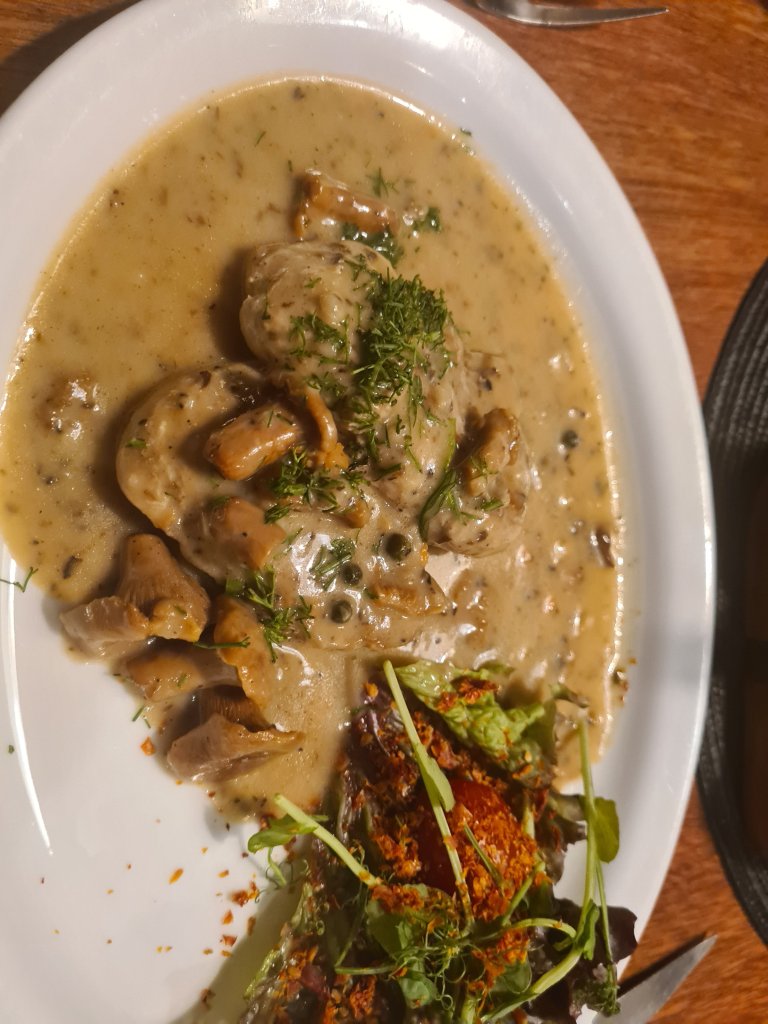
J had minced pork roll around bacon, onion and mushroom. With a ‘delicate’ sauce. I ordered pork loin with mushroomsauce. Actually, it was pepper sauce (offered elsewhere on the menu), withmushrooms thrown in. Tasty though. As well as these fountains, Karpacz offers numerous museums such a Lego and toys. We won’t be going!
Yesterday was a quiet day. We needed it after all the socialising before leaving the UK and then long drives followed by busy days. We managed a walk into town to find an ATM and a light lunch … a soup, a huge plate of pate, and 2 soft drinks for £13.10. BBQ in the evening and early to bed despite the snoozy day.
Tourist town.
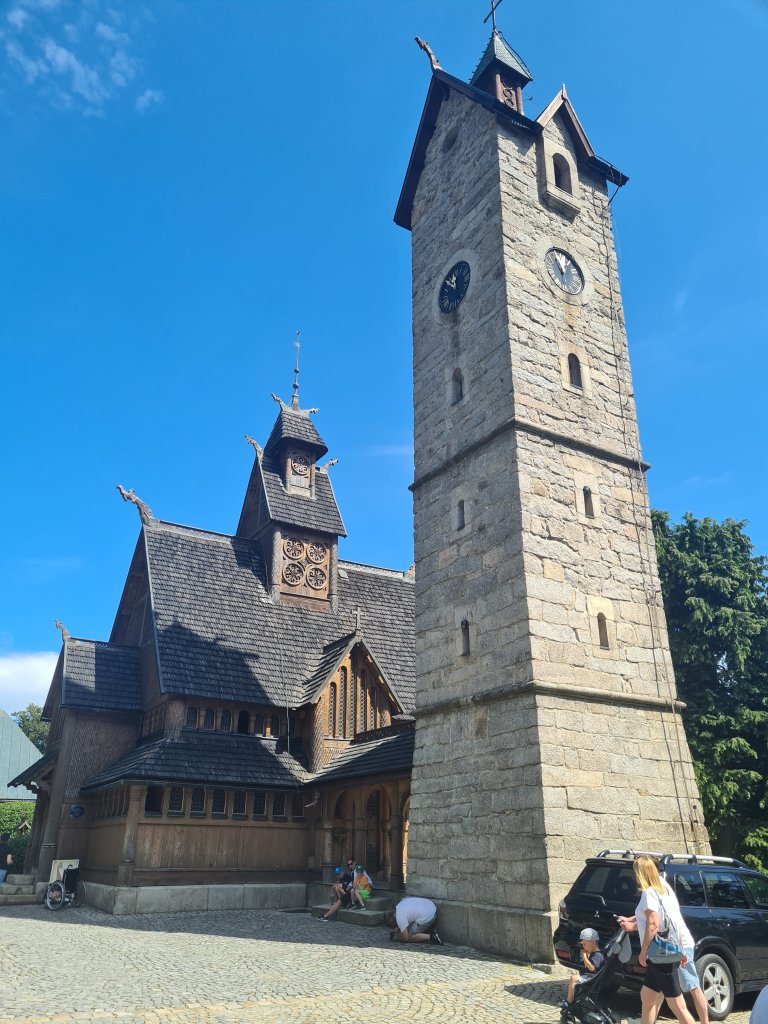
Today, we elected to NOT pay the £16 each to ride the cable car up and down. Being Saturday, the top of the mountain paths would’ve been mobbed anyway. Instead, we elected to walk up to the Vang stave Church. Imported from Noway, where there used to be 400+, now only 40 remain. Rebuilt here in 1842 … no nails. This was busy, so we just had an ice cream. Lovely lunch on the return nearing town.
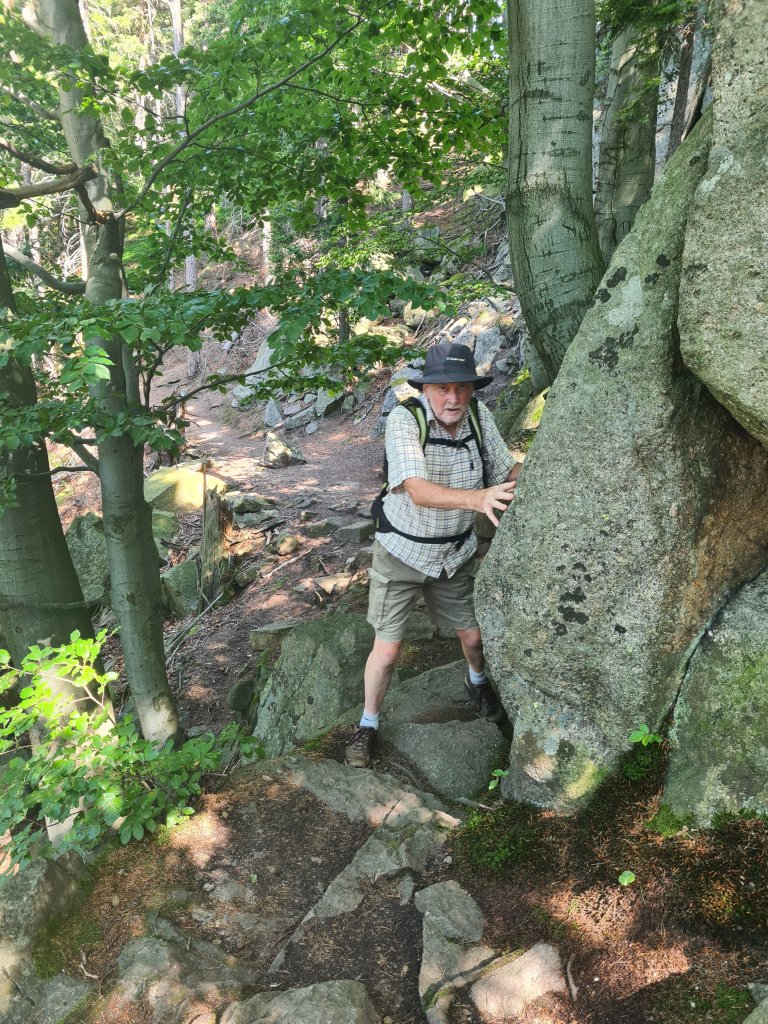
The walk took us over a small dam.Then up a small granite hill. (S)he’ll be coming around the mountain.View from granite mountain … impossible to get a shot without other people. Busy. The tower was an addition to assist against strong winds.We didn’t go in. There was a queue for tickets. Then a queue to get in. Too busy. I don’t know why people said I wouldn’t like Polish food. These crispy potato pancakes with rice pork goulash we so delicious, I nearly ate the lot. Interestingly, J had white wine … from Chile … adding fuel to my theory that Poland is too far north for decent wine
Then a tad more laundry, cos there’s water, a van clean. And an evening gawping at the tightly packed campers … the other side of us is empty, so why??? It is a nice area, but just too popular.
For the first time in ages, J ran and I did a short pilates. After all the driving, my back demanded it. My stomach muscles paid for it for the next 2 days.
The Stalag Luft museum started with a short film … the area had been a German military zone, and there were POW camps here in WW1. During WW2, there were camps housing 300,000+ POWs. Stalag Luft III housed 49,000 airmen. Initially, officers and then a further camp was built for non-coms. The German Luftwaffe ran the airmen camp following German tradition. POWs were relatively well treated. They were not used as forced labour. They received Red Cross parcels. To pass the time, they organised extensive entertainment, including theatre / cabinet twice weekly.
Despite the camp’s location …. a long way from neutral Switzerland and the route to the coast was German or occupied territory. Numerous escape attempts were made. Tunnelling was the method. Another factor against the would be escapees was the camp was sited on sandy soil. They used bed slats, wood from Red Cross parcels, mattresses, etc, to shore up the tunnels. After the Great Escape, all beds were limited to 9 slats! The subsoil sand was also a different colour to the top soil, so had to be mingled or hidden. Huts were half a foot above ground and English speaking Goons used to lie underneath trying to ear wig escape plans.
Tom, Dick and Harry were dug simultaneously. One abandoned as the camp was extended where it planned to exit. Harry was used and was a few metres short, and escapees were discovered. 79 escaped. Only 3 made it to Norway. 50 were shot on Hitler’s orders. Two chaps named Churchill and Nelson escaped the firing line due to their names. Lucky.
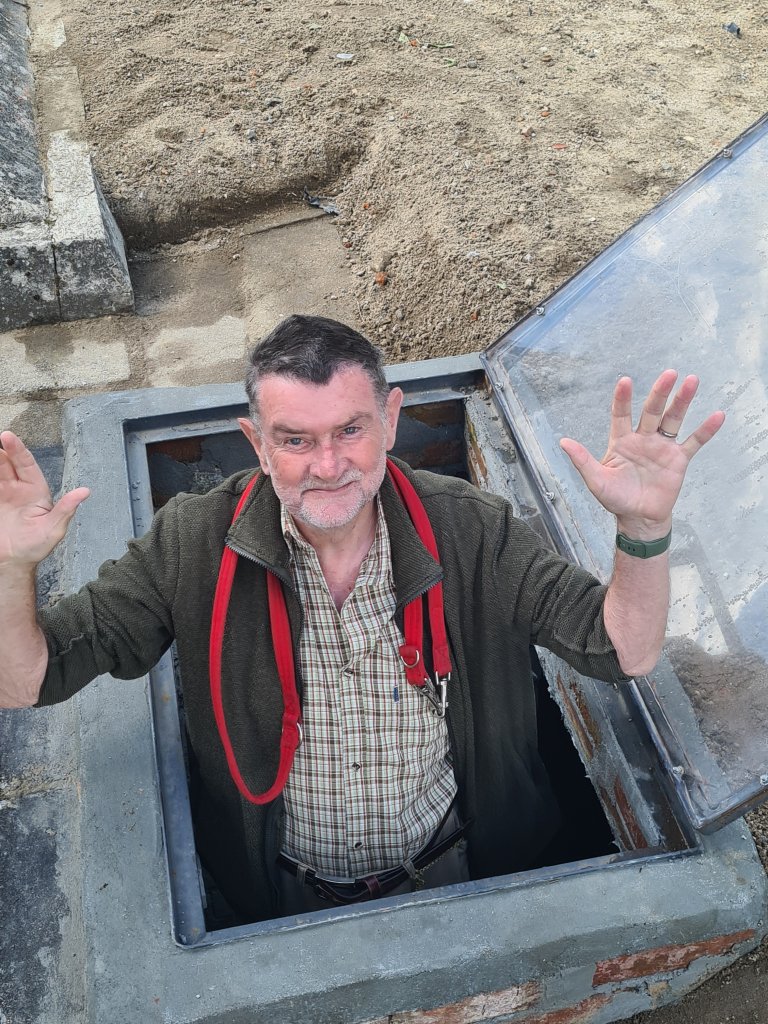
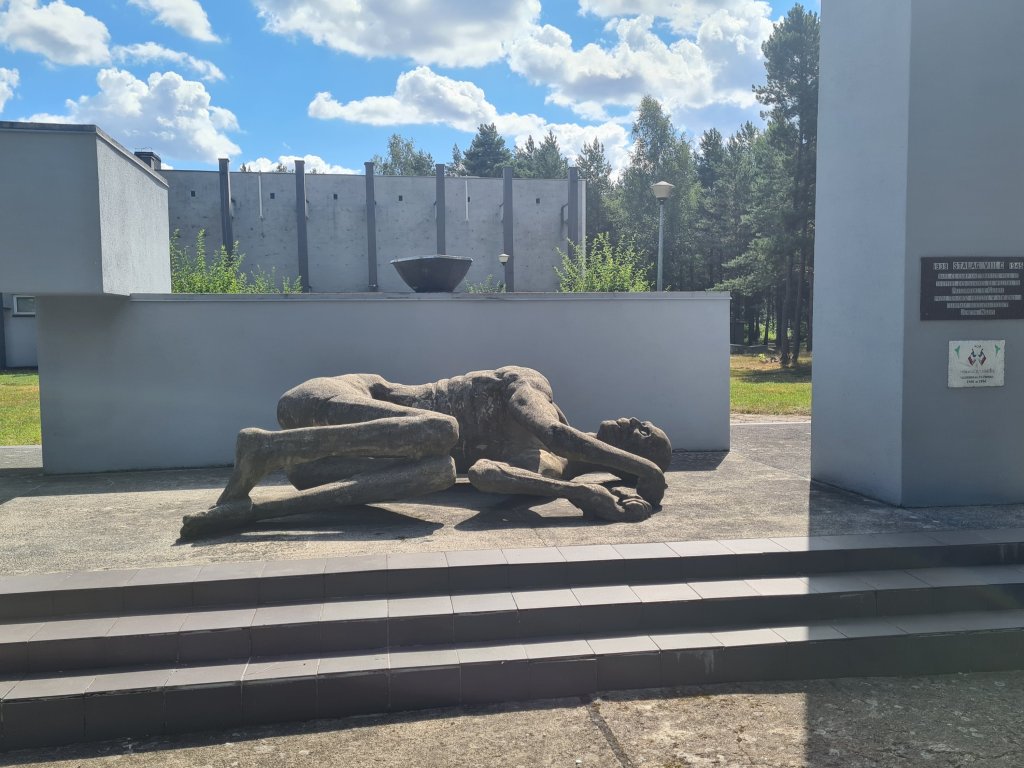
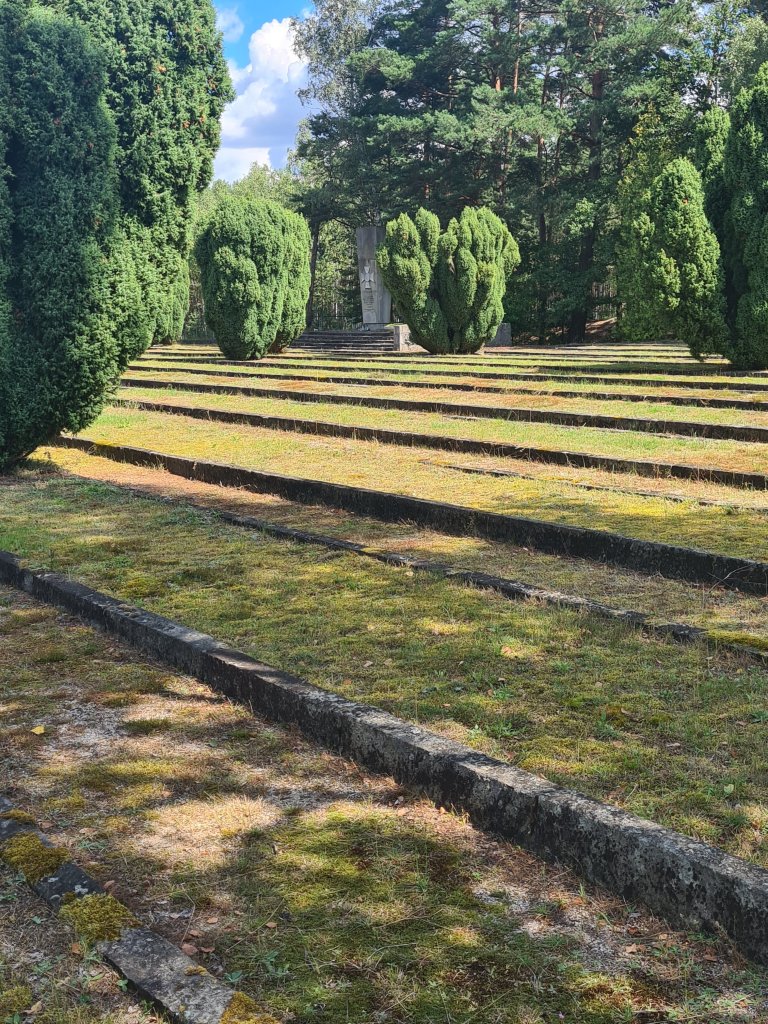
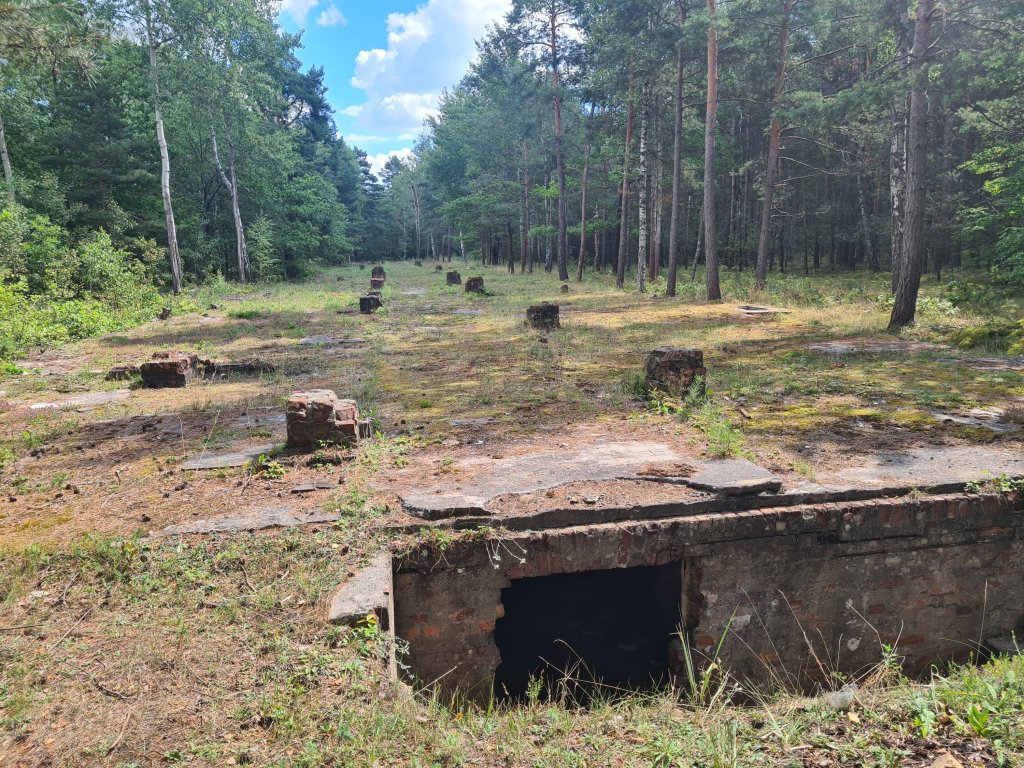
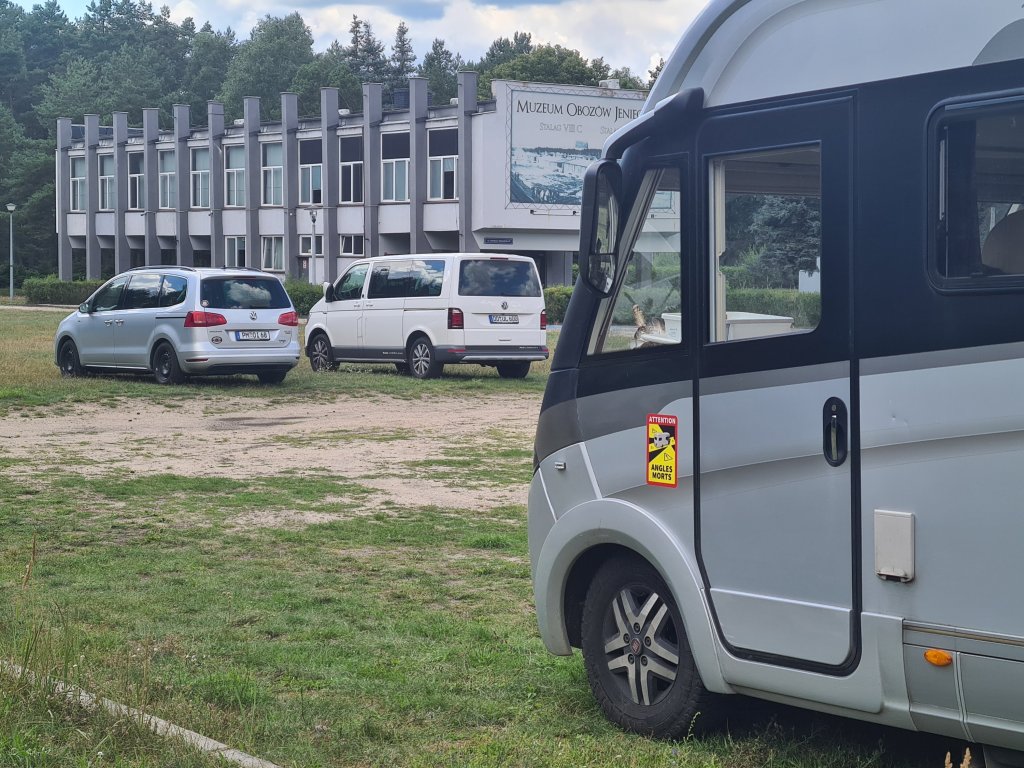
Model of Stalg Luft IIICaught exiting the mock up of HarryWe walked through the pine wood, noticing the sheer size of the camps area to the mass grave. The cement lines added in 1961. They estimate 120,000bodies. Many now exhumed. The site of the exit of Harry, which was several metres short of the shelter of the forest. Just one of the camp remains.The museum and our previous night’s parking.
Pleased to report a dry night in bed. No, incontinence or roof leaks despite the heavy rain. Perhaps yesterday’s leak was the heavy downpour combined with driving, forcing the rain under the lipped roof light. Will need sorting, but possibly be able to be left till Jez on return to the UK.
I took C for her morning walk, discovering some of the above ground bunkers. Poland seems to be like Slovakia … you pay an entrance then share the cost of the guide by the number of people. Tickets £14.50, but the English speaking guide would have been an extra £35. So we booked onto the 11.00 Polish tour, with no guide cost as over 10 people. On my morning walk, I’d spotted audio guide numbers … downloaded the free app.
Obviously, the guide gave a lot more info than the audio guide, but he answered some of our questions in very good English. A few facts:
1. The German army was restricted to 100,000 men post WWI, leaving them vulnerable. Poland was a threat as their army was over 1 million.
2. Germany had to design a defensive strategy. A series of underground tunnels just inside the Polish German border running from the coast north south. Workers from Germany were paid 3x normal wages and could complete a bunker in 2.5 months. The tunnels were worked on for only 2.5 years. Very impressive project management. However, they were never completed as Germany’s strategy became offensive …
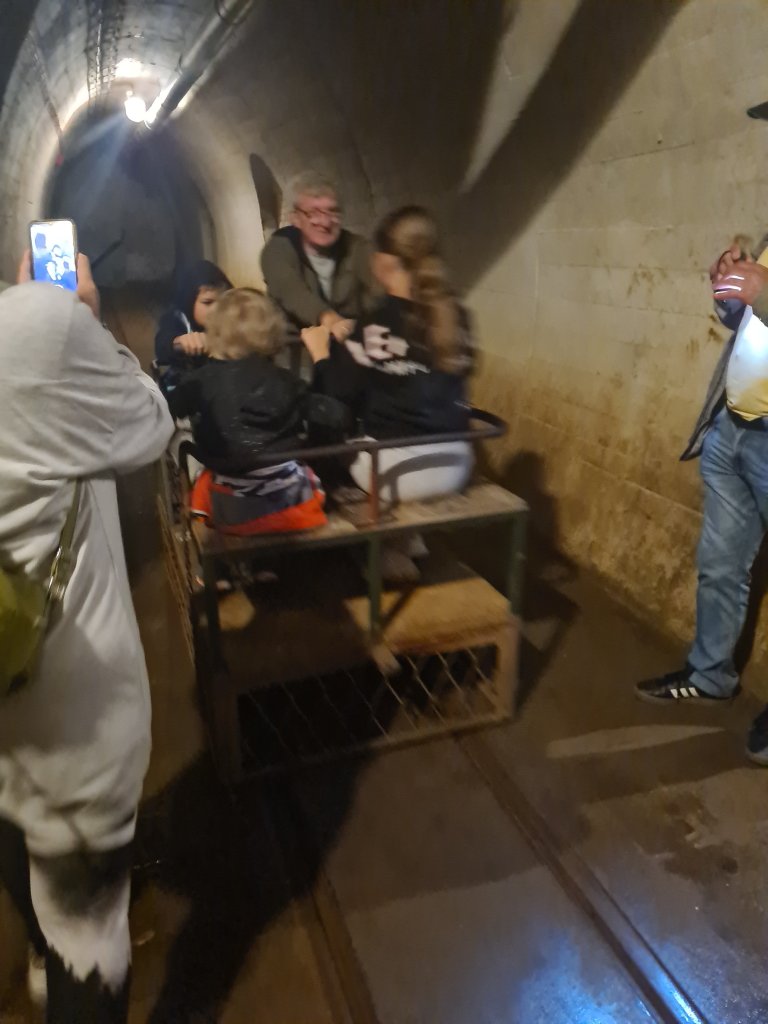
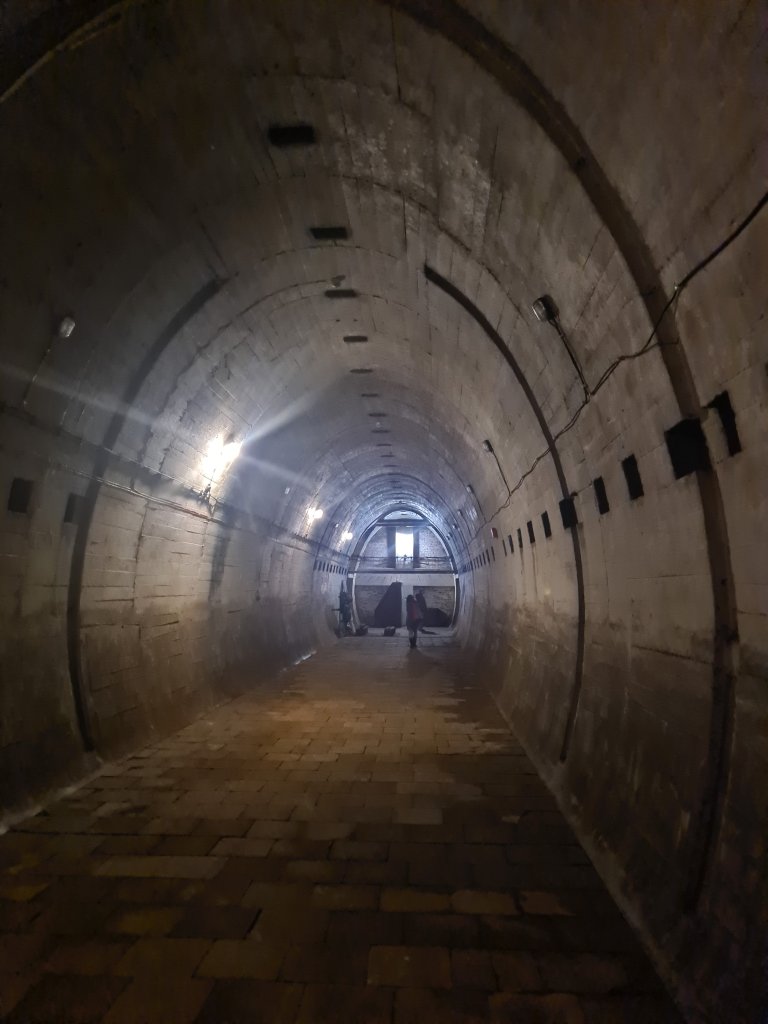
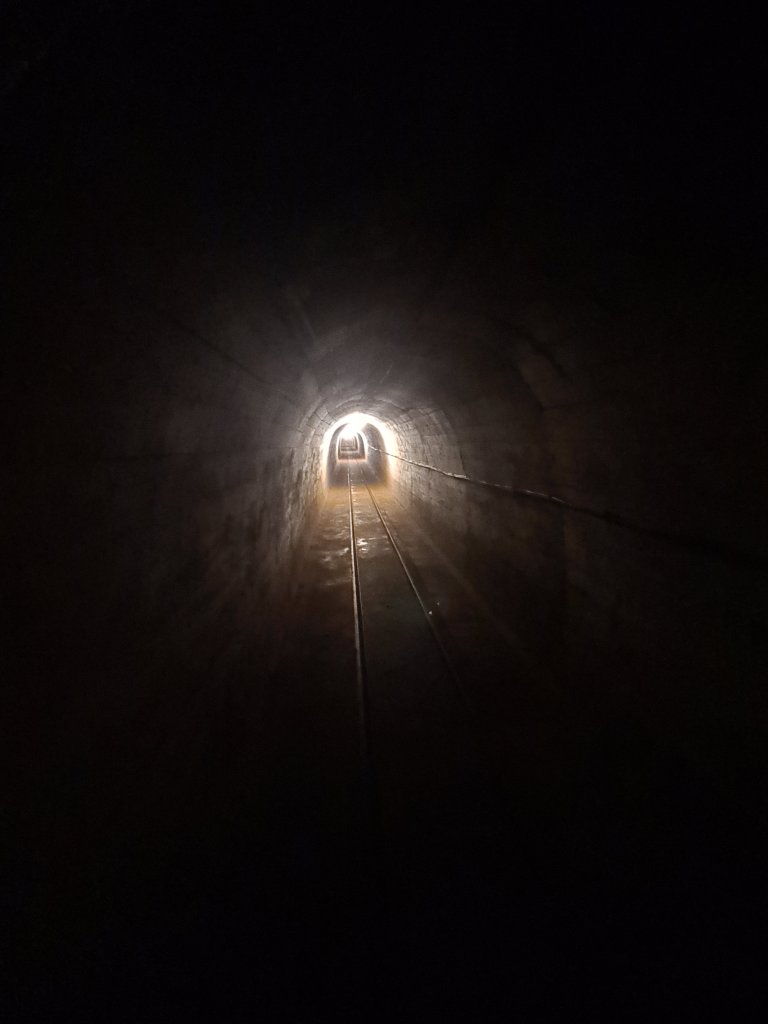
3. The middle section, where we were is 32km long. A narrow gauge railway was installed with 14 stations. These are alphabetically named … I’d gone looking for Heinrich on my morning walk as I spotted an ‘attraction’ on the map. No wonder I couldn’t find it, it was underground. Most of this section is now occupied by central Europe’s largest bat colony. Apparently, they are not in this tourist section as they need access to water during hibernation, and this part is dry.
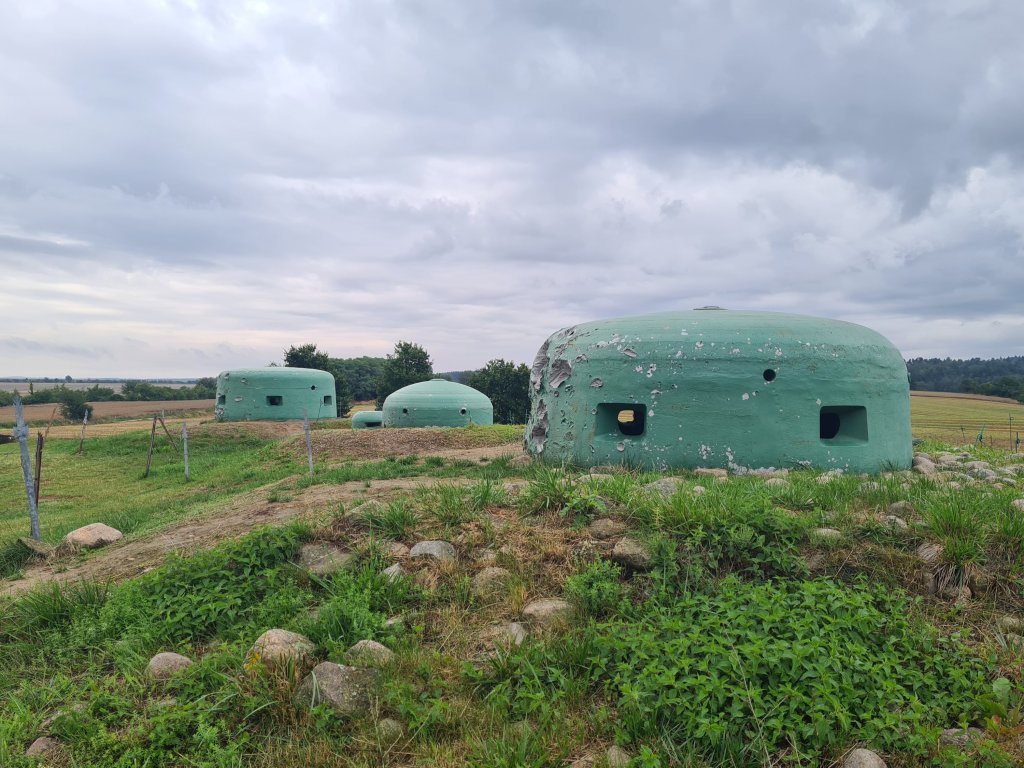
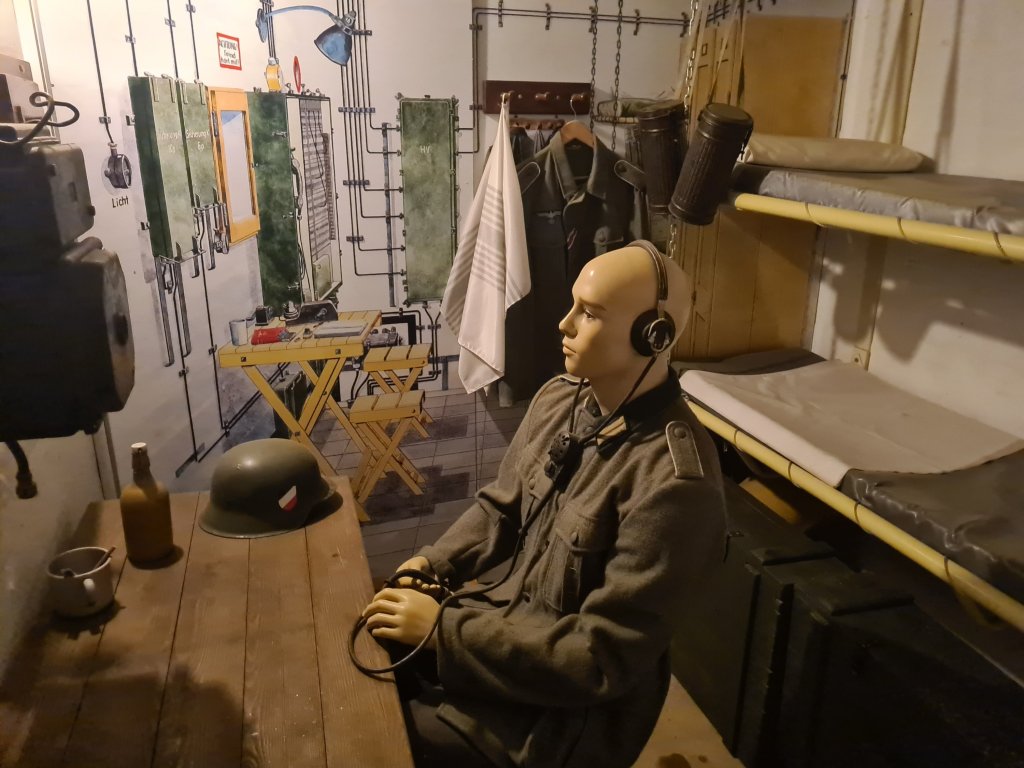
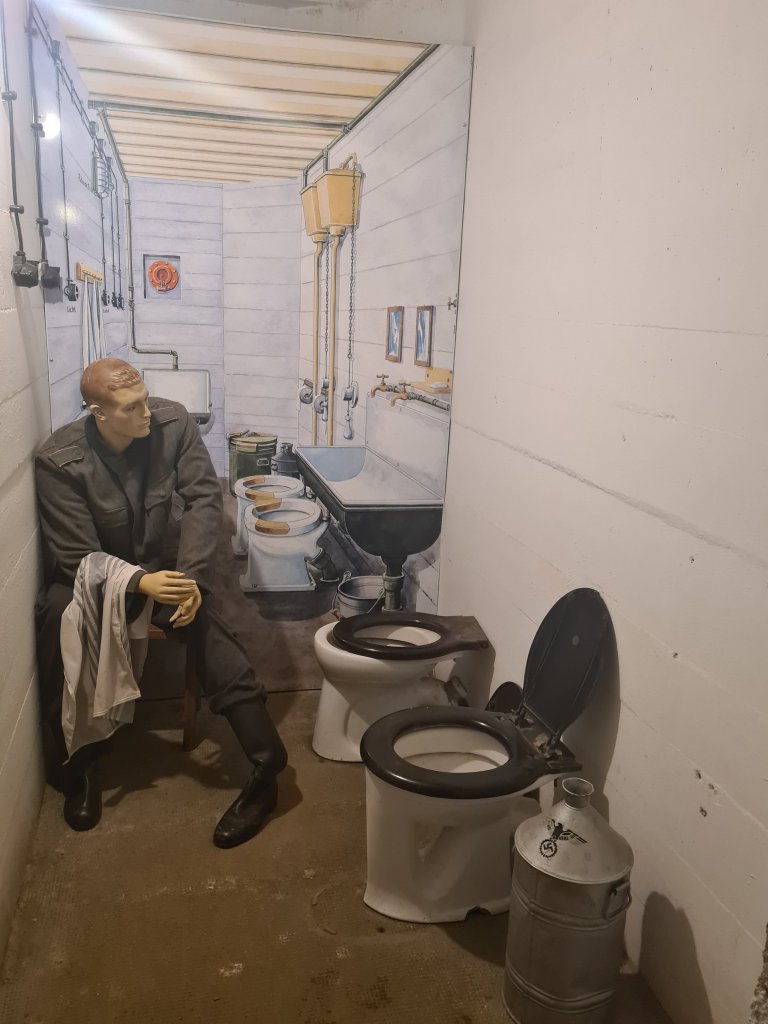
Overground bunkers, ventilation shaft and flame thrower. Damage to the left side from Russian guns.The tourist entrance. Fortunately the 5 metre pit immediately through the door had been filled in. Corrie photo bombing againSome room mock ups as they were never fitted out. The electric cabling and pipes were laid under the floorsWe climbed down these (and up) adjacent to an unfinished lift shaft.Poland is purple. The red line are the tunnel defences. Narrowgauge railwayStation Heinrich. During WW2 Daimler Benz moved aircraft engine repair here. We must’ve walked over easily over a km each way along this dead straight tunnel.
Enough. We found it fascinating and can’t believe it only received one line in only one of our guide books. Thank goodness for Atlas Obscura, where I’d found it.
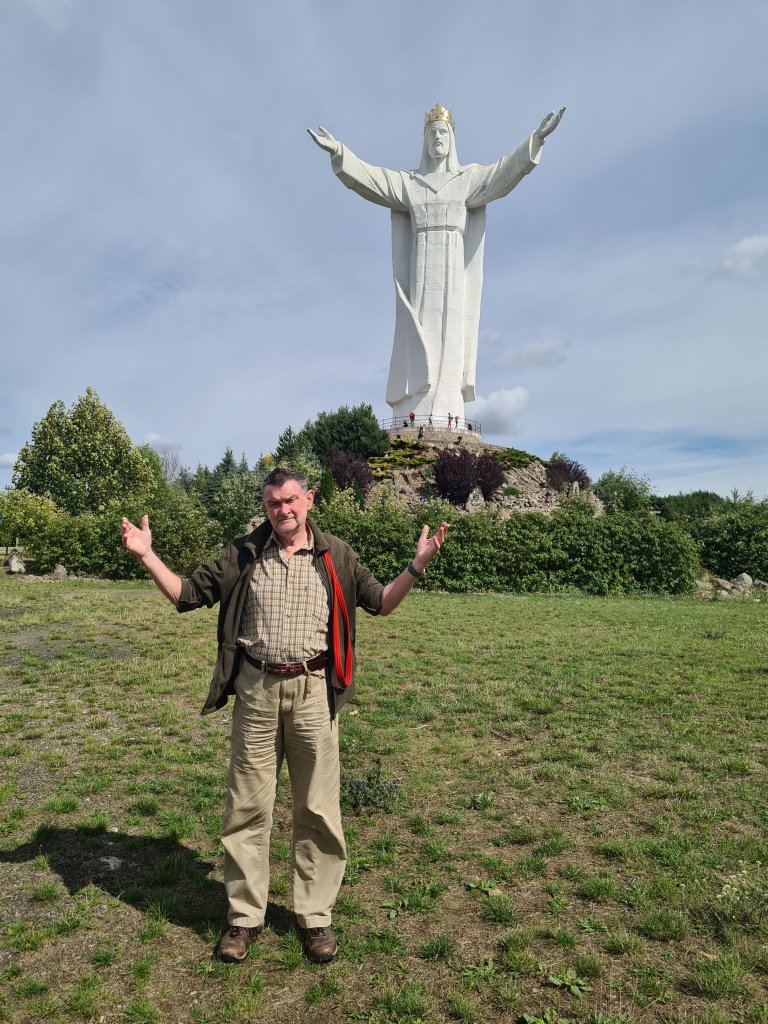
After lunch, it was a short hop to see Jesus
The view from his feet, confirmed the area is very flat. Apparently there was a public outcry when radio mast were placed in the crown.
I’m trying to find things to look at to break up the driving. Zagan was attractive and it had a Lidl … not seen any large supermarkets yet.
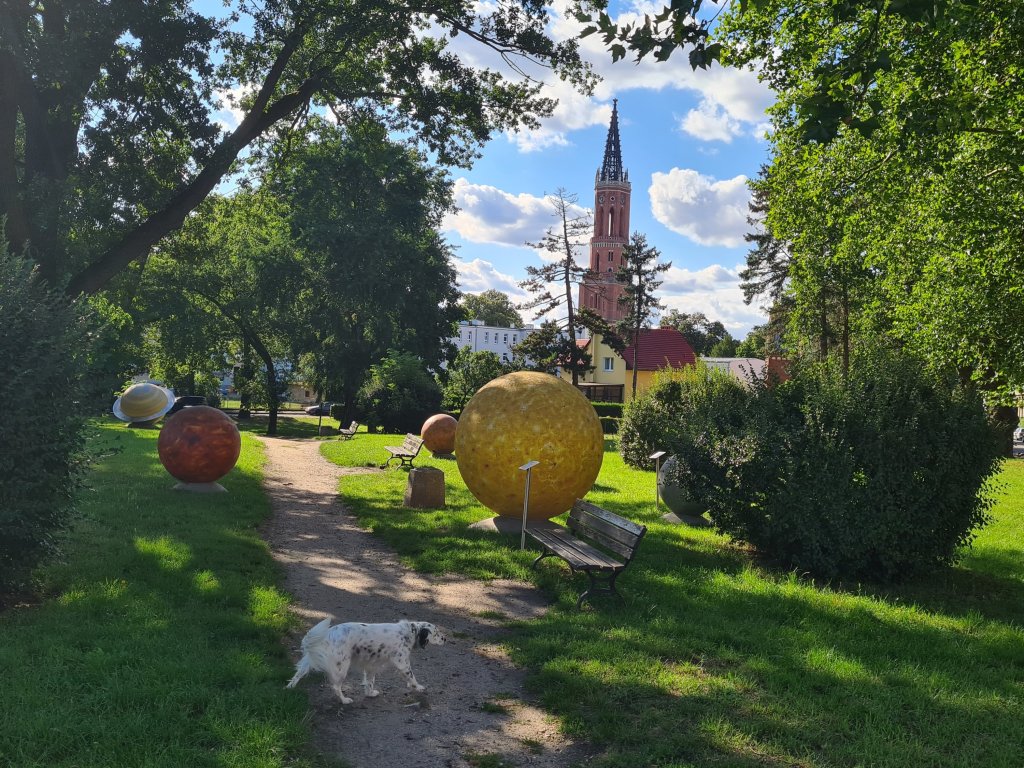
Corrie phot bombing the Planets in ZaganA socialite lived here and entertained the likes of Verdi and Liszt, so the theatrical faces above the windows are appropriate.Backend of the Palace, and James‘Confused as to why Lidl has Greek edition toilet roll. Most places in Greece don’t even allow paper down the pan.
Our overnight is outside Stalag Luft III, famous for the Great Escape. A small camper has arrived and erected a tent for the 3 teenage children … wild camping seems to be accepted. I had a conversation with a local. Not really a conversation, as my German is sehr schlecht, but it was better than his.